
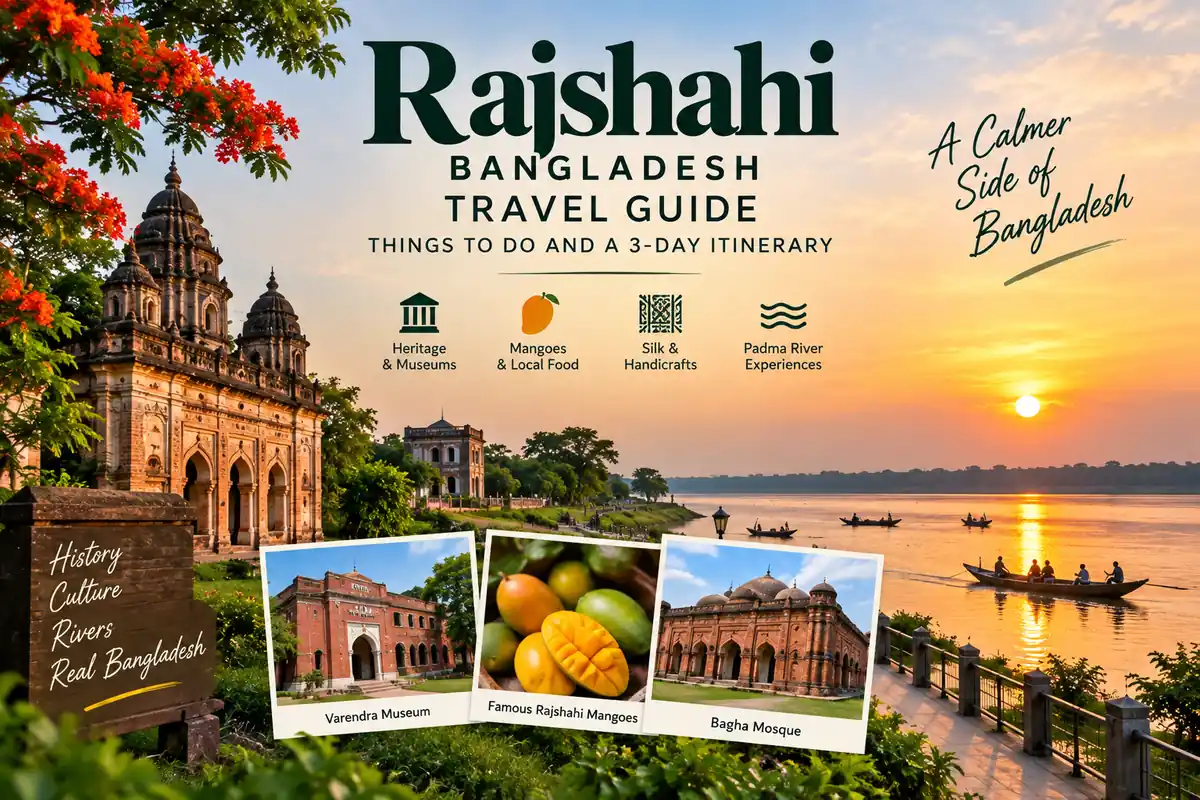
Rajshahi is one of Bangladesh’s most rewarding cities for travelers who prefer heritage, river landscapes and everyday culture to crowded landmark circuits. Set beside the Padma River in the country’s northwest, the city is known for silk, mangoes, educational institutions and access to some of the finest temple and mosque architecture in Bengal.
For an international visitor, Rajshahi works best as a slow travel base rather than a rushed photo stop. The city itself deserves a full day, while Puthia and Bagha add two very different heritage excursions. A three-day stay creates enough time for the Varendra Research Museum, the Padma riverfront, a silk experience, local food and two day-trip routes without turning the journey into a checklist.
This Rajshahi travel guide is written for visitors arriving from the United States and other international markets. It explains what to see, how to travel from Dhaka, when mango season occurs, how to choose accommodation, what to eat and how to plan a practical three-day itinerary.
Rajshahi Bangladesh at a Glance
Quick Answer: Is Rajshahi Worth Visiting?
Yes. Rajshahi is worth visiting for travelers interested in archaeology, architecture, textiles, food culture and river scenery. It is calmer and easier to navigate than Dhaka, yet it provides access to nationally important sites such as the Varendra Research Museum, Puthia Temple Complex and Bagha Mosque.
Allow at least two nights and three days. One day is enough only for a brief city visit; it does not comfortably include both Puthia and Bagha. Rajshahi is especially attractive from November through February for cooler weather and from late May through July for mango varieties, although summer heat can be intense.
Essential Visitor Facts
- Region: Northwestern Bangladesh
- River: Padma, the principal distributary of the Ganges in Bangladesh
- Known for: Silk, mangoes, the Varendra region, universities and historic architecture
- Ideal stay: Three days and two or three nights
- Best comfortable season: November to February
- Mango-focused season: Generally late May to July, varying by variety and official harvest calendar
- Main arrival options from Dhaka: Train, domestic flight, intercity bus or private vehicle
- Best local transport: Reserved auto-rickshaw, rickshaw or a vehicle with a local guide
- Travel style: Heritage, culture, photography, food and slow travel
Rajshahi city should not be confused with Rajshahi Division, a much larger administrative region containing destinations that require additional days. This page focuses on the city and realistic excursions to Puthia and Bagha.
Why Visit Rajshahi?
Rajshahi offers a combination that is difficult to find elsewhere in Bangladesh. Its central neighborhoods contain museums, markets, educational landmarks and traces of the silk trade. The Padma gives the city an open horizon, while surrounding districts preserve temples, mosques, palaces and archaeological landscapes.
The experience also feels less packaged than many classic tourism destinations. Travelers can watch evening life along the embankment, speak with textile sellers, compare mango varieties in season and observe how heritage buildings remain connected to living communities. This makes the city suitable for culturally curious visitors, documentary photographers and repeat travelers to South Asia.
Rajshahi is not a resort destination. Service standards, opening schedules and road conditions may be less predictable than in heavily visited cities. Visitors who arrive with realistic expectations, local support and time for changes are more likely to appreciate it.
Best Things to Do in Rajshahi
Visit the Varendra Research Museum
The Varendra Research Museum is the strongest starting point for understanding Rajshahi. Established through the Varendra Research Society and now maintained by the University of Rajshahi, it is widely recognized as Bangladesh’s oldest museum. Its collections connect visitors to the archaeology, sculpture, inscriptions, manuscripts, coins and artistic traditions of Bengal and the wider subcontinent.
Do not treat the museum as a quick indoor stop. Its galleries provide context for the temples, mosques and archaeological sites that appear later in a North Bengal journey. Visitors who see the collection first can recognize Buddhist, Hindu and Islamic artistic elements with greater confidence at Puthia, Bagha, Paharpur or Mahasthangarh.
The museum’s official visitor page currently lists Saturday through Wednesday from 10:00 a.m. to 4:30 p.m., and Friday from 10:00 a.m. to 4:30 p.m. Arrangements can change for holidays, maintenance or institutional events, so verify the schedule before building a fixed itinerary.
Photography, bags and access to individual galleries may be controlled. Ask at the entrance rather than relying on an old review. Allow 60 to 90 minutes for a useful visit.
Walk Along the Padma Riverfront
The Padma riverfront gives Rajshahi its strongest sense of place. The river can look dramatically different by season: broad water during the monsoon, shifting channels in drier months and extensive exposed sandbanks when water levels fall.
Late afternoon is usually the most comfortable time for a walk. Residents gather near embankment areas, tea stalls become active and the light softens across the river. Popular reference points include T-Badh, I-Badh and areas around Padma Garden, although access and crowd conditions vary.
The riverbank is not a controlled promenade in every section. Stay away from unstable edges, do not enter isolated sandbars without local advice and avoid swimming. During rain, steps and earthen surfaces become slippery. At night, use a known transport pickup point rather than walking through unfamiliar lanes.
Discover Rajshahi Silk
Rajshahi’s identity as the Silk City remains one of its strongest cultural associations. Silk production and trade involve cocoon handling, reeling, weaving, dyeing, printing, embroidery and garment making. The visitor experience, however, differs greatly between a working production unit, a showroom and a souvenir shop.
Ask a guide to arrange a legitimate workshop or factory visit if the process interests you. Not every facility permits visitors, and production schedules may not match tourism hours. A responsible visit should not interrupt machinery, expose workers to unwanted photography or imply that every product sold in Rajshahi is locally produced from local silk.
When shopping, ask what type of silk or blend the item contains, where it was woven and how it should be cared for. Compare texture, finish and labeling rather than purchasing only from a verbal claim. Scarves and lightweight textiles are easier to pack than large garments.
Explore Shaheb Bazar and Local Markets
Shaheb Bazar is a useful place to encounter Rajshahi’s commercial rhythm. Markets sell produce, fish, spices, clothing, household goods and seasonal fruit. During mango season, the range of varieties and volumes entering the market can be remarkable.
Visit early for active wholesale scenes or later for a more relaxed retail experience. Keep valuables secure in crowded lanes and ask before making close portraits. If you photograph vendors, buying something or taking time to converse is more respectful than treating the market as a visual set.
Choose busy food stalls with high turnover, freshly cooked food and clean serving utensils. Peel fruit yourself or ask for it to be cut with a clean knife.
See the Shah Makhdum Shrine Area
The shrine associated with Shah Makhdum Rupos is an important spiritual landmark. It reflects the region’s Islamic history and the continuing devotional life of the city. This is a religious site, not simply an architectural attraction.
Dress modestly, remove shoes where instructed and avoid blocking worshippers. Photography rules may differ between the courtyard, tomb area and prayer spaces. Non-Muslim visitors should ask before entering sensitive interiors, especially during prayer or religious gatherings.
Visit the University of Rajshahi Campus
The University of Rajshahi is one of Bangladesh’s major public universities. Its spacious campus provides a contrast to the denser commercial center and can interest visitors curious about architecture, public art and educational life.
The campus is a working institution. Entry, photography and vehicle access may change during examinations, political events or security restrictions. Stay in publicly accessible areas, avoid photographing students closely without consent and do not enter departments or residences uninvited.
The Shabash Bangladesh sculpture is a significant campus landmark associated with the Liberation War. A guide can explain its context without turning the campus into a hurried sightseeing loop.
Look for Boro Kuthi and Colonial-Era Traces
Boro Kuthi, associated with Dutch commercial activity and later institutional use, stands near the Padma. Its condition and public accessibility have changed over time, and restoration or administrative control may limit entry.
Treat it as a contextual stop rather than promising an interior visit. The area helps explain Rajshahi’s river-based trading history and its connections to silk, indigo and colonial commerce. Verify access locally on the day.
Rajshahi Mango Season
When Is Mango Season in Rajshahi?
Rajshahi’s mango season generally begins in the second half of May and continues through July, with some later varieties extending beyond that period. Exact dates are not permanent. District authorities publish harvest calendars to discourage premature picking and specify when different varieties may enter the market.
For 2026, the district calendar began with Guti mangoes on May 15, followed by Gopalbhog on May 22, Ranipasand or Lakshmanbhog on May 25, Himsagar or Khirsapat on May 30, Langra on June 10, and Amrapali and Fazli on June 15. Later varieties were scheduled into July. These dates illustrate the sequence, but travelers should check the calendar for their actual year.
Best Time for a Mango-Focused Visit
June offers the broadest chance of finding several popular varieties, but it also brings heat, humidity and the beginning of monsoon conditions. Late May favors earlier varieties; late June and July bring later fruit. Availability changes with weather, crop conditions and market demand.
An orchard visit should be arranged in advance. Orchards are working farms, not automatically public attractions. Ask permission, agree on any fee, follow the owner’s instructions and never pick fruit without approval. Closed shoes, water, sun protection and insect repellent are useful.
Buying Mangoes as an International Traveler
Choose mature fruit without excessive softness, leaking juice or damaged skin. Ask which varieties are ready to eat and which need time to ripen. Buy a small mixed selection for hotel consumption rather than a large crate.
International travelers should not assume fresh mangoes can be carried into the United States. U.S. agricultural entry rules restrict many fresh fruits and require declaration of agricultural items. Consume mangoes in Bangladesh unless current U.S. Customs and Border Protection and USDA guidance clearly permits a specific product and treatment.
Day Trip to Puthia Temple Complex
Puthia is east of Rajshahi and is known for a concentration of historic Hindu temples and palace architecture. Competitor tour pages commonly present it as a short stop on a larger archaeological route, but its terracotta, ponds, active shrines and layered estate history deserve unhurried observation.
What to See in Puthia
Important structures include the Pancha Ratna Govinda Temple, the large Shiva Temple, smaller Govinda temples, the Dol Mandir and the Puthia Rajbari area. Individual access varies because some buildings are active places of worship, protected heritage or under local administration.
Terracotta panels contain religious narratives, floral and geometric patterns and scenes of social life. Avoid touching the panels or climbing onto platforms for a photograph. Conservation conditions are uneven, making careful visitor behavior important.
How Long to Allow
Allow half a day from Rajshahi, including transport and two to three hours around the complex. Traffic and roadwork affect timing. Starting early helps avoid midday heat and leaves time for an evening riverfront visit.
Respectful Temple Etiquette
Dress modestly and remove shoes when requested. Do not interrupt worship, ceremonies or maintenance. Ask before photographing priests or devotees, and never stage a person against a shrine without consent. A guide can clarify which structures are active and which are primarily archaeological.
Day Trip to Bagha Mosque
Bagha Mosque is a celebrated Sultanate-era mosque southeast of Rajshahi. Built during the rule of Nasiruddin Nasrat Shah in the sixteenth century, it is known for brick construction, domes, terracotta ornament and its historic setting.
Why Bagha Is Different from Puthia
Puthia emphasizes Hindu temple and estate architecture, while Bagha presents an Islamic religious and architectural landscape. Visiting both helps international travelers understand that Rajshahi’s heritage cannot be reduced to one dynasty or religious tradition.
Bagha Mosque remains a place of worship. Friday prayer, festivals and local religious events may affect access. Wear modest clothing, remove shoes before entering the prayer space and avoid photographing worshippers without permission.
Planning the Excursion
Allow most of a day if combining the mosque with the local museum, surrounding area and a relaxed meal. Public transport is possible but challenging for a first-time foreign visitor because connections, language and waiting times complicate the return. A reserved vehicle and knowledgeable guide offer more control.
Museum schedules and foreign-visitor ticket categories can change. Verify them with the Department of Archaeology or locally before departure rather than publishing a permanent price.
How to Travel from Dhaka to Rajshahi
Dhaka to Rajshahi by Train
Train is often the best balance of comfort, scenery and environmental impact. Bangladesh Railway operates intercity services on the corridor, but times, weekly closure days and carriage availability change.
Use the official Bangladesh Railway e-ticket system or Rail Sheba app. Avoid social-media ticket resellers; Bangladesh Railway warns travelers about fraudulent and black-market sales. Passport details may be required for booking or verification, and popular air-conditioned seats sell out around holidays.
Allow roughly five to seven hours depending on the service and operating conditions. Confirm the exact departure station because Dhaka-area boarding points may differ by train. Arrive early for security, platform finding and luggage handling.
Dhaka to Rajshahi by Air
A domestic flight can reduce travel time substantially, with the airborne journey usually around one hour. Total door-to-door time is longer after airport transfers, check-in and possible schedule changes.
Flight frequency varies by season and airline. Check the operating carrier directly, confirm baggage allowance and keep flexibility if Rajshahi is the first connection after an international arrival.
Dhaka to Rajshahi by Bus or Private Car
Intercity coaches and private vehicles use the highway corridor through western Bangladesh. Journey time depends heavily on Dhaka traffic, bridge approaches, road conditions and rest stops. It can take six hours or considerably longer.
A reputable coach may suit budget travelers familiar with South Asian overland travel. For families, photographers or travelers carrying equipment, a private vehicle gives more control. Drivers need adequate rest; avoid plans requiring the same driver to complete a long transfer and a full sightseeing day without recovery.
Which Option Is Best?
Choose the train for a comfortable cultural journey, a flight when time is limited and a private vehicle when combining Rajshahi with Puthia, Natore or other northern destinations. Always build buffer time before an international departure.
Getting Around Rajshahi
Central Rajshahi can be explored with rickshaws, auto-rickshaws and reserved vehicles. Distances that look short on a map may involve heat, dust, limited sidewalks or difficult crossings.
Agree on the fare before using an unmetered vehicle. A hotel or guide can write the destination in Bangla and arrange a pickup point. Save the accommodation’s name and phone number offline. At night, use a known driver or pre-arranged transport.
For Puthia and Bagha, a reserved vehicle is the most efficient option. Confirm whether the quoted rate includes fuel, parking, driver meals, waiting time and overtime.
Where to Stay in Rajshahi
Rajshahi has business hotels, mid-range local hotels, budget accommodation and tourism properties. International chains are limited, so judge a property by recent operational evidence rather than brand assumptions.
Choose a hotel near the center if the museum, markets and restaurants are priorities. A quieter property may suit families or light sleepers but can increase transport time. Before booking, confirm:
- Twenty-four-hour reception and acceptance of foreign passports
- Air-conditioning and backup power
- Hot water and Western-style toilet availability
- Elevator or step-free access if required
- Reliable Wi-Fi and mobile-network coverage
- Secure luggage storage
- Breakfast time and safe drinking water
- Airport or railway-station transfers
- Card acceptance and the need for cash
Read recent reviews, especially those written during the same season. Construction, ownership changes and maintenance can make older ratings unreliable.
What to Eat in Rajshahi
Rajshahi’s food experience combines regional ingredients with familiar Bengali meal structures. Rice, river fish, lentils, vegetables, bhorta, meat curries and seasonal sweets are widely available. Mango appears as fresh fruit, juice, chutney, pickle and dessert during the season.
Foods to Try
- Fresh seasonal mangoes from a reputable seller
- Rice with local fish curry and vegetables
- Bhorta selections with dal
- Kalai roti or regional flatbread where available
- Mango pickle and chutney
- Mishti, yogurt or Bengali sweets from a busy shop
- Tea and light snacks near the riverfront
Restaurant menus may be only in Bangla, and spice levels vary. Ask for less spicy food if needed, though not every preparation can be changed. Drink sealed or reliably filtered water and avoid raw garnishes when hygiene is uncertain.
Travelers with allergies should carry a translated card explaining the ingredient and seriousness of the reaction. Mustard oil, peanuts, dairy and cross-contact may not always be obvious.
A Practical 3-Day Rajshahi Itinerary
Day 1: Rajshahi City, Museum, Silk and Padma Sunset
Begin at the Varendra Research Museum while it is open. Allow at least an hour and note objects that provide context for the next two days. After lunch, visit a verified silk workshop, factory or showroom, then continue through Shaheb Bazar or another central market.
Reach the Padma riverfront before sunset. Walk only in active, well-used areas and arrange return transport. Finish with a Bengali dinner near the city center.
Day 2: Puthia Temples and Rajshahi Culture
Leave after breakfast and spend two to three hours exploring the temple and palace complex. Focus on the relationship among terracotta, active worship and the former estate landscape rather than racing between structures.
Return to Rajshahi for a shrine, Boro Kuthi exterior or university-campus stop if access is confirmed. Use the evening for a guided market walk or mango tasting. A broader A Cultural Tour can connect textile, food and religious traditions without forcing unrelated sites into one day.
Day 3: Bagha Mosque and Mango Country
Depart early for Bagha Mosque. Study the terracotta and architectural details while respecting active worship. Add the museum only after confirming its schedule.
During mango season, arrange a permitted orchard visit with a farmer or local host. Outside the season, use the time for river landscapes, village observation or a slower return.
Return to Rajshahi for an evening train or stay another night to reduce risk. Travelers continuing toward Paharpur, Mahasthangarh or Rangpur should use a dedicated North Bengal tour itinerary rather than stretching this city guide beyond its purpose.
Best Time to Visit Rajshahi
November to February
These months offer the most comfortable walking weather. Mornings and evenings can feel cool, while haze may reduce long river views. This is the strongest season for sightseeing, architecture and day trips.
March to April
Temperatures rise and outdoor sightseeing becomes tiring. Start early, rest at midday and choose air-conditioned transport. Dust and storms may affect road journeys.
May to July
This is the core mango period, but it overlaps with intense heat, humidity and monsoon rain. The cultural reward is high for food-focused travelers, while physical demands are greater. Use flexible plans and weather protection.
August to October
Rain and high river levels can create dramatic scenery. Flooding, transport delays and slippery heritage sites remain possible. Check local conditions before day trips.
Safety, Etiquette and Accessibility
Rajshahi is generally calmer than Dhaka, but ordinary precautions still apply. Keep valuables discreet, use registered or hotel-arranged transport at night and avoid political gatherings. Carry identification while keeping a secure digital copy separate from the passport.
Dress modestly at mosques, shrines, temples and rural communities. Ask before photographing people, religious ceremonies, workers or private homes. Drone use should never be assumed legal or appropriate, especially near airports, government facilities, borders and religious sites.
Historic attractions may have steps, uneven courtyards, narrow thresholds and limited accessible toilets. Travelers with mobility needs should request a route inspection rather than accept a generic accessibility promise. Heat and long vehicle journeys may matter more than walking distance alone.
Some areas of Rajshahi District are close to the Indian border. Do not approach restricted zones or photograph security infrastructure without clear permission.
Why Explore Rajshahi with Bangladesh Explore
Rajshahi is easy to underestimate when presented only as a transfer point. Bangladesh Explore can build a more coherent journey by checking museum access, sequencing Puthia and Bagha realistically, arranging responsible silk or orchard visits and providing an English-speaking guide who understands heritage and etiquette.
Travelers comparing the Best Tour Agency in Bangladesh should look beyond a list of included attractions. Ask how the operator verifies opening days, handles transport delays, protects working communities from intrusive tourism and adapts for dietary or mobility needs.
For visitors with a deeper interest in architecture and archaeology, Rajshahi can connect with World Heritage and Historical Places Tours covering Paharpur and other northern sites. Those longer routes should remain separate from this city guide so each page answers a distinct search and booking intent.
Frequently Asked Questions
Where is Rajshahi in Bangladesh?
Rajshahi is in northwestern Bangladesh on the north bank of the Padma River. It is the main city of Rajshahi District and a gateway to heritage destinations across North Bengal.
How many days do I need in Rajshahi?
Three days is ideal for a first visit. Use one day for the city, one for Puthia and one for Bagha or a seasonal mango experience. Add more days for Paharpur, Mahasthangarh, Natore or Chapai Nawabganj.
What is Rajshahi famous for?
Rajshahi is famous for silk, mangoes, the Padma River, the Varendra Research Museum, educational institutions and access to historic temples and mosques.
What are the best things to do in Rajshahi?
Top experiences include the Varendra Research Museum, Padma riverfront, a responsible silk visit, Shaheb Bazar, the Shah Makhdum shrine area, Puthia Temple Complex and Bagha Mosque.
When is mango season in Rajshahi?
The main season usually runs from the second half of May through July, but varieties are harvested on different dates. Check the district’s harvest calendar for the year of travel.
How do I travel from Dhaka to Rajshahi?
You can travel by intercity train, domestic flight, bus or private car. Train is often the best all-around choice, while flying saves time and a private car works well for a wider northern route.
Is Rajshahi safe for foreign tourists?
Rajshahi is generally manageable with ordinary precautions. Use trusted transport, avoid demonstrations, respect religious and campus rules, and check local conditions before remote day trips.
Is the Varendra Research Museum open every day?
No. Its official visitor information currently lists Saturday through Wednesday and Friday opening, with Thursday not listed as a public opening day. Verify current hours because holidays and institutional events can change access.
Can foreign tourists visit mango orchards?
Yes, when the owner or organizer gives permission. Orchards are working farms, so arrange the visit, agree on conditions and never pick fruit without consent.
Can I combine Rajshahi with Paharpur?
Yes, but not comfortably within the same three-day plan if Puthia and Bagha are also included. Add one or two nights and use a properly routed North Bengal itinerary.