Planning a trip to Bangladesh is exciting, but figuring out how to travel between destinations can feel overwhelming at first. Should you take the train through the countryside, fly to save time, book a long-distance coach, or hire a private car with a driver? The right choice for getting around Bangladesh depends on your itinerary, budget, and the kind of experience you want from your trip.
Although Bangladesh is relatively compact, distances can be deceptive. A short journey on the map may take several hours because of traffic, river crossings, or seasonal weather. The good news is that visitors have plenty of options. Modern intercity trains, comfortable luxury buses, domestic flights, ride-sharing apps, and one of the world’s largest inland waterway networks make it possible to explore almost every corner of the country.
In fact, getting from one destination to another often becomes part of the adventure. Watching emerald-green rice fields drift past a train window, crossing broad rivers by launch, or weaving through the lively streets of Old Dhaka in a rickshaw offers a glimpse of Bangladesh that many visitors remember just as vividly as the destinations themselves.
This guide compares every major transportation option—from trains and buses to flights and private cars—so you can choose the best way to get around Bangladesh with confidence. Whether you’re planning a one-week highlights tour or a longer journey across the country, you’ll find practical advice to help you travel efficiently, comfortably, and with realistic expectations.
Understanding Transportation in Bangladesh
One of the first things many visitors notice is that Bangladesh feels much larger than it appears on a map. Distances between major destinations aren’t especially long, but traffic, river crossings, road conditions, and seasonal weather can make travel times unpredictable. A little flexibility in your itinerary goes a long way.
Most international travelers begin their journey in Dhaka, the country’s main transportation hub. From the capital, you can reach almost every major destination by train, bus, domestic flight, or private vehicle. Whether you’re heading to the tea estates of Sylhet, the beaches of Cox’s Bazar, the historic landmarks around Rajshahi, or the waterways of Khulna and Barishal, you’ll usually have more than one way to get there.
Rather than relying on a single mode of transport, experienced travelers often mix different options throughout their trip. You might enjoy a scenic train ride to Sylhet, fly back from Cox’s Bazar to save time, and hire a private car for exploring villages, archaeological sites, or national parks beyond the reach of public transportation. Choosing the right combination often results in a smoother and more rewarding journey than sticking to just one method from start to finish.
Before comparing each option in detail, here’s a quick overview of how they differ in terms of speed, comfort, flexibility, and cost.
Transportation Options at a Glance
Before looking at each option in detail, here’s a quick overview of what you can expect.
Each option has its strengths. The key is choosing the right one for your destination rather than assuming one method works for every journey.
| Transport | Best For | Travel Time | Comfort | Cost |
| Train | Scenic intercity journeys | Moderate | High | Budget-friendly |
| Luxury Bus | Long-distance road travel | Moderate | Good | Affordable |
| Domestic Flight | Saving time | Fast | Excellent | Premium |
| Private Car | Flexible sightseeing | Flexible | Excellent | Premium |
| Ride-sharing | City travel | Short | Good | Affordable |
Local Expert Tip
If you’re visiting Bangladesh for the first time, don’t feel you need to choose one mode of transportation for your entire trip. Many of the most enjoyable itineraries combine trains for scenic intercity travel, flights for long distances, and private vehicles for day trips where flexibility matters most.
Traveling by Train in Bangladesh
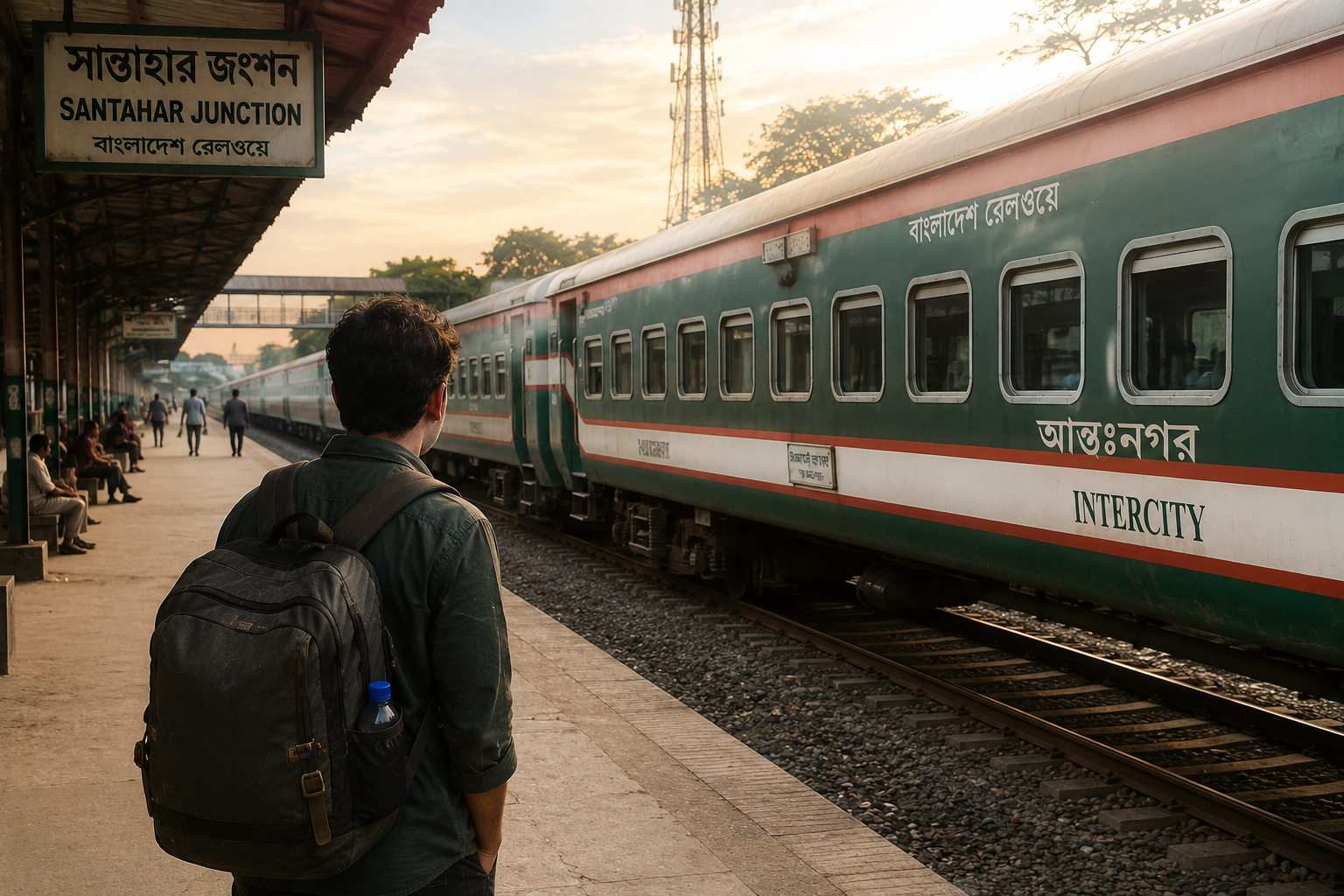
For many international visitors, the train isn’t simply a way to travel between cities—it’s one of the most rewarding experiences in Bangladesh. Long before you reach your destination, the journey itself offers a window into everyday life, with emerald rice paddies, winding rivers, village markets, and small rural stations unfolding beyond your seat.
Over the past decade, Bangladesh Railway has modernized many of its intercity services, making train travel a practical choice for both local commuters and overseas visitors. Air-conditioned coaches, reserved seating, and online ticket booking have made the network easier to use than ever before, especially on the country’s most popular routes.
Unlike long road journeys, trains aren’t delayed by highway congestion. Instead of watching traffic inch forward, you can settle into your seat and enjoy constantly changing scenery—from fishermen casting their nets into quiet waterways to children waving as the train passes through small villages. For photographers and slow travelers, these unscripted moments often become some of the most memorable parts of a trip.
If your itinerary includes destinations such as Sylhet, Chattogram, Rajshahi, or Khulna, traveling by train is often the most enjoyable way to get there.
Why Choose the Train?
Choosing the train isn’t always about reaching your destination as quickly as possible. It’s about enjoying the journey while traveling in a way that’s comfortable, affordable, and deeply connected to the landscapes you’re passing through.
Among the biggest advantages are:
- Reserved seating on most intercity services.
- Air-conditioned coaches for longer routes.
- Scenic countryside views throughout the journey.
- Reliable schedules that aren’t affected by highway traffic.
- Lower fares than domestic flights.
- A more authentic glimpse into everyday Bangladesh.
That said, trains aren’t the best choice for every itinerary. Seats on popular routes can sell out several days in advance—especially before weekends, public holidays, and Eid celebrations—so it’s wise to book as early as possible if you’re traveling during busy periods.
The Best Train Routes for Tourists
Bangladesh’s railway network reaches most of the country’s major cities, but some routes are memorable for reasons that go beyond convenience. Whether you’re traveling through tea country, heading toward the world’s largest mangrove forest, or exploring historic cities, these journeys offer an experience that’s as rewarding as the destination itself.
Dhaka to Sylhet – The Best Journey for Nature Lovers
If your Bangladesh itinerary includes misty tea estates, rolling hills, and tranquil wetlands, the journey from Dhaka to Sylhet deserves a place on your travel plans. Widely regarded as one of the country’s most scenic railway routes, it offers a constantly changing landscape of emerald rice fields, winding rivers, village stations, and rural communities that many visitors would otherwise never experience.
Most intercity services complete the journey in around six to seven hours. For the most enjoyable ride, book a Snigdha (air-conditioned chair) or AC Cabin, especially if you’re traveling during the warmer months.
Arriving in Sylhet opens the door to some of Bangladesh’s best-loved natural attractions. Many travelers continue into the tea-growing region around Sreemangal, explore the flooded forests of Ratargul, cruise along the emerald waters of Lalakhal, or spend a day discovering the dramatic stone landscapes of Jaflong near the Indian border.
Local Expert Tip: Choose a morning departure if possible. The countryside is at its most photogenic in the softer daylight, and arriving before evening gives you time to settle in and enjoy Sylhet’s renowned local cuisine.
Dhaka to Chattogram – A Relaxing Alternative to Highway Travel
Although buses run frequently between Dhaka and Chattogram, many travelers prefer the train for one simple reason—it replaces hours of unpredictable highway traffic with a far more relaxing journey.
Most intercity trains cover the route in five to six hours, offering reserved seating and air-conditioned coaches that make the trip considerably more enjoyable than a long road journey.
Chattogram is far more than Bangladesh’s commercial centre. It’s also the gateway to the country’s southeastern coast and hill districts. Spend time exploring Patenga Sea Beach, climb Batali Hill for panoramic views of the city, or continue south toward Cox’s Bazar, Bandarban, or Rangamati as your adventure unfolds.
Local Expert Tip: Rather than catching an immediate connection, consider spending a night in Chattogram. The city is often overlooked by international visitors, yet its waterfront, seafood restaurants, and nearby attractions make it well worth a stop.
Dhaka to Rajshahi – Traveling to Bangladesh’s Cultural Heartland
Travelers interested in history, architecture, and local culture will find Rajshahi a refreshing contrast to Bangladesh’s larger cities. The railway journey from Dhaka passes through fertile farmland and quiet rural landscapes before reaching one of the country’s most relaxed urban destinations.
Expect the trip to take around five to six hours. Once there, you’ll discover a city known for its silk heritage, leafy boulevards, and celebrated mango orchards.
Rajshahi also serves as an excellent base for exploring the beautifully preserved Puthia Temple Complex, the Varendra Research Museum, and several archaeological sites that reveal centuries of Bengal’s rich history. It rewards travelers who prefer slower, more immersive experiences over crowded tourist hotspots.
Local Expert Tip: Visiting between May and July? Don’t leave without tasting Rajshahi’s famous mangoes. They’re considered among the finest in South Asia and are a highlight of the local summer season.
Dhaka to Khulna – Your Gateway to the Sundarbans
For many visitors, Khulna isn’t the final destination—it’s the starting point for one of Bangladesh’s greatest natural wonders. If the Sundarbans is on your itinerary, the train is one of the most comfortable ways to begin the journey.
The route from Dhaka typically takes eight to nine hours, making it the longest rail journey featured in this guide. Fortunately, comfortable overnight services and air-conditioned coaches allow you to arrive well rested for the adventure ahead.
From Khulna, most travelers continue to Mongla, where boats depart for the UNESCO-listed mangrove forest. Over the following days, you’ll navigate quiet waterways, watch for crocodiles and spotted deer, and, if you’re fortunate, catch a glimpse of the elusive Royal Bengal Tiger in its natural habitat.
Local Expert Tip: Don’t rush your visit. Plan at least three days for the Sundarbans so you have enough time to enjoy the river cruises, wildlife, and peaceful rhythm of the forest.
Choosing the Right Train Class
For first-time visitors, choosing the right ticket class can make a noticeable difference—especially on longer journeys.
If you’re looking for the best balance of comfort and value, Snigdha Class is the easiest recommendation. These air-conditioned coaches offer reserved seating, making them ideal for daytime routes such as Dhaka–Sylhet, Chattogram, or Rajshahi.
Travelers seeking extra privacy—whether you’re with family, carrying expensive camera gear, or simply prefer a quieter space—may find AC Cabins or First-Class Cabins worth the additional cost. They’re particularly comfortable on journeys lasting six hours or more.
Those traveling on a tighter budget can choose Shovon Chair, which provides reserved seating at a lower fare. While the facilities are simpler, it’s still a dependable option for most daytime trips.
Whichever class you choose, book as early as possible. Seats on popular intercity services often sell out well in advance of weekends, public holidays, and especially during Eid, when demand across the railway network increases dramatically.
Traveling by Bus in Bangladesh
Not every destination in Bangladesh is connected by rail, and that’s where the country’s extensive long-distance bus network becomes invaluable. Whether you’re heading to the beaches of Cox’s Bazar, the hills of Bandarban, or the southern coastline around Kuakata, a comfortable coach is often the most practical way to travel.
Although many visitors imagine long bus journeys to be tiring, Bangladesh’s premium coach services have improved dramatically over the past decade. Modern operators now offer air-conditioned buses, reclining seats, scheduled rest stops, and online ticket booking, making them a reliable option for both domestic and international travelers.
For many routes, buses are also the most direct choice. Instead of changing trains or arranging additional local transport, you can often travel straight to your destination in a single trip.
Why Choose the Bus?
While trains provide a more scenic experience on many routes, buses offer something equally valuable: flexibility.
Bangladesh’s road network reaches destinations that the railway doesn’t, giving travelers far more options when planning an itinerary. Departures are usually more frequent than trains, making it easier to adjust your schedule or travel at short notice.
A long-distance coach is often the better option if you’re planning to visit:
- Cox’s Bazar
- Bandarban
- Kuakata
- Saint Martin’s Island (via Teknaf)
- Rangamati
- Smaller towns and rural destinations beyond the railway network
For these places, the journey by road isn’t simply an alternative—it is the primary way most travelers arrive.
Luxury Bus Operators Worth Considering
Choosing the right operator can make a noticeable difference, especially on journeys lasting six hours or longer. Bangladesh has several companies with a strong reputation for modern coaches, dependable schedules, and comfortable onboard facilities.
Green Line Paribahan
One of Bangladesh’s best-known premium coach operators, Green Line is often the first choice for travelers looking for a higher standard of comfort. Its modern fleet and consistent service make it particularly popular on routes between Dhaka, Chattogram, Cox’s Bazar, and Khulna.
Shohagh Paribahan
With one of the country’s largest route networks, Shohagh offers frequent departures to many major cities. It’s a dependable option if flexibility is more important than luxury.
Ena Transport
Travelers heading toward Sylhet and northeastern Bangladesh frequently choose Ena thanks to its reliable schedules and comfortable coaches. It’s also an excellent alternative when train tickets are unavailable.
Hanif Enterprise
Hanif serves destinations across much of Bangladesh, offering both standard and premium services. Choosing one of its executive coaches provides a noticeably better experience on longer routes.
Local Expert Tip
If you’re traveling for more than five or six hours, paying a little extra for a premium coach is usually money well spent. The difference in seat comfort, onboard facilities, and overall experience is significant, while the price increase is often modest.
When Is the Bus a Better Choice Than the Train?
Instead of asking whether buses are better than trains, it’s more useful to ask which option suits your itinerary.
A bus is usually the smarter choice when:
- your destination isn’t connected by rail,
- you need more departure times,
- train tickets have sold out,
- or you’re traveling directly to coastal or hill district destinations.
For example, visitors exploring Bandarban, Kuakata, or Saint Martin’s Island will almost always complete at least part of their journey by road.
Is Bus Travel Safe?
Yes—provided you choose a reputable operator.
Luxury coach companies generally maintain much higher standards than local buses and are the recommended choice for international visitors. Booking with an established company, keeping valuables with you, and arriving at the terminal a little early are usually all that’s needed for a smooth journey.
If you’re traveling during Eid holidays or long weekends, reserve your seat several days in advance, as the busiest routes often sell out quickly.
Should Tourists Travel by Bus?
Absolutely.
For many destinations, buses aren’t simply a budget-friendly alternative—they’re the most practical form of public transportation available.
If your plans include remote beaches, hill districts, or smaller towns beyond the railway network, a premium coach offers an excellent balance of value and convenience.
However, if you’re traveling with young children, carrying bulky camera equipment, or planning multiple sightseeing stops in one day, hiring a private vehicle with a local driver will usually provide a more relaxed experience.
Domestic Flights in Bangladesh
If you’re trying to see as much of Bangladesh as possible in a limited amount of time, domestic flights can completely change the pace of your trip. While trains and buses provide a richer overland experience, flying allows you to spend less time in transit and more time exploring the country’s beaches, tea estates, historic cities, and national parks.
Bangladesh’s domestic aviation network connects Dhaka with major destinations including Cox’s Bazar, Chattogram, Sylhet, Rajshahi, Jashore, Barishal, and Saidpur. Most routes have multiple departures throughout the week, making it relatively easy to build an itinerary that combines different regions without losing entire days to travel.
For visitors spending one or two weeks in Bangladesh, a well-timed domestic flight often makes it possible to experience places that would otherwise be difficult to include in a single trip.
When Should You Fly?
Not every journey needs a flight. In many cases, the train is a more memorable experience, and a luxury coach is perfectly comfortable for shorter overland routes.
Flying becomes worthwhile when time is your most valuable resource.
Consider booking a domestic flight if you:
- have less than ten days in Bangladesh,
- want to visit several regions in one trip,
- prefer to avoid long road journeys,
- are traveling during the monsoon, when overland travel may take longer than expected,
- or need to connect with an international departure from Dhaka.
A good example is the route between Dhaka and Cox’s Bazar. The flight takes about an hour, while the same journey by road can easily take ten hours or more. If your priority is spending extra time on the beach instead of sitting on a bus, the additional cost is often easy to justify.
Popular Domestic Flight Routes
Although flights operate to several cities, a handful of routes are especially useful for international travelers.
-
Dhaka → Cox’s Bazar
- The fastest and most convenient way to reach the world’s longest natural sea beach.
-
Dhaka → Sylhet
- Ideal if you’re heading straight for Bangladesh’s tea country, waterfalls, and forest reserves.
-
Dhaka → Chattogram
- A practical option for travelers continuing to the hill districts or exploring the southeastern coast.
-
Dhaka → Saidpur
- The preferred gateway for discovering Bangladesh’s northern heritage sites and nearby natural attractions.
-
Dhaka → Jashore
- Often used by travelers making their way toward the Sundarbans through Khulna.
Which Airlines Operate Domestic Flights?
Bangladesh has several reliable domestic carriers, giving travelers a choice of schedules and fare options.
The main airlines are:
- Biman Bangladesh Airlines – the national carrier with the broadest domestic network.
- US-Bangla Airlines – frequent departures and extensive route coverage.
- NOVOAIR – a popular choice for dependable service on major routes.
- Air Astra – one of the country’s newer airlines, operating a modern fleet on selected domestic routes.
Whichever airline you choose, booking a few weeks ahead usually provides better fares, especially around Eid holidays and other peak travel periods.
Tips for Booking Domestic Flights
A little planning can make domestic travel smoother.
- Book early if you’re traveling during holidays or school vacations.
- Arrive at the airport around 90 minutes before departure.
- Check baggage allowances before purchasing your ticket.
- Keep some flexibility in your schedule during the monsoon, when weather occasionally affects flight times.
Local Expert Tip
Many experienced travelers combine flying with overland transport rather than relying on one mode throughout their trip. Flying to Cox’s Bazar or Saidpur, then returning by train, lets you save time while still enjoying one of Bangladesh’s scenic railway journeys.
Is Flying Worth It?
That depends entirely on your itinerary.
If you’re planning a relaxed two- or three-week journey, trains and road travel allow you to experience Bangladesh at a slower pace and see far more of the countryside along the way.
However, if you’re visiting for a week or combining destinations such as Dhaka, Sylhet, and Cox’s Bazar, domestic flights can free up valuable time that you’d rather spend exploring than traveling.
Rather than asking whether flying is the best option, ask whether it’s the right option for your schedule. In many cases, the answer is yes—but only for selected parts of your journey.
Hiring a Private Car with a Driver
For travelers who prefer flexibility over fixed schedules, hiring a private car with a local driver is often the most comfortable way to explore Bangladesh. While it costs more than public transportation, it offers something that trains and buses can’t: complete freedom to travel at your own pace.
Instead of planning your day around departure times, you decide when to leave, where to stop, and how long to stay. That flexibility becomes especially valuable when visiting places where attractions are spread out or public transport is limited.
Whether you’re photographing rural landscapes, traveling with family, or exploring several destinations in one region, a private vehicle can turn a busy travel day into a far more relaxed experience.
When Does a Private Car Make Sense?
Bangladesh’s public transportation network works well for many popular routes, but it isn’t designed for every type of trip.
Hiring a private car is often the better choice if you plan to:
- visit several attractions in a single day,
- explore rural areas beyond the main tourist circuit,
- travel with children or older family members,
- carry large suitcases or photography equipment,
- or combine cities, villages, and natural attractions in the same itinerary.
For example, visiting Sonargaon, Panam City, and nearby riverside villages in one day is straightforward with a dedicated driver. Doing the same journey using buses, rickshaws, and ride-sharing services can quickly become time-consuming and unnecessarily complicated.
Ideal Destinations for Private Transport
Some of Bangladesh’s most memorable places are easier to appreciate when you aren’t tied to public transport schedules.
A private vehicle is particularly useful for exploring:
- the tea estates around Sreemangal,
- the ancient ruins of Paharpur,
- the archaeological site of Mahasthangarh,
- the beautifully preserved temples of Puthia,
- the hill districts of Bandarban and Rangamati,
- and quiet villages that rarely appear in traditional guidebooks.
One of the biggest advantages is the freedom to make spontaneous stops. You might pause at a roadside fruit market, watch fishermen along a village river, or discover a small local restaurant that never appears on travel websites. Those unscripted moments often become the stories travelers remember long after the trip is over.
Why Travelers Choose a Private Driver
Convenience is only part of the appeal.
A dedicated driver allows you to focus entirely on the experience rather than the logistics. There’s no need to coordinate multiple connections, negotiate fares throughout the day, or worry about finding transport back from remote attractions.
Other advantages include:
- door-to-door transportation,
- complete control over your daily schedule,
- extra space for luggage and travel equipment,
- easy access to places beyond the public transport network,
- and the flexibility to adjust your plans whenever something interesting catches your attention.
For photographers, families, and travelers who enjoy exploring beyond the obvious highlights, those benefits often outweigh the additional cost.
Things to Keep in Mind
Driving in Bangladesh is a very different experience from driving in North America, Europe, or Australia. Roads can be busy, traffic conditions change quickly, and journey times are often influenced by weather, festivals, and local events.
For that reason, international visitors are generally better off hiring a vehicle with an experienced local driver rather than attempting to drive themselves. Local drivers understand regional road conditions, city traffic, and alternative routes, allowing you to relax and enjoy the journey.
It’s also wise to leave some flexibility in your daily schedule. A route that looks straightforward on a map may take longer than expected, especially when passing through Dhaka or other major cities during peak hours.
Local Expert Tip
Resist the temptation to pack every attraction into a single day. Bangladesh rewards slower travel. Leaving room for an unplanned tea break, a conversation with local artisans, or a short stop beside a riverside village often creates the most memorable moments of the trip.
Using Ride-Sharing Apps in Bangladesh
Getting around Bangladesh’s major cities has become much easier thanks to ride-sharing apps. If you’re staying in Dhaka, Chattogram, or Sylhet, booking a ride is often the quickest and most convenient way to travel between hotels, restaurants, museums, and shopping districts without negotiating fares or explaining directions.
For many international visitors, ride-sharing also offers extra peace of mind. Fares are calculated before the journey begins, driver details are displayed in the app, and GPS tracking makes it easier to follow your route. If you’re arriving in Bangladesh for the first time, it’s one of the simplest ways to get around confidently.
Which Ride-Sharing Apps Are Available?
Several apps operate in Bangladesh, but a few have become the most popular among locals and visitors alike.
Uber
Uber operates widely across Dhaka and is the most familiar choice for many international travelers. Depending on your location, you can choose from different vehicle categories, making it a practical option for airport transfers, business districts, and popular attractions around the capital.
Pathao
Pathao is Bangladesh’s leading local ride-sharing platform and is available in several major cities. Alongside private cars, it also offers motorcycle rides and other local services.
While motorcycle rides are popular with locals because they can weave through heavy traffic, most international visitors will find a standard car more comfortable, especially if they’re carrying luggage or traveling with family.
Is Ride-Sharing Safe?
For most visitors, yes.
Ride-sharing services are generally among the safest and most convenient ways to travel within Bangladesh’s larger cities. As with anywhere else, it’s worth taking a few simple precautions: confirm the vehicle registration before getting in, check that the driver’s details match the information shown in the app, and share your trip with a friend or family member if you’re traveling late at night.
If you’re arriving at the airport or railway station after dark, booking through a ride-sharing app is usually a more reassuring option than searching for transport outside the terminal.
Tips for Using Ride-Sharing Apps
A few simple habits can make your experience even smoother.
- Download Uber and Pathao before you arrive.
- Buy a local SIM card or activate an international data plan so you always have internet access.
- Double-check your pickup point, especially outside shopping malls, railway stations, and busy markets.
- Allow extra time for journeys through Dhaka during weekday rush hours, when traffic can be considerably heavier than expected.
Local Expert Tip:At busy locations such as airports, shopping malls, and railway stations, walking a short distance to a nearby main road often makes pickups quicker and easier. Drivers can reach you more easily, and you’ll usually spend less time waiting.
Rickshaws and CNG Auto-Rickshaws
Few experiences feel more distinctly Bangladeshi than riding through a busy neighborhood in a brightly painted cycle rickshaw. More than just a form of transport, rickshaws are part of the country’s everyday life and offer a slower, more intimate way to experience its cities.
They’re ideal for short journeys—whether you’re exploring Old Dhaka, browsing a local market, or traveling between nearby cafés, restaurants, and attractions. Because they can navigate narrow streets where larger vehicles struggle, rickshaws often reach places that cars simply can’t.
For longer distances, CNG auto-rickshaws provide a faster alternative. These three-wheeled vehicles are widely available in cities across Bangladesh and are a practical choice when walking is too far but hiring a private car isn’t necessary.
If the fare isn’t displayed on a meter, agree on the price before your journey begins. Carrying small denominations of Bangladeshi Taka also makes payments much easier, as drivers may not always have change for larger notes.
Local Expert Tip: Don’t think of a rickshaw ride as simply getting from A to B. Take one through an older neighborhood or a bustling local market and you’ll experience the sounds, colors, and everyday rhythm of Bangladesh in a way that few other forms of transport can offer.
River Transport in Bangladesh
Bangladesh is often called the Land of Rivers, and for good reason. With one of the world’s largest inland waterway networks, rivers have shaped the country’s history, culture, and daily life for centuries.
Although most visitors rely on trains, buses, and domestic flights, river transport offers a completely different perspective. Passenger launches and ferries connect many destinations in southern Bangladesh, while overnight journeys to places such as Barishal remain a memorable experience for travelers who prefer a slower pace.
Boats are also essential for visiting the Sundarbans, where winding waterways replace roads and the journey becomes part of the adventure. Drifting through quiet mangrove channels while watching for birds, spotted deer, and perhaps even the elusive Royal Bengal Tiger is unlike any other travel experience in Bangladesh.
River transport isn’t the fastest way to travel, but it may well be the most atmospheric.
Local Expert Tip:If you’re planning an overnight launch journey, reserve a private cabin whenever possible. It’s significantly more comfortable than open seating and allows you to enjoy the peaceful rhythm of life on Bangladesh’s rivers.
Transportation Comparison
There’s no single “best” way to travel around Bangladesh. The right choice depends on where you’re going, how much time you have, and the kind of experience you’re hoping to have.
| Transport | Best For | Comfort | Cost |
| Train | Scenic intercity journeys between major cities | High | Budget-friendly |
| Luxury Bus | Destinations without railway access | Good | Affordable |
| Domestic Flight | Saving time on long-distance travel | Excellent | Premium |
| Private Car with Driver | Flexible itineraries and rural exploration | Excellent | Premium |
| Ride-Sharing Apps | Short trips within major cities | Good | Moderate |
| Rickshaw & CNG | Local sightseeing and short urban journeys | Basic to Good | Budget-friendly |
| River Transport | Scenic experiences and southern Bangladesh | Good | Affordable |
Rather than relying on one mode of transport for your entire trip, consider combining different options. A scenic train journey, a short domestic flight, a private vehicle for day trips, and ride-sharing within cities often create the most efficient—and enjoyable—itinerary.
Which Transport Should You Choose?
There’s no universal answer because every itinerary is different.
If your plans focus on Bangladesh’s major cities and you enjoy watching the countryside unfold, intercity trains are difficult to beat. They combine comfort, affordability, and some of the country’s most rewarding scenery.
Heading somewhere beyond the railway network? A luxury coach is usually the most practical choice, especially for destinations such as Bandarban, Kuakata, or Teknaf.
If time is limited, domestic flights allow you to include destinations like Cox’s Bazar or Sylhet without spending entire days on the road.
Travelers who enjoy exploring beyond the main tourist trail—or who prefer complete flexibility—will appreciate the convenience of hiring a private car with a local driver, particularly for day trips and rural sightseeing.
Within Bangladesh’s cities, ride-sharing apps, cycle rickshaws, and CNG auto-rickshaws make short journeys straightforward, each offering a different balance of convenience, speed, and local character.
The best itineraries rarely rely on just one form of transportation. Instead, they combine different options to match each stage of the journey.
Safety Tips for Getting Around Bangladesh
Traveling around Bangladesh is generally straightforward with a little planning and flexibility. Most visitors have smooth experiences by choosing reputable operators, allowing extra time between connections, and remaining adaptable when schedules change.
A few simple habits will make your journey easier:
- Reserve train tickets, domestic flights, and premium coach seats in advance during weekends, public holidays, and Eid festivals.
- Keep your passport, wallet, and electronics with you rather than placing them in checked luggage.
- Use established transport providers and ride-sharing apps whenever possible.
- Agree on the fare before starting a journey if you’re using a rickshaw or a CNG without a working meter.
- Build extra travel time into your schedule, especially in Dhaka, where traffic can be unpredictable.
- Carry small denominations of Bangladeshi Taka for local transport and small purchases.
- During the monsoon season, check weather forecasts before longer road or river journeys.
The key is to travel with realistic expectations. Journey times may be longer than they appear on a map, but slowing down often becomes part of the experience rather than an inconvenience.
Frequently Asked Questions on Getting Around Bangladesh
Is public transportation in Bangladesh safe for tourists?
Yes. Trains, domestic flights, luxury buses, and ride-sharing services are widely used by both locals and international visitors. Choosing reputable operators and following basic travel precautions will help ensure a comfortable journey.
What is the best way to travel between cities in Bangladesh?
For routes with railway connections, trains are often the most comfortable and scenic option. Luxury buses are ideal for destinations without rail service, while domestic flights are best for travelers with limited time.
Can tourists use Uber in Bangladesh?
Yes. Uber operates in Dhaka, and ride-sharing services are a convenient way to travel around the city. Other local platforms are also available in several major urban areas.
Is it easy to travel around Bangladesh without speaking Bengali?
Yes. English is widely understood in hotels, airports, and by many tourism professionals. Translation apps, ride-sharing platforms, and online booking systems also make getting around much easier than many first-time visitors expect.
Do I need to book transportation in advance?
For trains, domestic flights, and popular luxury bus routes, booking ahead is recommended, especially during holidays and peak travel periods.
Can foreigners book train and flight tickets online?
Yes. Domestic flights can be booked through airline websites and travel agencies, while Bangladesh Railway also offers online ticket booking for many intercity services. During weekends and Eid holidays, booking several days in advance is strongly recommended.
Conclusion
Getting around Bangladesh is about far more than moving from one destination to the next. Every mode of transport reveals a different side of the country, whether it’s watching village life unfold from a train window, weaving through the streets of Old Dhaka in a colorful rickshaw, cruising along quiet rivers at sunset, or taking to the skies to fit one more unforgettable destination into your itinerary.
The best choice isn’t always the fastest or the cheapest—it’s the one that matches the experience you’re hoping to have. A train might reward you with unforgettable countryside views, a private car might lead you to places few tourists reach, and a short domestic flight could give you an extra day beside the sea.
Plan your itinerary with a little flexibility, combine different forms of transportation where it makes sense, and leave room for unexpected discoveries along the way. In Bangladesh, some of the most memorable moments happen not only at the destination, but also on the journey between them.