There are places you visit, and then there are places that stay with you long after the journey ends. Jaflong in Sylhet belongs to the latter.
Nestled in the northeastern corner of Bangladesh along the border with India’s Meghalaya state, Jaflong is where emerald hills meet crystal-clear rivers, tea gardens stretch into the horizon, and clouds drift lazily over ancient landscapes. For travelers seeking nature, culture, photography, and authentic experiences, few destinations in Bangladesh can match the charm of Sylhet Jaflong.
Whether you’re a first-time visitor to Bangladesh or an experienced traveler looking to explore beyond the usual routes, Jaflong offers a refreshing escape into one of the country’s most picturesque regions.
From the iconic Piyain River to Khasi villages and stunning waterfalls, this guide covers everything you need to know about visiting Sylhet Jaflong.
Why Sylhet Jaflong Is One of Bangladesh’s Most Beautiful Destinations
Bangladesh is often associated with rivers, bustling cities, and historical monuments. However, Sylhet reveals a different side of the country—one filled with rolling hills, tea estates, forests, and breathtaking natural beauty.
Jaflong sits at the heart of this landscape. Located approximately 57 kilometers from Sylhet city, it is one of Bangladesh’s most visited natural attractions.
What makes Jaflong truly special is its unique geography. The region lies at the foothills of the Meghalaya Plateau, creating dramatic scenery where mountains, rivers, and green valleys merge into one unforgettable destination.
For travelers from the USA and Europe, Jaflong provides an opportunity to experience a side of South Asia that remains relatively untouched by mass tourism.
Where Is Jaflong Located?
Jaflong is situated in the Gowainghat Upazila of Sylhet District in northeastern Bangladesh. It lies directly along the Bangladesh-India border, offering panoramic views of India’s Meghalaya hills.
The area is famous for:
- Border landscapes
- Stone collection along the river
- Tea gardens
- Indigenous Khasi communities
- Waterfalls
- Eco-tourism opportunities
Because of its proximity to the border, Jaflong offers visitors a rare chance to experience two distinct landscapes separated only by a river.
The Magical Beauty of the Piyain River
No visit to Jaflong is complete without experiencing the beauty of the Piyain River.
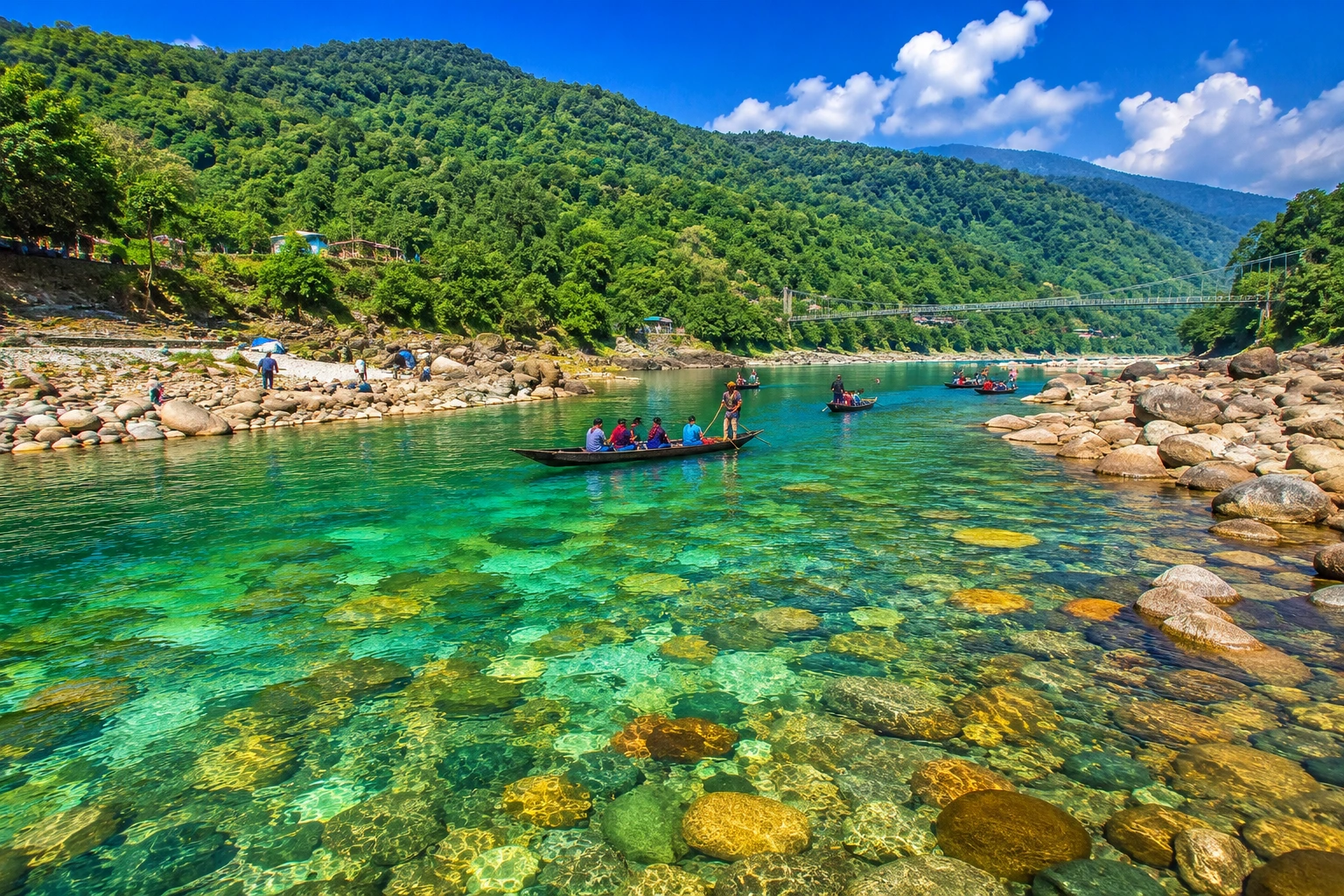
Flowing down from the Meghalaya hills, the river is renowned for its crystal-clear water and colorful stones. During the dry season, visitors can see the riverbed through the transparent water, creating one of the most photogenic scenes in Bangladesh.
Local communities have collected stones from this river for generations. Watching workers gather stones while mountains rise in the background creates a striking image of life and livelihood in northeastern Bangladesh.
For photographers, sunrise and sunset at the Piyain River offer some of the best lighting conditions in the country.
Jaflong Zero Point: Standing at the Edge of Bangladesh
One of the most famous attractions in Sylhet Jaflong is Zero Point.
This border area allows visitors to stand at the very edge of Bangladesh while gazing across into India. On clear days, the views of Meghalaya’s lush hills are spectacular.
Zero Point is especially popular among travelers because of:
- Panoramic mountain views
- River landscapes
- Border scenery
- Photography opportunities
- Peaceful natural surroundings
During winter, the area remains accessible and comfortable for sightseeing. The monsoon season transforms the landscape into a vibrant green paradise, although some areas may become flooded.
Exploring the Khasi Community and Culture
One of the most enriching experiences near Jaflong is visiting the Khasi villages.
The Khasi people are an indigenous community with a rich cultural heritage and unique traditions. Their villages are often surrounded by betel leaf gardens and forests, offering insight into a way of life that has remained largely unchanged for centuries.
Visitors can learn about:
- Traditional Khasi houses
- Betel leaf cultivation
- Local customs
- Indigenous lifestyles
- Sustainable farming practices
For travelers interested in A Cultural Tour, these villages provide a meaningful cultural experience beyond typical sightseeing.
Discover Mayabi Waterfall
Just a short distance from Jaflong lies the beautiful Mayabi Waterfall, also known as Sengram Punji Waterfall.
Hidden among greenery and village paths, the waterfall offers a peaceful retreat for nature lovers. The journey itself is part of the adventure, as visitors walk through bamboo bridges and scenic landscapes.
The waterfall becomes especially impressive during the monsoon season when water flow increases dramatically.
Travelers seeking less crowded attractions often consider Mayabi Waterfall one of Sylhet’s hidden gems.
Panthumai Waterfall: A Natural Wonder Near Jaflong
Panthumai Waterfall is another must-visit attraction in the Sylhet region.
Although the waterfall itself lies across the border in India, visitors can enjoy magnificent views from the Bangladesh side.
Surrounded by mountains, forests, and rivers, Panthumai is frequently featured among the most beautiful landscapes in Bangladesh.
Its dramatic scenery attracts photographers, nature enthusiasts, and travelers searching for unique destinations.
Walking Through Sylhet’s Tea Gardens
Sylhet is often called the tea capital of Bangladesh, and Jaflong is surrounded by some of the country’s most scenic tea estates.
Shreepur Tea Garden and Jaflong Tea Garden provide endless green landscapes stretching across rolling hills.
Visitors can:
- Walk through tea plantations
- Observe tea harvesting
- Enjoy fresh mountain air
- Capture stunning photographs
- Learn about Bangladesh’s tea industry
Those who wish to explore more of the region can combine Jaflong with a Sreemangal and Sylhet Tour, covering Bangladesh’s most famous tea-growing areas.
Best Things to Do in Sylhet Jaflong
Jaflong offers activities for every type of traveler.
Enjoy Scenic Boat Rides
Boat rides on the Piyain River provide unique perspectives of the surrounding hills and border landscapes.
Visit Tea Estates
Explore the tea gardens and experience one of Bangladesh’s most iconic industries.
Experience Indigenous Culture
Interact respectfully with local communities and learn about their traditions.
Explore Waterfalls
Visit Mayabi and Panthumai waterfalls for unforgettable natural experiences.
Capture Amazing Photographs
Jaflong is one of Bangladesh’s top destinations for landscape and travel photography.
Photography enthusiasts may also enjoy a Street Photography Tour in Dhaka to contrast rural beauty with urban life.
Best Time to Visit Jaflong
The best time to visit Jaflong depends on your travel preferences.
Winter (November to February)
- Pleasant temperatures
- Clear skies
- Ideal for sightseeing
- Best for international travelers
Monsoon (June to September)
- Lush green landscapes
- Strong waterfalls
- Dramatic scenery
- Excellent photography opportunities
Winter is generally considered the most comfortable season for travelers from the USA and Europe.
How to Reach Jaflong from Sylhet
Traveling to Jaflong is relatively easy.
By Private Car
Private vehicles provide the most comfortable experience and allow flexibility.
By Bus
Regular buses operate from Sylhet city to Jaflong.
By Microbus
Microbuses are popular for groups and day tours.
The drive typically takes between 1.5 and 2 hours depending on road conditions.
Where to Stay Near Jaflong
Accommodation options range from budget hotels to luxury resorts.
Travelers often stay in Sylhet city and visit Jaflong as a day trip.
Popular options include:
- Boutique hotels
- Resorts
- Guesthouses
- Eco-lodges
Luxury travelers may prefer staying in premium resorts before exploring Jaflong.
What to Eat in Sylhet
Sylhet is famous for its delicious cuisine.
Must-try dishes include:
- Seven-layer tea
- Traditional Sylheti dishes
- Fresh fish curry
- Beef specialties
- Local sweets
Food lovers can further explore Bangladeshi cuisine through a Dhaka Food Tour.
Responsible Tourism in Jaflong
As tourism grows, responsible travel becomes increasingly important.
Visitors should:
- Respect local communities
- Avoid littering
- Support local businesses
- Follow border regulations
- Preserve natural resources
Sustainable tourism helps ensure future generations can enjoy Jaflong’s beauty.
Beyond Jaflong: Explore More of Bangladesh
Your journey doesn’t have to end in Sylhet.
Travelers can extend their adventures with:
- North Bengal Tour to discover ancient archaeological sites.
- Sundarbans and Bagerhat Tour to explore UNESCO World Heritage Sites and mangrove forests.
- World Heritage and Historical Places Tours to uncover Bangladesh’s rich history.
- Old Dhaka and Sonargao Tour to experience centuries-old heritage and architecture.
- Discover Dhaka City for an immersive urban experience.
- Visiting Panam City to explore one of Bengal’s most iconic historical settlements.
These experiences showcase the incredible diversity that makes Bangladesh an emerging destination for international travelers.
Why Choose the Best Tour Agency in Bangladesh
Exploring Bangladesh becomes far more rewarding with knowledgeable local guides and carefully designed itineraries.
Choosing the Best Tour Agency in Bangladesh ensures:
- Expert local knowledge
- Comfortable transportation
- Cultural insights
- Responsible tourism practices
- Authentic experiences
Whether you seek nature, history, photography, or cultural immersion, professional guidance helps create unforgettable memories.
Final Thoughts on Sylhet Jaflong
Jaflong is more than a tourist destination. It is a meeting point of rivers, mountains, cultures, and stories.
From the crystal-clear Piyain River to the misty Meghalaya hills, from tea gardens to indigenous communities, every corner of Jaflong reveals another layer of Bangladesh’s natural beauty.
For travelers seeking authentic experiences beyond the usual tourist trails, Sylhet Jaflong offers a journey filled with wonder, culture, and unforgettable landscapes.
As Bangladesh continues to emerge as one of South Asia’s most exciting destinations, Jaflong remains one of its brightest treasures waiting to be discovered.
Frequently Asked Questions
What is Jaflong famous for?
Jaflong is famous for its crystal-clear Piyain River, tea gardens, stone collection activities, waterfalls, and breathtaking views of the Meghalaya hills.
How far is Jaflong from Sylhet city?
Jaflong is approximately 57 kilometers from Sylhet city and can be reached in around 1.5 to 2 hours by road.
What is the best time to visit Jaflong?
The best time to visit Jaflong is between November and February when the weather is cool and pleasant.
Is Jaflong safe for tourists?
Yes, Jaflong is generally safe for tourists. Visitors should respect local regulations and border security instructions.
Can international travelers visit Jaflong?
Absolutely. Jaflong is one of Bangladesh’s most popular destinations for international travelers.
Are there tea gardens near Jaflong?
Yes, several tea gardens including Shreepur Tea Garden and Jaflong Tea Garden are located nearby.
Is Jaflong suitable for photography?
Jaflong is considered one of the best photography destinations in Bangladesh due to its rivers, hills, tea gardens, and waterfalls.
Can I combine Jaflong with other tours in Bangladesh?
Yes. Travelers often combine Jaflong with Sreemangal and Sylhet Tour, Old Dhaka and Sonargao Tour, and World Heritage and Historical Places Tours.