If you want to experience Bangladesh beyond the busy streets, traffic, and modern skyline of Dhaka, the Sonargaon Folklore Museum offers one of the easiest and most rewarding cultural escapes from the capital.
Located in the historic Sonargaon region, the museum introduces visitors to the traditional art, crafts, objects, skills, and everyday cultural heritage that have helped shape Bangladesh for generations.
For many travelers, Sonargaon is best known for Panam Nagar. However, the Sonargaon Folklore Museum offers something very different.
Panam Nagar tells its story through historic architecture.
The museum tells the story of Bangladesh through the creativity of its people.
Here, traditional crafts, folk art, textiles, decorative objects, and representations of rural life help visitors understand how culture was created, preserved, and passed from one generation to another.
The best part is that you do not need an entire day to enjoy it.
For travelers with limited time, a visit to the Sonargaon Folklore Museum can be an excellent half-day cultural trip from Dhaka. You can explore the museum, walk around the heritage complex, appreciate the architecture of Boro Sardar Bari, and, if your schedule allows, combine the experience with nearby historic attractions.
Whether you are interested in history, art, photography, traditional crafts, or simply want to experience a quieter side of Bangladesh, this museum deserves a place on your itinerary.
What Is the Sonargaon Folklore Museum?
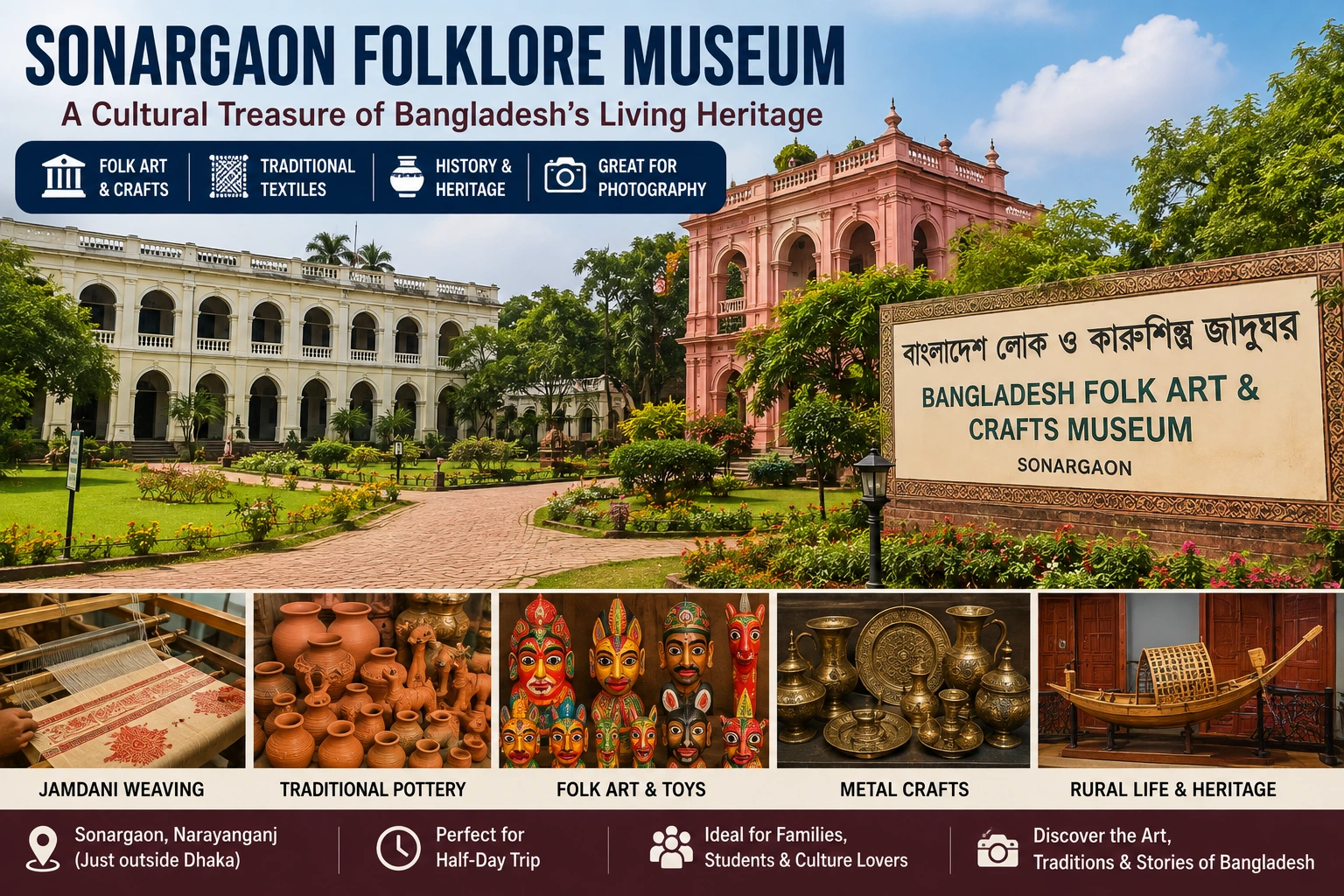
The Sonargaon Folklore Museum is widely known as the Bangladesh Folk Art and Crafts Museum and forms part of a larger cultural heritage complex in historic Sonargaon.
The museum is dedicated to preserving and presenting traditional Bangladeshi folk art and craftsmanship.
That makes it much more than a collection of old objects.
It is a place where visitors can explore the creative traditions of ordinary people.
Many of the cultural objects associated with Bangladesh’s folk heritage were created for everyday life rather than for galleries.
They were used in homes, ceremonies, celebrations, religious traditions, agriculture, transportation, and community life.
Over time, modernization changed many of these traditions.
Some objects disappeared from regular use.
Some skills became less common.
Others survived because craftspeople continued to pass their knowledge from one generation to another.
The Sonargaon Folklore Museum helps preserve that connection with the past.
For international travelers, this makes the experience particularly valuable.
You are not only learning about kings, rulers, or political history.
You are learning about the cultural lives of people.
Why Is Sonargaon Important in Bangladesh’s History?
The location itself is one of the reasons the museum is worth visiting.
Sonargaon was historically an important center in Bengal.
For centuries, the region played a major role in political, commercial, and cultural life.
Today, the area remains one of the most important heritage destinations near Dhaka.
This historical setting gives the museum additional meaning.
You are not visiting a cultural institution placed randomly inside a modern city.
You are exploring traditional Bangladeshi heritage within one of the country’s most historically significant regions.
That combination creates a richer visitor experience.
You can learn about folk traditions inside the museum and then step outside into a landscape connected to centuries of Bengali history.
This is also why the museum works so well as part of A Cultural Tour of Bangladesh.
It provides a strong introduction to traditions that continue to influence Bangladeshi identity today.
A Museum That Tells the Story of Everyday Bangladesh
One of the most interesting things about the Sonargaon Folklore Museum is its connection to everyday life.
History is often presented through major political events, rulers, wars, and famous buildings.
Folk culture tells another story.
It shows how ordinary people lived.
Traditional crafts reveal the materials people used.
Household objects reveal how homes were organized.
Textiles reveal artistic preferences and regional skills.
Decorative objects show how creativity existed outside royal courts and major cities.
This is what makes the museum particularly interesting for travelers who want a deeper understanding of Bangladesh.
Instead of asking only, “What happened here?”
The museum encourages another question:
“How did people live?”
That shift in perspective makes the experience more personal.
What Can You Expect to See at the Sonargaon Folklore Museum?
The collections focus on the traditional folk art and crafts of Bangladesh.
The exact exhibits and displays available may change over time, but visitors can expect to encounter different expressions of Bangladeshi cultural heritage.
These may include traditional examples connected with:
- Folk art
- Textiles
- Weaving
- Pottery
- Woodwork
- Metal crafts
- Decorative objects
- Traditional household items
- Rural life
- Transportation traditions
- Handmade crafts
- Regional artistic practices
The museum experience is especially interesting because these objects represent skills developed through generations.
A handcrafted object is rarely just an object.
It may represent a particular region, a family tradition, a local material, or a skill that took years to master.
When you visit, take your time.
Do not simply walk through each gallery as quickly as possible.
Look closely at the details.
Ask questions.
Consider how an object may have been made and used.
That approach can transform a simple museum visit into a much more meaningful cultural experience.
Discover the Traditional Crafts of Bangladesh
Bangladesh has a long history of craftsmanship.
For generations, artisans have worked with clay, wood, metal, textiles, bamboo, cane, and other locally available materials.
The Sonargaon Folklore Museum provides an opportunity to understand this creative heritage.
Traditional crafts were often connected directly to local life.
A craftsperson did not necessarily create an object to display in a museum.
They created something useful.
A household needed containers.
A farmer needed equipment.
A traveler needed transportation.
A family needed textiles.
A celebration required decoration.
Over time, practical needs and artistic creativity became closely connected.
That relationship is one of the most fascinating aspects of folk art.
A simple object can be functional and beautiful at the same time.
The Importance of Jamdani and Traditional Textiles
Textiles are an essential part of Bangladesh’s cultural identity.
Among the country’s most famous traditional weaving practices is Jamdani.
The delicate patterns and extraordinary skill associated with traditional weaving demonstrate how much patience and craftsmanship can exist within a single piece of fabric.
For visitors from the United States and other international destinations, seeing this cultural context can be especially interesting.
Modern fashion often separates consumers from the people who make their clothing.
Traditional weaving tells a very different story.
It reminds us that fabric can represent:
- Generational knowledge
- Artistic expression
- Cultural identity
- Local craftsmanship
- Time and patience
If textiles and handmade crafts are among your main interests, Sonargaon can be an excellent destination for learning more about Bangladesh’s artistic traditions.
Explore Boro Sardar Bari
The wider Sonargaon heritage complex adds another dimension to the museum experience.
Boro Sardar Bari is one of the notable historic structures associated with the area.
Its architecture provides a different visual experience from the museum collections.
Inside the museum, you explore objects and traditions.
Around the heritage complex, you can appreciate historic architecture and the physical environment of Sonargaon.
This combination makes the visit feel less like a conventional indoor museum trip.
You can move between galleries, open spaces, historic structures, and cultural surroundings.
For photographers, this variety can make the half-day trip particularly rewarding.
Why the Sonargaon Folklore Museum Is Worth Visiting
The answer is simple.
It provides context.
Many travelers visit a country and see famous landmarks.
They take photographs.
They learn a few historical dates.
Then they move to the next destination.
The Sonargaon Folklore Museum offers something more personal.
It helps you understand the traditions behind modern Bangladesh.
The visit can give you a stronger appreciation of:
- Bengali creativity
- Traditional craftsmanship
- Rural cultural heritage
- Handmade art
- Historical lifestyles
- Textile traditions
- Regional diversity
It is also an excellent choice for travelers who want a meaningful experience without committing an entire day to sightseeing.
A half-day trip can provide enough time to explore the museum and surrounding cultural environment at a relaxed pace.
Is Half a Day Enough for Sonargaon Folklore Museum?
Yes, if your main goal is to visit the museum and explore the immediate heritage complex.
A half-day itinerary works particularly well for travelers who:
- Have limited time in Dhaka
- Prefer cultural experiences over long travel days
- Want a relaxed itinerary
- Are interested in museums and traditional crafts
- Want to combine the visit with another Dhaka activity
A typical half-day experience can include travel from Dhaka, time to explore the museum, a walk around the heritage complex, photography, and a visit to Boro Sardar Bari or another nearby attraction depending on your available time.
However, if you also want to visit Panam Nagar, Goaldi Mosque, Jamdani weaving areas, and other Sonargaon attractions, a full-day trip may be a better choice.
The important thing is to choose an itinerary based on your interests.
There is no need to rush.
A Perfect Half-Day Itinerary From Dhaka
A practical half-day visit could follow this structure.
Start With an Early Departure From Dhaka
Leaving early gives you more flexibility.
Traffic in and around Dhaka can be unpredictable, so a comfortable schedule is always better than trying to fit too many activities into a short period.
Depending on where you are staying, arrange transportation that allows you to travel comfortably and return without unnecessary stress.
Bring comfortable shoes, drinking water, sun protection, and a camera.
Explore the Museum Galleries
Once you arrive, begin with the museum itself.
Give yourself enough time to appreciate the displays.
Do not approach the visit as a race.
The museum is most rewarding when you pay attention to details.
Look at the craftsmanship.
Think about the materials.
Imagine how the objects may have been used.
If guide services are available during your visit, local interpretation can add valuable context to the collections.
Walk Around the Heritage Complex
After exploring the museum galleries, spend time walking around the surrounding area.
The open environment provides a welcome contrast to central Dhaka.
Take photographs.
Explore the architectural details.
Slow down and enjoy the atmosphere.
For many visitors, this quieter environment becomes an important part of the experience.
Visit Boro Sardar Bari
If time allows, include Boro Sardar Bari in your visit.
The building adds an architectural layer to the cultural experience.
Its historic character creates a natural transition between the museum’s collections and the wider history of Sonargaon.
Return to Dhaka or Continue Exploring
At this point, you have two options.
You can return to Dhaka and continue with another activity.
Or you can extend your journey toward nearby historic attractions.
Travelers with more time may want to continue Visiting Panam City and explore the historic streets of Panam Nagar.
If your main goal is a shorter cultural experience, however, the museum itself can provide a satisfying half-day trip.
Sonargaon Folklore Museum vs. Panam City: Which Should You Visit?
Ideally, both.
However, they offer very different experiences.
The Sonargaon Folklore Museum focuses on culture, traditional crafts, objects, and the everyday artistic heritage of Bangladesh.
Panam Nagar focuses more heavily on historic architecture and the physical remains of a former commercial settlement.
Choose the museum if you are most interested in:
- Art
- Traditional crafts
- Textiles
- Bengali culture
- Museum collections
- Folk heritage
Choose Panam Nagar if you are most interested in:
- Architecture
- Photography
- Historic streets
- Urban heritage
- Atmospheric ruins
If you have a full day, combining both can create a more complete Sonargaon experience.
An Old Dhaka and Sonargao Tour can also be a strong choice for travelers who want to connect the historic heart of Dhaka with one of Bengal’s most important heritage regions.
Is the Museum Good for First-Time Visitors to Bangladesh?
Yes.
In fact, it can be one of the best introductions to the country.
Bangladesh is often experienced through its energy.
Visitors remember the streets of Dhaka, colorful markets, river traffic, food, and the warmth of local people.
The museum adds another layer.
It helps explain where many of the country’s artistic and cultural traditions come from.
For first-time visitors, this can make later experiences more meaningful.
After learning about traditional crafts, you may begin noticing handmade products differently.
After understanding folk culture, you may see connections between museum collections and objects still used in local communities.
That is the real value of a good museum.
It changes the way you see the world outside its walls.
Is Sonargaon Folklore Museum Good for Families?
Yes, particularly for families interested in culture and educational travel.
Children can encounter objects and traditions that are very different from their everyday lives.
Adults can appreciate the historical and artistic context.
The open surroundings also make the visit feel less confined than a traditional city museum.
Families should still plan according to their own travel style.
Young children may enjoy a shorter visit combined with time outdoors.
Older children and teenagers interested in history, art, or photography may enjoy spending more time exploring.
A Great Destination for Photography
The museum and surrounding heritage environment can also appeal to photographers.
While Panam Nagar may offer more dramatic historic street scenes, the Sonargaon Folklore Museum provides a different visual experience.
You may find opportunities to photograph:
- Traditional architecture
- Decorative details
- Cultural objects
- Landscaped surroundings
- Historic buildings
- Folk art
- Craftsmanship
The goal should not simply be to collect photographs.
Try to tell a story.
Capture the details that represent Bangladeshi culture.
If photography is a major part of your Bangladesh itinerary, you may also enjoy a Street Photography Tour in Dhaka for a completely different visual experience.
Dhaka offers movement and urban life.
Sonargaon offers heritage, craftsmanship, and a slower cultural environment.
Best Time to Visit Sonargaon Folklore Museum
The cooler months are generally more comfortable for combining indoor and outdoor sightseeing.
Many international travelers find the period from late autumn through early spring particularly pleasant for exploring cultural attractions near Dhaka.
However, Sonargaon can be visited throughout the year.
During warmer months, an earlier departure can make the trip more comfortable.
During the rainy season, the surrounding environment can become greener, although outdoor plans may need more flexibility.
Because opening schedules, visitor access, exhibitions, and special events can change, it is always wise to confirm current arrangements before traveling.
What Should International Travelers Know Before Visiting?
A visit to the Sonargaon Folklore Museum is generally straightforward, but a little preparation can improve the experience.
Wear comfortable clothing.
Bring comfortable walking shoes.
Carry drinking water.
Keep your itinerary flexible.
Allow extra time for traffic when traveling from Dhaka.
If you are particularly interested in a specific cultural subject, consider asking about available guides or current exhibitions when you arrive.
International visitors should also remember that Bangladesh is a culturally rich but rapidly changing destination.
A flexible and curious approach will make the experience more rewarding.
Do not arrive expecting a museum experience identical to one in New York, London, or Paris.
The value of Sonargaon comes from its own cultural context.
That is exactly what makes it worth visiting.
How Sonargaon Fits Into a Larger Bangladesh Itinerary
A half-day museum visit can be the beginning of a much larger journey through Bangladesh.
For travelers staying in Dhaka, Sonargaon provides a cultural contrast to the capital.
Afterward, you may continue exploring Discover Dhaka City and experience the different personalities of Old and New Dhaka.
If you are planning a longer journey through the country, Bangladesh offers extraordinary variety.
You can move from historic Sonargaon to tea gardens in the northeast through a Sreemangal and Sylhet Tour.
You can explore the world’s largest mangrove forest and historic architecture through a Sundarbans and Bagerhat Tour.
For travelers interested in heritage, World Heritage and Historical Places Tours can help connect different periods of Bangladesh’s history into a more complete travel experience.
This diversity is one of Bangladesh’s greatest advantages as a travel destination.
Within one trip, you can experience cities, rivers, forests, tea gardens, historic settlements, traditional crafts, and coastal landscapes.
Why a Guided Visit Can Add More Value
You can visit the museum independently.
However, a guided experience can help you understand what you are seeing.
Traditional objects often become more meaningful when you know:
- Where they came from
- How they were made
- Who used them
- What they represented
- Whether similar traditions still exist
A knowledgeable guide can connect these details.
That is especially useful for international travelers who may not be familiar with Bangladeshi history or Bengali folk culture.
When choosing the Best Tour Agency in Bangladesh for a cultural experience, look beyond transportation.
The real value should come from local knowledge, thoughtful planning, flexibility, and the ability to explain the cultural significance of the places you visit.
A good cultural experience should leave you with more than photographs.
It should leave you with understanding.
Is Sonargaon Folklore Museum Worth a Half-Day Trip From Dhaka?
Yes.
If you only have a limited amount of time in Dhaka, the Sonargaon Folklore Museum can provide one of the most meaningful cultural experiences available outside the city.
It offers history without requiring an entire day.
It introduces you to traditional crafts.
It provides insight into Bengali culture.
It allows you to explore a historically important region.
And it can be combined with other nearby attractions if you decide to extend your itinerary.
The museum is especially worthwhile if you are the kind of traveler who enjoys understanding a destination rather than simply seeing it.
You may arrive expecting a collection of traditional objects.
You may leave with a better understanding of the creativity, craftsmanship, and cultural identity that continue to shape Bangladesh.
That is why the Sonargaon Folklore Museum is worth adding to your Dhaka itinerary.
FAQ
What is the Sonargaon Folklore Museum?
The Sonargaon Folklore Museum, also known as the Bangladesh Folk Art and Crafts Museum, is a cultural institution dedicated to preserving and presenting traditional Bangladeshi folk art, crafts, and cultural heritage.
Is Sonargaon Folklore Museum worth visiting?
Yes. It is worth visiting for travelers interested in Bangladeshi culture, traditional crafts, textiles, folk art, history, and cultural heritage.
How long do you need at Sonargaon Folklore Museum?
Most visitors can enjoy the museum and surrounding heritage complex in a few hours. A half-day trip is a practical option if the museum is your main destination.
Can I visit Sonargaon Folklore Museum from Dhaka in half a day?
Yes. A half-day trip is possible, especially if you focus on the museum and its immediate surroundings. Travel time can vary depending on traffic and your starting location in Dhaka.
What can I see at Sonargaon Folklore Museum?
Visitors can explore displays and collections connected to traditional Bangladeshi folk art, crafts, textiles, handmade objects, rural culture, and other aspects of cultural heritage.
Who should visit Sonargaon Folklore Museum?
The museum is particularly suitable for history lovers, cultural travelers, photographers, families, art enthusiasts, students, and first-time visitors who want to understand Bangladesh beyond its major landmarks.
Can I combine Sonargaon Folklore Museum with Panam City?
Yes. If you have a full day, the museum can be combined with Panam Nagar and other attractions in Sonargaon. A half-day visit is better if you prefer a slower museum-focused experience.
Is Sonargaon Folklore Museum good for photography?
Yes. The museum complex and surrounding heritage environment offer opportunities to photograph traditional architecture, decorative details, cultural objects, and the wider landscape.
What is the best time to visit Sonargaon Folklore Museum?
The cooler and drier months are generally comfortable for sightseeing, but the museum can be visited throughout the year. It is best to confirm current visitor schedules before planning your trip.
Is Sonargaon Folklore Museum suitable for international travelers?
Yes. The museum is an excellent destination for international travelers interested in authentic cultural experiences, traditional crafts, Bengali heritage, and the history of Bangladesh.
Do I need a guide to visit Sonargaon Folklore Museum?
A guide is not essential, but guided interpretation can add significant value by explaining the history, craftsmanship, cultural meaning, and context behind the objects and traditions you encounter.