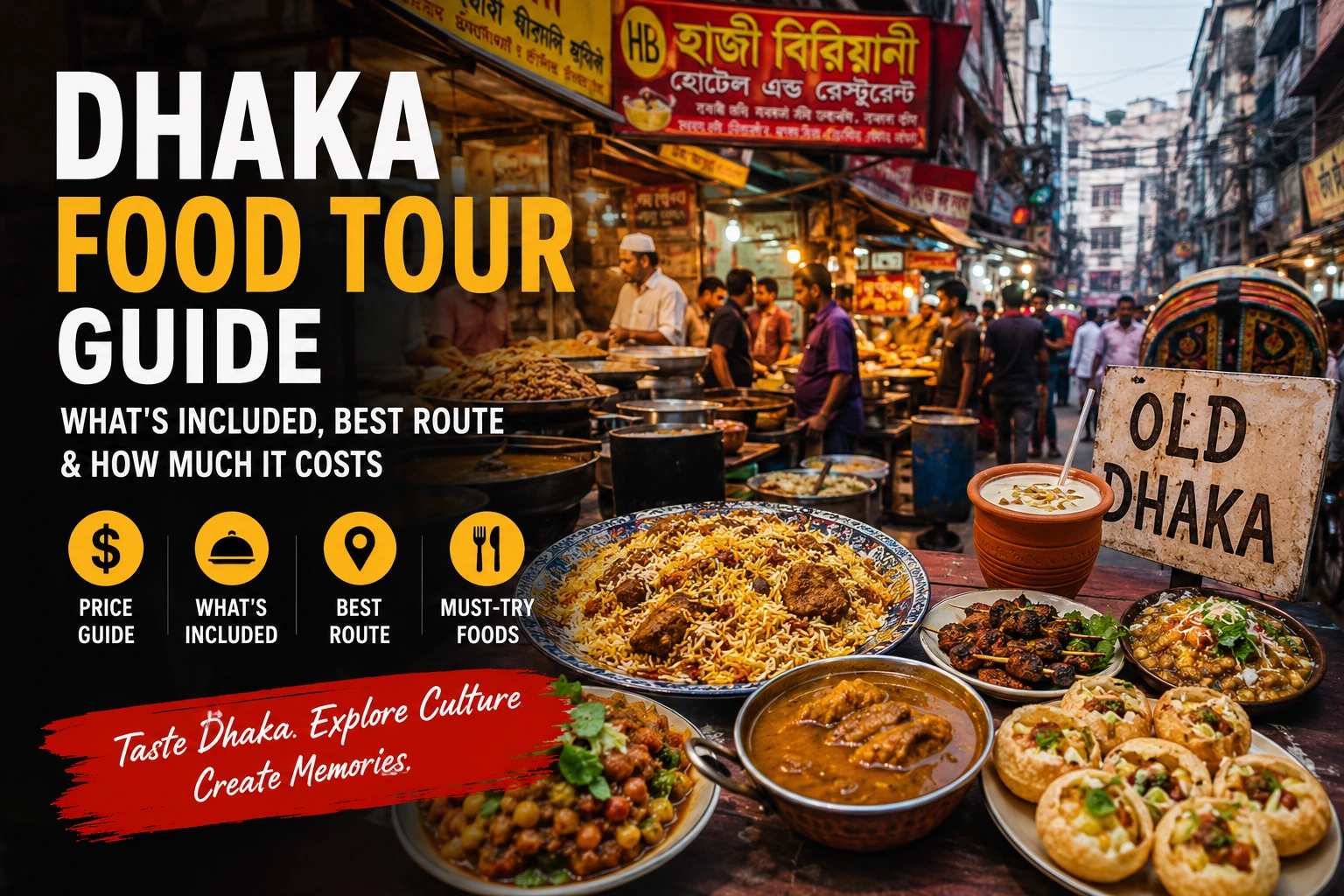
If you are planning to visit Bangladesh and want to experience Dhaka beyond its famous landmarks, a food tour can be one of the best ways to understand the city.
Dhaka is not a destination where food is limited to restaurants with polished menus. Some of the city’s most memorable flavors are found in Old Dhaka’s historic lanes, century-old eateries, local markets, traditional bakeries, roadside stalls, and busy neighborhood food spots.
From aromatic kacchi biryani and traditional bakarkhani to spicy fuchka, chotpoti, kebabs, lacchi, and Bangladeshi sweets, the capital offers an intense and diverse culinary experience.
But before booking, most travelers have the same questions:
How much does a Dhaka food tour cost? What is included? Which foods will you try? Is Old Dhaka street food safe? And is a guided food tour worth the price?
For travelers searching for the Dhaka food tour price, a typical guided experience can vary depending on the duration, number of participants, whether the tour is private, and what is included. Shorter food tours may start around the 60–70 range per person, while private, customized, or longer experiences can cost significantly more.
However, the price alone does not tell you whether a tour offers good value.
A well-planned Dhaka Food Tour should combine authentic local food, knowledgeable guidance, cultural context, efficient transportation, and carefully selected stops. The goal is not simply to eat as much as possible. It is to understand the food culture of Bangladesh while experiencing parts of Dhaka that many first-time visitors would struggle to discover independently.
This guide explains the Dhaka food tour price, what should be included, the best food route through Old Dhaka, the dishes worth trying, food safety considerations, and how to choose the right experience for your trip.
Dhaka Food Tour Price: How Much Does It Cost?
Quick Answer
A typical Dhaka food tour price for a shorter guided experience may start at approximately $60 to $70 per person. Private, customized, or longer tours may cost anywhere from $100 to $250 or more, depending on the itinerary, transportation, group size, guide, and number of food tastings.
Prices can change based on the travel season and the individual tour operator, so travelers should always confirm the latest rate before booking.
The biggest factors affecting the cost are:
- Tour duration
- Private or shared experience
- Number of participants
- Number of food tastings
- Transportation
- English-speaking guide
- Customized itinerary
- Entrance fees or cultural activities
- Hotel pickup and drop-off
The cheapest option is not always the best value.
For example, a lower-priced experience may include only a few food samples and basic guidance. A higher-priced private experience may include transportation, several food tastings, local expertise, flexible timing, and cultural exploration.
For international travelers with limited time in Dhaka, those additional elements can make a significant difference.
Typical Dhaka Food Tour Cost by Experience Type
| Food Tour Type | Typical Duration | Expected Price Range | Best For |
| Short food walking tour | 2–3 hours | Around 60–80 per person | Travelers with limited time |
| Old Dhaka food tour | 3–4 hours | Around 70–150+ | First-time visitors |
| Private Dhaka food tour | 3–6 hours | Around 100–250+ | Couples, families, private groups |
| Customized food and cultural tour | Half day or full day | Varies by itinerary | Travelers wanting a complete experience |
| Premium private experience | 4+ hours | $200+ | Luxury and personalized travel |
These are general planning ranges rather than fixed prices.
When comparing the Dhaka food tour price, always ask one important question:
What exactly is included in the cost?
That will help you compare experiences more accurately.
What Should Be Included in a Dhaka Food Tour?
A good food tour should feel like a complete experience rather than simply a guide taking you to a restaurant.
The strongest tours combine food, culture, history, transportation, and local knowledge.
Here are the most important things to look for.
Multiple Authentic Food Tastings
A Dhaka food tour should introduce you to several different flavors and food traditions.
Depending on the itinerary, you may try:
- Kacchi biryani
- Tehari
- Fuchka
- Chotpoti
- Bakarkhani
- Kebabs
- Singara
- Dal puri
- Traditional sweets
- Lacchi
- Falooda
- Bangladeshi tea
The exact foods may change depending on the time of day, season, availability, and location.
That flexibility can actually improve the experience because food should be selected based on freshness and quality rather than forcing every tour to follow the same fixed menu.
A Knowledgeable English-Speaking Guide
For many visitors from the United States, Canada, Europe, Australia, and other international markets, the guide can be just as valuable as the food.
Dhaka’s cuisine is connected to its history.
Old Dhaka’s food traditions have been influenced by Mughal cuisine, Bengali cooking, trade, migration, religion, and generations of family-run food businesses.
A knowledgeable guide can explain:
- Why certain foods became famous in Old Dhaka
- How Bangladeshi food differs from Indian cuisine
- The cultural history behind local dishes
- What locals usually eat
- Which foods are seasonal
- How food preparation differs between neighborhoods
- Why particular restaurants became famous
Without local context, you may enjoy a good meal.
With local context, you understand the story behind it.
Local Transportation
Old Dhaka is best explored partly on foot, but transportation can make the experience more comfortable and efficient.
Depending on the route, local transportation may include:
- Rickshaw
- CNG auto-rickshaw
- Private vehicle
- Walking between nearby food stops
A rickshaw ride can also become part of the cultural experience.
For first-time visitors, moving through Old Dhaka’s narrow streets can be challenging. A local guide who understands the area can help create a smoother and more enjoyable route.
Bottled Water
Dhaka can be hot and humid, especially during warmer months.
A food tour involving walking and multiple food stops should provide or make bottled drinking water easily available.
International travelers should generally avoid untreated tap water.
Flexible Food Preferences
Before booking, travelers should ask whether the experience can accommodate:
- Vegetarian preferences
- Food allergies
- Mild spice preferences
- Religious dietary requirements
- Specific food restrictions
Bangladeshi food can be highly customizable, but communication before the tour is important.
What Is the Best Route for a Dhaka Food Tour?
For most first-time visitors, the best food route is centered around Old Dhaka.
Old Dhaka is one of the most historically significant and culturally rich parts of the capital. Its narrow streets, traditional markets, old neighborhoods, mosques, restaurants, bakeries, and food stalls create an environment that is very different from modern Dhaka.
A well-planned route should balance food with cultural exploration.
Here is an ideal structure for a Dhaka culinary experience.
Stop 1: Begin With a Traditional Bangladeshi Breakfast or Snack
Starting with a lighter local dish helps introduce travelers to Bangladeshi flavors before moving into heavier meals.
Depending on the time of day, the first stop might include:
- Paratha
- Dal
- Singara
- Puri
- Traditional sweets
- Tea
This gives travelers an opportunity to learn about everyday eating habits in Bangladesh.
Stop 2: Explore the Historic Streets of Old Dhaka
The journey between food stops is part of the experience.
Old Dhaka is not designed like a modern tourist district. The streets can be narrow, busy, noisy, and full of activity.
That is exactly what makes the area memorable.
As you move through the neighborhood, you may encounter:
- Traditional markets
- Local workshops
- Historic buildings
- Mosques
- Small restaurants
- Street vendors
- Rickshaws
- Everyday neighborhood life
A guided experience helps turn this environment into a story rather than simply a confusing maze of streets.
Stop 3: Try Famous Old Dhaka Biryani
Biryani is one of the most recognizable foods associated with Dhaka.
Old Dhaka is particularly famous for its rich and aromatic biryani traditions.
The dish typically combines:
- Fragrant rice
- Meat
- Spices
- Potatoes in some variations
- Mustard oil or other distinctive local ingredients
Kacchi biryani is particularly popular among visitors.
However, a good food experience should explain that Bangladeshi biryani is not a single dish with one standard recipe.
Different restaurants, neighborhoods, and families have their own approaches.
That variation is part of what makes the food culture interesting.
Stop 4: Experience Dhaka Street Food
A Dhaka street food tour would not be complete without trying some of the city’s most popular snacks.
Two of the most recognizable options are fuchka and chotpoti.
Fuchka
Fuchka consists of crisp, hollow shells filled with ingredients such as mashed potato, chickpeas, spices, and flavored tamarind water.
The flavor can be:
- Spicy
- Tangy
- Sweet
- Sour
For many travelers, fuchka is one of the most memorable street-food experiences in Bangladesh.
Chotpoti
Chotpoti is a warm and flavorful dish that can include:
- Chickpeas
- Potatoes
- Eggs
- Green chilies
- Tamarind
- Fresh herbs
- Local spices
It is a great example of how Bangladeshi street food layers multiple flavors and textures into a single dish.
Stop 5: Taste Traditional Bakarkhani
Bakarkhani is strongly associated with the culinary heritage of Old Dhaka.
This traditional bread-like snack has a distinctive texture and flavor.
Trying bakarkhani gives visitors an opportunity to explore a part of Dhaka’s food culture that is very different from the biryani and street-food dishes that usually dominate international travel content.
It is also a reminder that food history is not only preserved in famous restaurants.
Sometimes it survives through small bakeries and family traditions.
Stop 6: Try Local Kebabs and Savory Foods
Old Dhaka has a strong tradition of meat-based dishes and kebabs.
Depending on the route, visitors may encounter:
- Seekh kebabs
- Chicken kebabs
- Beef preparations
- Grilled foods
- Traditional snacks
These dishes can offer another perspective on the influence of Mughal and regional culinary traditions.
Stop 7: Visit a Traditional Sweet Shop
Bangladeshi cuisine has a wide variety of traditional sweets.
A food tour can include desserts made with:
- Milk
- Chhena
- Sugar syrup
- Rice
- Coconut
- Seasonal fruits
The available options may vary by season.
A sweet stop provides a natural transition after exploring spicy and savory foods.
Stop 8: Finish With Lacchi, Falooda, or Tea
A good Dhaka Food Tour should end at a relaxed pace.
Traditional lacchi can be refreshing after spicy foods, while falooda provides a more elaborate dessert experience.
Tea is another important part of Bangladeshi everyday culture.
The final stop can give travelers time to discuss their favorite foods and ask questions about the city.
What Foods Should You Try on a Dhaka Food Tour?
If you are visiting Bangladesh for the first time, these are some of the most important foods to look for.
Kacchi Biryani
One of the most famous dishes in Bangladesh.
It is rich, aromatic, filling, and deeply connected with Dhaka’s food identity.
Tehari
A flavorful rice dish that is another important part of Bangladeshi cuisine.
It can offer a different flavor profile from kacchi biryani.
Fuchka
A must-try for travelers interested in authentic street food.
Chotpoti
A popular local snack combining chickpeas, spices, potatoes, tamarind, and other ingredients.
Bakarkhani
One of Old Dhaka’s most distinctive traditional foods.
Kebabs
A food tour may include different grilled or spiced meat preparations.
Lacchi
A yogurt-based drink that can help balance spicy food.
Falooda
A sweet and colorful dessert drink with multiple textures.
Traditional Bangladeshi Sweets
The exact selection depends on where you go and what is available.
Is a Dhaka Food Tour Worth the Price?
Short Answer: Yes, Especially for First-Time Visitors
You can eat very cheaply in Dhaka without booking a guided experience.
The cost of food itself is not the main reason to take a tour.
The value comes from:
- Local knowledge
- Time saved
- Carefully selected food stops
- Cultural context
- Easier navigation
- Language assistance
- Transportation planning
- Food recommendations
- A more efficient itinerary
For a traveler visiting Dhaka for only two or three days, independent research can take hours.
A local guide can help you experience the city’s food culture in a much shorter amount of time.
The real value is not simply how much food you eat.
It is how much of Dhaka you understand through food.
Private vs. Group Dhaka Food Tours
Your choice between a private and group experience will affect the Dhaka food tour price.
Private Food Tour
A private experience is generally better if you want:
- Flexible start times
- Customized food choices
- More photography opportunities
- A slower pace
- Private transportation
- Family-friendly planning
- Personalized cultural explanations
Private tours are often particularly suitable for couples, families, and travelers who prefer flexibility.
Group Food Tour
A group experience can be a better option if you:
- Want a lower per-person cost
- Enjoy meeting other travelers
- Do not require a customized itinerary
- Are comfortable following a fixed schedule
Before booking, check whether the price is listed:
- Per person
- Per group
- For a minimum number of travelers
This can significantly affect the final cost.
Is Old Dhaka Street Food Safe for American Travelers?
Street food safety is an important consideration for international visitors.
The answer depends on where and what you eat.
A knowledgeable local guide can help you select vendors where food is freshly prepared and where there is regular customer turnover.
However, travelers should still take sensible precautions.
Food Safety Tips for International Travelers
- Drink sealed bottled water.
- Avoid untreated tap water.
- Choose freshly cooked food.
- Be cautious with raw ingredients if you have a sensitive stomach.
- Tell your guide about food allergies.
- Ask for less spice if needed.
- Carry necessary personal medication.
- Do not assume every street-food stall has the same hygiene standards.
A guided food tour can reduce uncertainty, but it cannot completely eliminate travel-related food risks.
Travelers with serious allergies or medical dietary requirements should communicate them before booking.
Best Time of Year for a Dhaka Food Tour
The best time for a food-focused experience depends partly on weather.
For many international travelers, the cooler and drier months are generally more comfortable for walking through Old Dhaka.
During hotter months, an afternoon or evening tour may feel more comfortable than a long midday walking experience.
Ramadan can also create a unique food experience.
During this period, Dhaka’s food culture changes significantly in the evening, with special foods and busy markets appearing before iftar.
For travelers interested in seasonal culture, this can provide a completely different perspective on the city.
Best Time of Day for a Dhaka Food Tour
The ideal time depends on what you want to eat.
Morning
Best for:
- Traditional breakfast
- Fresh bakery products
- Tea
- Local snacks
- Cooler temperatures
Afternoon
Best for:
- A combination of sightseeing and food
- Restaurant meals
- Cultural exploration
Evening
Best for:
- Street-food atmosphere
- Busy local food stalls
- Snacks
- Desserts
- A more energetic atmosphere
A flexible itinerary can often provide a better experience than a rigid schedule.
How Long Should a Dhaka Food Tour Last?
For most visitors, three to four hours is a good length.
This gives enough time to:
- Explore Old Dhaka
- Visit several food stops
- Try different types of food
- Learn about local culture
- Use local transportation
- Take photographs
A two-hour experience may be suitable for travelers with limited time.
A half-day experience is better for travelers who want to combine food with history and cultural exploration.
A full-day customized experience may include additional neighborhoods and a broader look at Bangladeshi cuisine.
A Sample Half-Day Dhaka Food Tour Itinerary
Here is an example of what a balanced itinerary could look like.
9:00 AM – Meet Your Local Guide
Discuss food preferences, allergies, spice tolerance, and the day’s route.
9:30 AM – Traditional Breakfast or Local Snack
Start with lighter foods and learn about everyday Bangladeshi eating habits.
10:15 AM – Explore Old Dhaka
Walk through historic streets and observe markets, rickshaws, architecture, and local life.
11:00 AM – Street Food Tasting
Try freshly prepared fuchka, chotpoti, or another local specialty.
12:00 PM – Traditional Biryani
Enjoy one of Dhaka’s most famous culinary experiences.
1:00 PM – Bakarkhani or Traditional Snack
Explore another side of Old Dhaka’s food heritage.
1:30 PM – Bangladeshi Sweets
Visit a local sweet shop and try traditional desserts.
2:00 PM – Lacchi, Falooda, or Tea
Finish the experience with a refreshing drink or dessert.
This type of itinerary provides a balance between food, culture, walking, and rest.
How to Choose the Best Dhaka Food Tour
Not every food tour offers the same experience.
Before booking, consider the following factors.
Check the Number of Food Tastings
Ask whether the experience includes:
- A full meal
- Multiple small tastings
- Drinks
- Desserts
- Street-food samples
More stops do not always mean a better experience, but variety is important.
Ask About Transportation
Old Dhaka can involve a significant amount of walking.
Check whether the price includes:
- Rickshaw rides
- CNG auto-rickshaw transportation
- Private vehicle
- Hotel pickup
- Hotel drop-off
Check the Guide’s Local Knowledge
A good guide should understand more than restaurant menus.
They should be able to explain:
- Food history
- Local traditions
- Neighborhood culture
- Ingredient differences
- Eating customs
- The stories behind famous dishes
Confirm Dietary Requirements
Contact the operator before booking if you have:
- Food allergies
- Vegetarian requirements
- Religious dietary restrictions
- Severe spice sensitivity
Do not assume every experience can accommodate every dietary need.
Look for a Clear Itinerary
The itinerary should explain:
- Duration
- General meeting area
- Food stops
- Transportation
- Inclusions
- Exclusions
- Physical activity level
Clear information is particularly important for international travelers planning from overseas.
Dhaka Food Tour for US Travelers: What to Know Before Booking
Travelers from the United States often arrive in Bangladesh with limited time and little familiarity with Dhaka’s geography.
The city can feel very different from destinations with highly structured tourist infrastructure.
That is not necessarily a disadvantage.
It can make the experience more authentic.
But it also means preparation matters.
Before booking, US travelers should consider:
Currency
Bangladesh uses the Bangladeshi Taka.
Tour prices may be displayed in US dollars for international travelers, while additional purchases are often made in local currency.
Food Spice Level
Bangladeshi food can be spicy, but not every dish has to be extremely hot.
Tell your guide about your spice preference.
Walking Conditions
Old Dhaka involves walking on busy streets and uneven surfaces.
Comfortable shoes are recommended.
Weather
Dhaka can be hot and humid.
Light clothing, bottled water, and sun protection can improve comfort.
Travel Time
Traffic in Dhaka can be unpredictable.
Allow extra time when traveling to your meeting point.
Travel Insurance
International travelers should consider appropriate travel insurance before visiting Bangladesh.
A food tour should be one enjoyable part of a broader travel plan rather than your only preparation for the trip.
Why Old Dhaka Is the Heart of a Dhaka Culinary Experience
Modern Dhaka has restaurants representing cuisines from around the world.
You can find international hotels, modern cafés, fast-food chains, and contemporary restaurants.
But Old Dhaka offers something different.
Its food is closely connected to place.
The neighborhood itself becomes part of the meal.
You hear the traffic.
You see rickshaws moving through narrow streets.
You watch vendors prepare food.
You smell spices, grilled meat, baked goods, and sweets.
You see local customers eating foods they have known for years.
That environment cannot be recreated inside a modern shopping mall.
For travelers looking for an authentic Bangladesh food tour, Old Dhaka provides both culinary variety and cultural depth.
How to Get the Best Value From Your Dhaka Food Tour Price
The best strategy is not necessarily to find the lowest price.
Instead, compare the complete experience.
Before booking, ask:
- How many food tastings are included?
- Is transportation included?
- Is the experience private or shared?
- How long does the tour last?
- Is bottled water included?
- Can dietary preferences be accommodated?
- Does the guide speak English?
- Does the itinerary include Old Dhaka?
- Are there any additional fees?
- Can the itinerary be customized?
These questions will help you understand the real value behind the advertised Dhaka food tour price.
Dhaka Food Tour Price: Final Thoughts
A food tour is one of the most immersive ways to experience Bangladesh’s capital.
For travelers searching for the Dhaka food tour price, expect the cost to vary based on duration, group size, privacy, transportation, and the number of experiences included.
Shorter guided tours may begin around the 60–70 range, while longer and more personalized private experiences can cost more.
But the best food tour is not simply the one with the lowest price.
It is the one that gives you access to authentic food, local knowledge, cultural stories, and neighborhoods that help you understand Dhaka on a deeper level.
From biryani and bakarkhani to fuchka, chotpoti, kebabs, sweets, and traditional drinks, Dhaka’s food culture is diverse, intense, and deeply connected to the city’s history.
For first-time visitors, a guided experience can remove much of the uncertainty involved in exploring a new city.
Instead of spending your limited travel time researching restaurants, navigating unfamiliar streets, and wondering what to order, you can focus on the experience itself.
A well-designed Dhaka Food Tour does more than introduce you to Bangladeshi food.
It introduces you to Dhaka.
FAQ
How much is a Dhaka food tour?
The Dhaka food tour price can start at approximately 60–70 per person for a shorter guided experience. Private, customized, or longer tours may cost 100–250 or more depending on the itinerary, group size, transportation, and inclusions.
What is included in a Dhaka food tour?
Inclusions vary by operator, but a good food tour may include multiple food tastings, an English-speaking local guide, bottled water, local transportation, and cultural exploration. Always check the exact inclusions before booking.
Is food included in the Dhaka food tour price?
Most food tours include selected tastings or meals, but the number and type of food stops can vary. Check whether the advertised price includes all food, drinks, transportation, and additional fees.
What food will I try on a Dhaka food tour?
You may try kacchi biryani, tehari, fuchka, chotpoti, bakarkhani, kebabs, traditional Bangladeshi sweets, lacchi, falooda, and other local specialties depending on the route and availability.
Is Old Dhaka the best place for a food tour?
Yes. Old Dhaka is one of the best areas for a food tour because it combines traditional food, historic neighborhoods, local markets, famous restaurants, bakeries, and authentic street-food culture.
Is Dhaka street food safe for tourists?
Street-food safety depends on the vendor and food preparation. Choose freshly prepared food, drink sealed bottled water, and communicate any allergies or dietary concerns. A knowledgeable local guide can help identify suitable food stops.
Is a private Dhaka food tour worth it?
A private food tour can be worth the higher price if you want flexibility, customized food choices, a personalized itinerary, private transportation, or a slower pace.
How long does a Dhaka food tour take?
Most food tours take approximately two to four hours. A half-day experience allows more time for cultural exploration and additional food stops, while customized experiences can last longer.
What is the best time for a Dhaka food tour?
Morning is ideal for traditional breakfast foods, while afternoon and evening can offer a wider street-food experience. Cooler months are generally more comfortable for walking through Old Dhaka.
Can American travelers eat Bangladeshi street food?
Yes, but travelers should take sensible food and water precautions. Choose freshly prepared food, drink sealed bottled water, and inform your guide about allergies or dietary restrictions.
Do I need to book a Dhaka food tour in advance?
Booking in advance can be helpful, especially if you want a private guide, have specific dietary requirements, or are traveling during a busy period.
Is a Dhaka food tour suitable for first-time visitors to Bangladesh?
Yes. A guided food tour can be particularly useful for first-time visitors because it provides local knowledge, easier navigation, food recommendations, cultural context, and a structured way to explore Old Dhaka.