Bangladesh rarely feels like a destination designed around tourists—and that is part of what makes traveling here memorable.
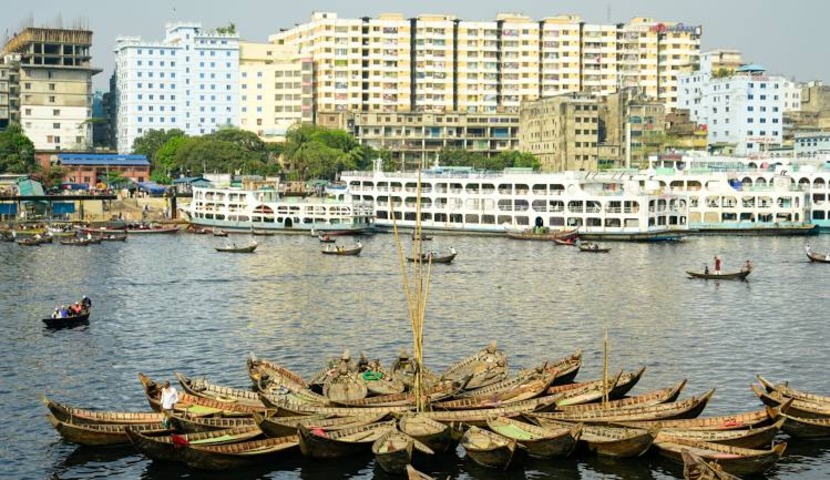
You may begin a morning among the rickshaws and historic streets of Old Dhaka, spend another day walking through tea country near Sreemangal, and later find yourself traveling by boat through landscapes where rivers still shape everyday life.
But Bangladesh also rewards preparation.
Traffic can completely change your schedule. Cash remains important outside major urban areas. Weather influences everything from road travel to river journeys, and cultural expectations may be different from what first-time visitors from the United States, Canada, Australia or Europe are accustomed to.
If you are planning your first trip, these 15 Bangladesh travel tips will help you arrive with realistic expectations and experience the country more confidently.
Bangladesh Travel Essentials at a Glance
Capital: Dhaka
Currency: Bangladeshi Taka (BDT)
Official language: Bangla (Bengali)
Most comfortable travel season: Generally November to February
Typical tourist trip: Around 7–14 days for a first visit
Payment: Carry cash alongside cards
Internet: Mobile data is widely available, although coverage varies
Clothing: Lightweight, modest clothing works best
Drinking water: Use safely treated or sealed bottled water
Transport: Allow generous time, particularly in Dhaka
Health preparation: Discuss vaccines and destination-specific risks with a travel-health professional
Key planning rule: Check visa, weather, transport and official travel advice shortly before departure
1. Check Your Bangladesh Visa Requirements Before Booking
Do not assume that every nationality follows the same entry procedure.
Bangladesh has different visa arrangements depending on nationality, purpose of travel and individual circumstances. Visa on Arrival may be available to eligible travelers, but eligibility should never be treated as guaranteed simply because another traveler received one previously.
Before buying nonrefundable arrangements, check the current requirements applicable to your passport through an official Bangladesh diplomatic mission or immigration authority.
If you intend to rely on Visa on Arrival, confirm the latest eligibility, required documents, fees, acceptable payment method, passport validity requirements and evidence you may need to show at immigration.
Keep your accommodation details, onward or return travel information and local contact information accessible when arriving.
Practical rule: Treat a blog—including this one—as planning guidance, not immigration authorization.
2. Choose the Right Time to Visit Bangladesh
For most first-time international travelers, November through February provides the most comfortable conditions.
Temperatures are generally cooler and conditions are better suited to walking tours, heritage sites and longer days outdoors.
March and April become progressively hotter.
The monsoon changes the experience considerably. Rain transforms rural Bangladesh into an intensely green landscape, but it can also bring flooding, waterlogging, transport delays and disruptions to outdoor itineraries.
That does not mean Bangladesh should automatically be avoided during the rainy season. It means your itinerary needs more flexibility.
The best time to visit ultimately depends on what you want to experience.
Winter is easier for a broad first trip. Monsoon can be atmospheric for photography and river landscapes, while specific festivals, wildlife experiences and seasonal destinations may have their own ideal periods.
3. Carry Bangladeshi Taka, Not Just a Credit Card
The local currency is the Bangladeshi Taka (BDT).
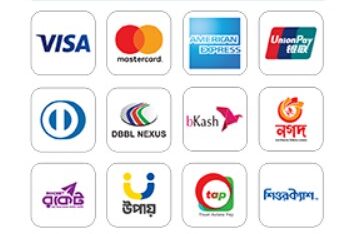
Cards are accepted by many higher-end hotels, restaurants, shopping centers and businesses in major cities, but Bangladesh is not a destination where international travelers should depend entirely on card payments.
Cash becomes increasingly useful in local markets, small restaurants, rural areas, roadside stops and when using certain forms of local transport.
Carry enough cash for normal daily expenses while keeping the remainder securely stored.
ATMs are available in major cities and towns, but your foreign card may not work in every machine. Bank limits, international transaction settings and temporary network problems can also interfere with withdrawals.
Tell your bank about your travel if required and carry more than one payment option.
Avoid displaying large amounts of cash in public.
4. Dress for the Climate and the Culture
Bangladesh is generally socially conservative, but travelers do not need to dress exactly like local residents.
The most practical approach is lightweight, breathable and reasonably modest clothing.
For women, loose trousers, long skirts, breathable tops and a light scarf can be useful, particularly when entering religious places.
For men, lightweight trousers or longer casual clothing work well for many situations. Shorts may be acceptable in some informal environments, but they are less suitable for religious sites and more conservative settings.
You will usually be asked to remove your shoes before entering a mosque and at certain other religious spaces.
The goal is not to imitate local dress. It is to remain comfortable while showing awareness of where you are.
5. Get Connected, but Do Not Depend Completely on Your Phone
Mobile internet makes independent travel considerably easier.
Local SIM and mobile-data services are available through Bangladesh’s major telecommunications providers. Registration requirements apply, and visitors should use authorized outlets and provide whatever identification is currently required.
Mobile data can work well in Dhaka and other major cities, but coverage becomes less predictable in remote areas.
Before traveling outside major towns, save important information offline.
Keep copies of your hotel address, guide contact, transport details, maps and essential travel documents somewhere you can access without an internet connection.
A power bank is particularly useful on long road, train and boat journeys.
6. Expect Bangladeshi Food to Become Part of the Journey
Food is one of the easiest ways to understand Bangladesh.
Rice and fish remain fundamental to Bangladeshi cuisine, but regional food is far more diverse than a single national menu.
In Dhaka, you may encounter biryani, kebabs, bhorta, dal, curries, paratha and street snacks such as fuchka. Elsewhere, regional ingredients and cooking traditions change with geography.
Bangladeshi food can be spicy, but not every dish is extremely hot. If you are sensitive to chili, explain that when ordering.
Street food deserves sensible judgment rather than automatic avoidance.
Choose busy vendors with high turnover, look for food being cooked fresh and hot, and pay attention to how ingredients, plates and water are handled.
Travelers with dietary restrictions should learn a few key Bangla terms or carry a written explanation.
7. Bangladeshi Hospitality Can Feel Surprisingly Personal
One of the experiences many foreign visitors remember is conversation.
People may ask where you are from, what you think of Bangladesh, whether you are married, where you are traveling next or what Bangladeshi food you have tried.
Some questions can feel unusually personal by Western standards but may be intended as friendliness rather than intrusion.
Tea invitations and conversations can happen unexpectedly.
You are never required to accept an invitation that makes you uncomfortable, but approaching these interactions with patience can lead to some of the most memorable parts of a journey.
Learning one word helps immediately:
Dhonnobad means “thank you.”
8. You Can Travel Without Speaking Bangla—but Learn a Few Words
Bangla (Bengali) is the official language of Bangladesh.
English is used in many hotels, businesses and professional environments, particularly in major cities. However, fluency varies considerably, and English becomes less dependable outside established tourism and urban settings.
Save your hotel name and destination in Bangla when traveling independently.
A guide can become especially valuable in markets, rural areas, transport terminals and places where interpretation adds cultural context rather than merely translating words.
A few Bangla expressions can also make everyday interactions warmer.
Even an imperfect attempt is often appreciated.
9. Never Plan Dhaka by Distance Alone
This may be the most useful practical advice on this page.
A location that appears close on a map may take much longer to reach than expected.
Dhaka traffic changes dramatically by time of day, weather, road conditions, demonstrations, public events and the route being used.
Do not create an itinerary by calculating kilometers between attractions.
Plan by realistic travel time.
When exploring Old Dhaka, walking and rickshaws can sometimes make more sense than repeatedly getting into a car. Elsewhere, ride-hailing services, CNG auto-rickshaws and private vehicles can be practical depending on the journey.
Most importantly, avoid scheduling a tight sightseeing plan immediately before an international flight or train.
Build buffers into the day.
10. Bangladesh Is More Than Dhaka and Cox’s Bazar
A first-time visitor may arrive knowing only Dhaka, the Sundarbans and Cox’s Bazar.
The country becomes much more interesting once you look beyond that shortlist.
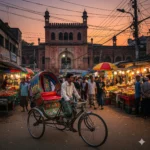
Old Dhaka combines river life, food, architecture and dense layers of history.
Sonargaon and Panam City reveal another side of Bengal’s commercial and architectural past.
Sreemangal provides access to tea landscapes, wetlands and Lawachara National Park.
The Sundarbans offer an entirely different journey through the world’s great mangrove ecosystem.
Bagerhat connects travelers with the historic mosque city and the architectural legacy of medieval Bengal.
Bangladesh’s hill districts can also be visually extraordinary, but access and security conditions require separate planning. Never add the Chittagong Hill Tracts to an itinerary solely because an old travel article describes them as a standard tourist destination.
Check current government travel advice and local access conditions first.
11. Be Serious About Drinking Water and Food Hygiene
International travelers should not rely on untreated tap water for drinking.
Use sealed bottled water from a trustworthy source or properly treated water.
Check that bottle seals are intact rather than automatically assuming every bottle is safe.
Be similarly cautious with ice when you cannot determine the water source.
Wash your hands regularly or carry alcohol-based hand sanitizer, particularly before eating.
For food, freshly prepared dishes served hot are generally a more sensible choice than items that have been sitting exposed for long periods.
Being cautious does not mean avoiding local cuisine. It means making informed choices so that food remains one of the highlights of your trip.
12. Ask Before Photographing People
Bangladesh can be extraordinary for photography.
Rickshaws, markets, river ports, railway stations, tea workers, historic architecture and everyday street life create constantly changing visual stories.
But a compelling photograph does not remove the need for respect.
Ask before taking close portraits, particularly of children, workers and people inside communities.
A smile and gesture toward the camera can often communicate the question even when you do not share a language.
Respect a refusal.
Extra caution is necessary around military installations, checkpoints, government security areas, airports and other sensitive infrastructure. Follow signs and instructions and never argue with security personnel for the sake of a photograph.
Drone use requires its own regulatory and security checks. Do not assume that permission to use a normal camera means a drone is permitted.
13. Understand Religious and Social Etiquette
Bangladesh is a Muslim-majority country with Hindu, Buddhist, Christian and other communities contributing to its cultural landscape.
Visitors should approach religious spaces according to the customs of each site.
Remove shoes where required, wear appropriate clothing and ask before entering areas where access is uncertain.
During Ramadan, daily rhythms may change. Restaurants, working hours, traffic patterns and evening activity can operate differently, particularly around iftar.
Friday is particularly important for Muslim congregational prayer, and some institutions or attractions may operate on different schedules. However, do not assume that the entire country simply closes every Friday.
Always check the current opening day and hours of a specific attraction before traveling across Dhaka to visit it.
Public displays of affection are generally more restrained than in many Western countries.
Observing how people behave around you is often the easiest guide.
14. Prepare for Health Risks Before You Travel
Health preparation should be specific to your itinerary.
Dengue is a concern in Bangladesh, so preventing mosquito bites is important. Use an effective insect repellent, wear suitable clothing and choose screened or air-conditioned accommodation where practical.
Malaria is different.
Risk exists in specific parts of Bangladesh rather than throughout the entire country. Whether preventive medication is appropriate depends on where you are going, how long you are staying and your individual health circumstances.
Before departure, consult a qualified travel-health professional and review current recommendations for vaccinations and destination-specific risks.
Bring enough of your regular prescription medication for the trip, preferably in original packaging, along with essential documentation where required.
Travel insurance should include appropriate medical coverage. Travelers heading into remote areas should also consider whether their policy adequately covers emergency evacuation.
15. Leave Space for Bangladesh to Surprise You
Not everything will operate according to your original plan.
A journey may take longer than expected.
Rain may change the day.
A ferry departure can alter your timing, an attraction may be inaccessible, or a conversation over tea may become more interesting than the place you intended to visit next.
This is where an overly rigid itinerary can work against you.
Prepare carefully for the things that matter—visa rules, health, accommodation, transport and safety—but leave some flexibility in the day itself.
Bangladesh often becomes most memorable between the planned stops.
Is Bangladesh Worth Visiting?
Yes—but it suits travelers who value experience over polish.
Bangladesh does not yet have the tourism infrastructure of many neighboring Asian destinations. That can make some journeys more demanding.
It also means much of the country still feels remarkably connected to everyday local life.
Historic neighborhoods remain lived-in neighborhoods. River journeys are often real transport rather than excursions created exclusively for visitors. Markets exist for residents first and photographers second.
For culturally curious travelers, photographers, history enthusiasts and people who enjoy understanding a place rather than simply checking off landmarks, that can be Bangladesh’s greatest appeal.
How Many Days Do You Need in Bangladesh?
For a first international visit, 7 to 14 days provides a useful starting range.
A shorter trip can focus on Dhaka, Sonargaon and perhaps Sreemangal.
With additional time, travelers can incorporate destinations such as the Sundarbans, Bagerhat or other regions depending on current conditions and personal interests.
Avoid trying to cover the entire country simply because Bangladesh appears geographically compact.
Road speeds, waterways, traffic and transport connections make actual travel time more important than distance on a map.
Planning Your First Bangladesh Trip with Bangladesh Explore
The hardest part of a first Bangladesh journey is often not deciding what to see.
It is understanding how the pieces fit together.
Bangladesh Explore works with international travelers to build private and customized itineraries around realistic travel times, local access, history, food, photography, architecture, nature and cultural experiences.
Instead of trying to fit every famous destination into one trip, we recommend building the journey around what genuinely interests you.
That might mean walking through Old Dhaka before breakfast, photographing river life, exploring the architecture of Sonargaon, spending quiet mornings in Sreemangal or traveling deeper into Bangladesh’s heritage landscapes.
The goal is not simply to see more Bangladesh.
It is to understand more of what you see.
Frequently Asked Questions on Bangladesh Travel Tips
What should I know before traveling to Bangladesh?
First-time visitors should check current visa requirements, plan around realistic travel times, carry Bangladeshi Taka, drink safely treated water, dress appropriately for local settings and prepare for mosquito-borne diseases. Keep the itinerary flexible because traffic, weather and local access conditions can change plans.
What is the best time to visit Bangladesh?
November through February is generally the most comfortable period for first-time visitors because temperatures are cooler and conditions are suitable for sightseeing. Other seasons can still be rewarding depending on your destination and interests.
Is Bangladesh expensive for international tourists?
Everyday local food and transport can be relatively affordable, while private vehicles, quality accommodation, specialist guides, domestic flights and remote-area logistics can increase the cost considerably. Your travel style and route matter more than a single national daily budget.
Can I use credit cards in Bangladesh?
Cards are accepted at many hotels, restaurants and larger businesses in major cities, but cash remains important. Carry Bangladeshi Taka for small businesses, markets, local transport and travel outside major urban areas.
Is English widely spoken in Bangladesh?
English is used in many hotels, professional settings and tourism businesses, particularly in Dhaka and other cities. It should not be assumed everywhere, especially in rural areas. A local guide or translated destination details can make travel easier.
Is Bangladesh good for solo travelers?
Independent travel is possible, but Bangladesh can be logistically demanding for a first-time visitor because of traffic, language differences and transport systems. Research destinations carefully, keep family or friends informed of your itinerary and consider using an experienced local guide for more complex routes.
How long should my first Bangladesh trip be?
Around 7–14 days works well for many first-time visitors. Rather than trying to cover the entire country, choose a few regions and allow enough time for transport and unexpected delays.