Thinking too hard about what to pack for Bangladesh?? Packing for Bangladesh is less about bringing everything you might possibly need and more about choosing things that work across different weather conditions, travel styles and destinations.
Your experience can vary considerably depending on your itinerary. A few days exploring Dhaka’s crowded streets require different preparation from a boat journey through the Sundarbans or a hill trip to Bandarban. Weather also matters: Bangladesh has hot, humid summers, a pronounced monsoon season and much more comfortable winters.
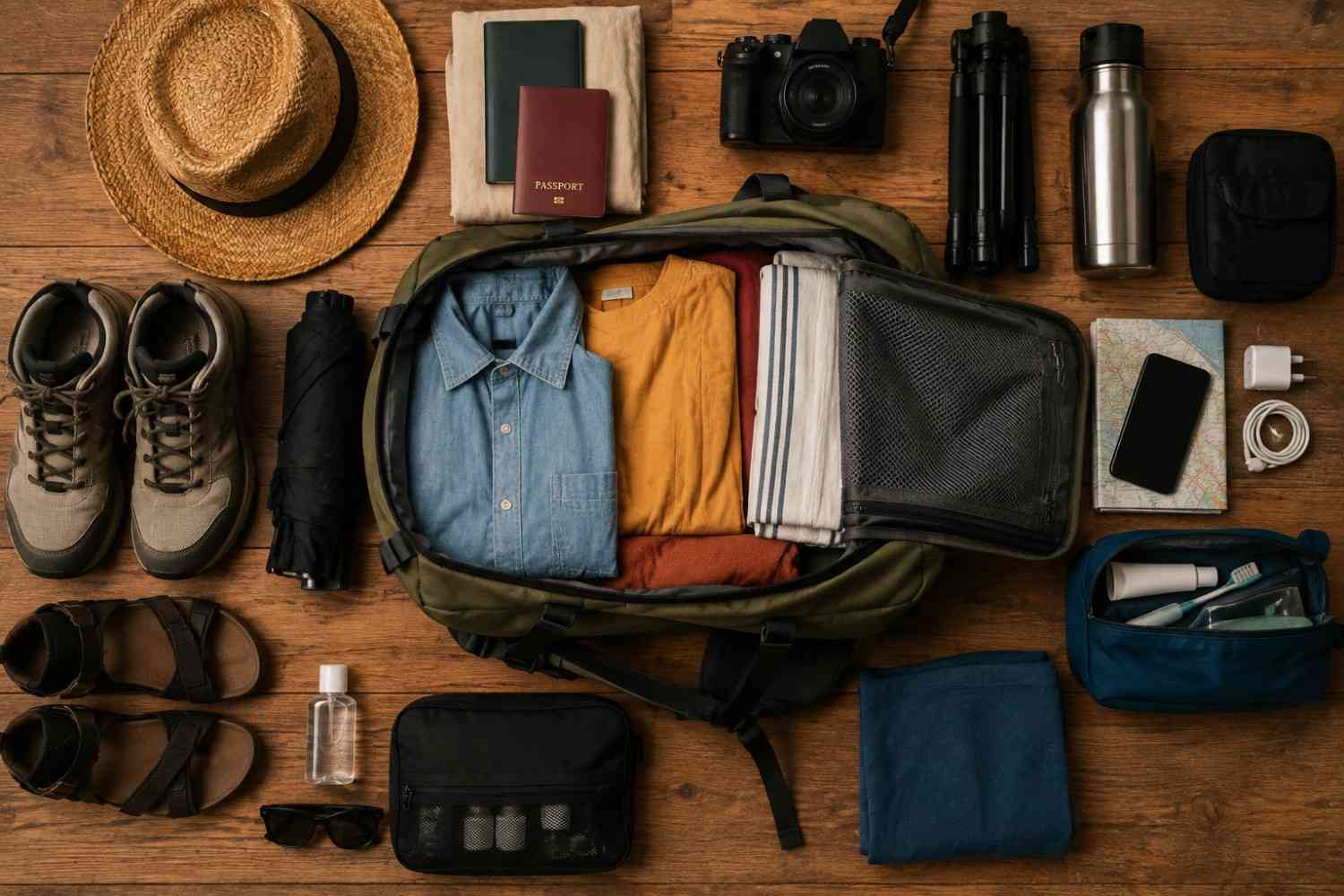
The good news is that you don’t need an enormous suitcase. Lightweight, breathable clothing, comfortable footwear, protection from rain and sun, and a few practical travel essentials will cover most journeys.
This Bangladesh packing guide explains what is genuinely useful to bring, what you can leave at home, and how to adjust your luggage depending on where you’re traveling.
Start With the Weather
Before deciding what goes into your luggage, check the conditions for the specific places you’re visiting.
Bangladesh’s climate is generally tropical to subtropical, but the experience changes significantly throughout the year. October through March is generally more comfortable for traveling, with cooler and drier conditions in many parts of the country. April through September can bring intense heat, humidity and monsoon rain.
That means your packing strategy should change with the season.
For a winter trip, lightweight layers are usually more useful than heavy cold-weather clothing. Mornings and evenings can feel noticeably cooler, particularly outside Dhaka.
During the warmer months, prioritize breathable fabrics, sun protection and hydration.
If you’re traveling during the monsoon, waterproofing becomes much more important. A compact rain jacket, waterproof bag or dry bags for electronics can save you considerable trouble when a sudden downpour arrives.
And remember that weather isn’t the only consideration. Your destination matters just as much.
A city itinerary, a Sundarbans expedition and a Bandarban hill journey may all take place during the same week but require very different day-to-day gear.
What Clothes Should You Pack for Bangladesh?
For most travelers, lightweight and breathable clothing is the best starting point.
Cotton, linen and other comfortable fabrics work well in warm conditions, although quick-drying technical clothing can be particularly useful if you’re traveling during humid or rainy periods.
For everyday sightseeing, consider packing:
- Lightweight shirts or T-shirts
- Comfortable trousers or loose-fitting pants
- Lightweight long-sleeved shirts
- Underwear and socks suitable for warm weather
- Sleepwear
- A light sweater or jacket for cooler evenings
- A compact rain jacket or poncho during the wet season
Bring Some Modest Clothing
You don’t need to dress formally throughout your trip, but having a few modest options is important.
Bangladesh is a predominantly Muslim country, and you’ll encounter mosques, shrines, religious neighborhoods and conservative communities during your travels. Clothing that covers the shoulders and knees is useful when visiting religious or culturally sensitive places.
For women, carrying a lightweight scarf can be practical. It doesn’t need to be worn everywhere, but it can provide an easy additional layer when visiting religious sites or more conservative areas.
For men, lightweight long trousers are a versatile option that works for city sightseeing, heritage sites and religious locations.
The goal isn’t to overthink your wardrobe. Pack clothes that keep you comfortable while allowing you to adapt respectfully to the places you’re visiting.
Choose Footwear for the Actual Journey
Your shoes may matter more than the number of outfits you bring.
Bangladesh travel can involve considerably more walking than a standard sightseeing itinerary suggests. You may move through crowded markets, uneven streets, historic neighborhoods, village paths, boat terminals and wet surfaces during the same trip.
A practical combination is:
One comfortable pair of walking shoes for cities, heritage sites and longer sightseeing days.
One lightweight pair of sandals or breathable footwear for hot weather, accommodation and easier days.
If you’re heading into the hills of Bandarban or spending significant time on rural trails, choose footwear with good grip rather than relying on ordinary casual sneakers.
For the Sundarbans, footwear should also be chosen with the actual activities in mind. Boat travel, forest walks and muddy or uneven surfaces can require something more practical than beach sandals.
You don’t need five pairs of shoes.
Two versatile pairs are usually more useful than a suitcase full of footwear.
Pack for Movement, Not Just Arrival
One thing first-time visitors sometimes underestimate is how often they may need to move their belongings.
A Bangladesh itinerary can involve private vehicles, trains, boats, rickshaws, walking through busy neighborhoods and changing hotels. Large, heavy luggage can quickly become inconvenient.
A medium-sized suitcase or travel backpack plus a small day bag is often a more practical combination than oversized luggage.
Your day bag should be large enough for:
- Water bottle
- Phone
- Power bank
- Passport copy
- Camera
- Small umbrella or rain protection
- Basic medication
- Hand sanitizer or tissues
- Sunglasses
- Any personal essentials
Keep valuables and important documents close to you when traveling through busy public areas, particularly in crowded markets, stations and transport hubs.
The best packing strategy for Bangladesh is simple: make the things you carry every day easy to access, easy to protect and easy to move.
Packing for the Sundarbans
The Sundarbans requires a slightly different approach. You’ll spend much of your time around water, boats, forest trails and humid conditions, so lightweight clothing and protection from moisture and insects matter more than looking polished.
Consider adding:
- Lightweight long-sleeved shirts and trousers
- Insect repellent
- A compact rain jacket
- Waterproof bags or dry bags for electronics
- Comfortable, secure footwear for forest walks
- Sunglasses and a hat
- Sunscreen
- Binoculars if you’re interested in wildlife
- A reusable water bottle
If you’re taking a camera, give extra attention to protection from humidity, splashes and sudden rain. A simple waterproof camera cover or dry bag can be more useful than bringing another lens.
And don’t pack based on the assumption that you’ll see a tiger. Wildlife encounters are unpredictable. Pack for observing the ecosystem, not chasing one particular shot.
For travelers joining a longer expedition, it’s also worth keeping your daily essentials in a small daypack rather than repeatedly opening your main luggage.
What to Pack for Bandarban and the Hill Areas
Bandarban can be more physically demanding than a city itinerary. Depending on your route, you may encounter uneven paths, hills, changing weather and longer periods outdoors.
A pair of shoes with good grip is more important here than fashionable footwear. Lightweight layers are useful because temperatures and conditions can change as you move through the hills.
Bring:
- Comfortable walking shoes with good traction
- Lightweight trousers
- Breathable shirts
- A light rain jacket
- Small daypack
- Sun protection
- Reusable water bottle
- Basic personal medication
- Small towel or quick-dry cloth
If you’re visiting during wetter months, allow for mud and slippery surfaces rather than assuming every trail will be dry.
Bandarban also requires a little more cultural awareness. If your journey takes you into Indigenous communities, pack modest, practical clothing and approach photography respectfully. A good travel experience is not just about getting the shot; it’s about making sure the people in it are comfortable with being photographed.
What About Dhaka, Old Dhaka and Other Cities?
City travel generally requires less specialized gear, but comfortable clothing and footwear become particularly important.
Dhaka’s heat, humidity, traffic and crowded streets can make a long day outside surprisingly tiring. Old Dhaka adds narrow lanes, busy markets, heritage buildings and plenty of walking.
A small backpack is much easier to manage than a large bag when moving through places such as Sadarghat, Old Dhaka markets or railway areas.
For city days, prioritize:
- Comfortable walking shoes
- Breathable clothing
- Sunglasses
- Sunscreen
- Water bottle
- Small umbrella
- Power bank
- Tissues or hand sanitizer
- Cross-body or secure day bag
If you’re planning to photograph street life, keep your camera setup relatively compact. A smaller camera or lens combination lets you move more naturally through crowded environments and spend less time worrying about your equipment.
For travelers particularly interested in Dhaka’s visual side, Bangladesh Explore’s Street Photography Tour in Dhaka covers environments ranging from Old Dhaka and Sadarghat to markets, railway areas and the Buriganga.
Packing for Sreemangal, Sylhet and the River Regions
If your itinerary includes Sreemangal, Sylhet or Bangladesh’s river regions, you’ll spend more time outdoors. Tea gardens, forests, wetlands and boat journeys are much easier to enjoy when your clothing and equipment can handle moisture and uneven conditions.
A lightweight rain jacket is worth carrying even when rain isn’t in the forecast, particularly if you’re traveling during the wetter months. Quick-drying clothes are also useful because humidity can make heavier fabrics uncomfortable.
For boat-based experiences, consider:
- Waterproof phone pouch
- Dry bag for electronics
- Quick-drying clothing
- Sandals or shoes that can handle wet surfaces
- Sun protection
- Insect repellent
- Small towel
- Reusable water bottle
If you’re visiting a floating market or rural river community, keep your camera and other valuables protected from accidental splashes. A waterproof phone pouch can be surprisingly useful even if you’re not expecting rain.
For nature-focused trips, binoculars can also be worth bringing. You don’t need professional wildlife equipment to appreciate Bangladesh’s forests and wetlands.
What to Pack for Cox’s Bazar and the Coast
Cox’s Bazar is easier to pack for than a multi-destination wilderness trip, but the combination of sun, sand, saltwater and humidity means a few additions are worthwhile.
Bring lightweight beach-friendly clothing, sandals, sunglasses, sunscreen and a reusable water bottle. If you’re planning to spend time around fishing communities or local markets, add comfortable walking shoes so you’re not limited to the beach.
For photography, protect your equipment from sand and salt spray. Avoid changing lenses unnecessarily on the beach, and keep your camera inside a protective bag when you’re not shooting.
A simple lens cloth is also useful because sea spray can quickly leave fine moisture or salt residue on your equipment.
If your trip includes early-morning coastal photography, bring a light layer as well. The beach can feel cooler before sunrise than it does later in the day.
Electronics and Travel Gear Worth Bringing
You don’t need to bring every gadget you own.
A sensible electronics setup for most travelers includes:
- Smartphone
- Phone charger
- Power bank
- Universal travel adapter
- Charging cables
- Headphones
- Small flashlight
A power bank is particularly useful during long travel days, boat journeys and excursions away from major cities.
If you’re bringing camera equipment, add spare batteries and memory cards. For photographers and filmmakers, a waterproof bag or dry bag is more valuable than packing unnecessary accessories.
A lightweight tripod can be useful for landscape, sunrise or night photography, but consider the itinerary before bringing one. If you’re moving frequently between boats, vehicles and hotels, unnecessary gear becomes a burden.
Health and Personal Essentials
Bring the personal items you know you need rather than assuming you’ll find your preferred brand everywhere.
A small personal-health kit can include:
- Prescription medicines
- Basic pain relief
- Oral rehydration supplies
- Basic first-aid items
- Hand sanitizer
- Tissues
- Sunscreen
- Insect repellent
- Any personal hygiene products you prefer
Keep prescription medication in its original packaging, particularly when traveling internationally.
If you take medication regularly, carry enough for your trip and a little extra in case your itinerary changes.
You should also keep important documents backed up digitally and carry copies of essential travel information separately from your passport.
Cash, Cards and Important Documents
Your passport is obviously the most important document, but don’t rely on having everything stored in one place.
Before leaving home, keep secure digital copies of:
- Passport
- Visa or entry documents, if applicable
- Travel insurance details
- Flight information
- Hotel confirmations
- Emergency contacts
- Important medical information
For money, carrying a combination of cards and some local currency is generally more practical than relying entirely on one payment method.
Keep your passport and excess cash somewhere secure rather than carrying everything with you during sightseeing.
For longer journeys, a small document organizer can save you from repeatedly searching through your luggage.
What You Probably Don’t Need to Pack
Packing light becomes much easier when you know what to leave behind.
You probably don’t need:
- Several formal outfits
- Multiple heavy jackets
- Lots of different shoes
- Large amounts of toiletries
- Excessive camera accessories
- More electronics than you can realistically use
- A huge backpack for day trips
Bangladesh has shops, pharmacies, supermarkets and markets in major cities, so you don’t need to prepare as though you’ll be completely cut off from civilization.
Instead, bring the things that are personal, difficult to replace, or essential to your comfort.
The goal isn’t to prepare for every possible situation.
It’s to arrive with enough to stay comfortable while keeping your luggage manageable.
What to Pack for Bangladesh by Season
Your packing list should change with the season more than with the number of outfits you plan to bring.
October to March
This is generally the most comfortable period for traveling around Bangladesh. Pack mostly lightweight clothing, but add a light sweater or jacket for cooler mornings and evenings.
If you’re visiting northern Bangladesh or spending time outdoors early in the morning, an extra layer can be useful.
April to May
The weather can become very hot and humid. Prioritize:
- Breathable, lightweight clothing
- Sun hat or cap
- Sunglasses
- High-SPF sunscreen
- Reusable water bottle
- Electrolyte or oral rehydration supplies
- Comfortable sandals or breathable shoes
Try not to overpack. In this weather, having fewer lightweight clothes that you can wash and dry easily is often more practical than carrying heavy outfits.
June to September
This is the monsoon period, so rain protection becomes essential.
A compact rain jacket, quick-drying clothes and waterproof protection for your phone and electronics can make a significant difference. An umbrella can also be useful in cities, although a rain jacket is generally easier when you’re carrying a camera or traveling by boat.
If you’re heading into rural areas, the Sundarbans or the hills, allow for muddy and wet conditions.
A Simple Bangladesh Packing List
If you want to keep things simple, this is a good starting point for a one-to-two-week trip:
Clothing
- 4–6 lightweight tops
- 2–3 comfortable trousers
- 1–2 lightweight long-sleeved shirts
- Underwear and socks
- Sleepwear
- Lightweight jacket or sweater
- Compact rain jacket
- Comfortable walking shoes
- Sandals or second pair of lightweight footwear
Everyday essentials
- Small daypack
- Reusable water bottle
- Sunglasses
- Hat or cap
- Sunscreen
- Insect repellent
- Hand sanitizer
- Tissues
- Small umbrella
Electronics
- Smartphone
- Universal travel adapter
- Power bank
- Charging cables
- Headphones
- Camera and essential accessories, if needed
- Spare batteries and memory cards
Travel documents & health
- Passport
- Visa or entry documents, if applicable
- Travel insurance information
- Copies of important documents
- Prescription medication
- Basic personal-health supplies
You can then add destination-specific items depending on whether your itinerary includes the Sundarbans, Bandarban, Sreemangal, Barisal or Cox’s Bazar.
One Last Packing Tip: Leave Some Space
Don’t fill your luggage to the limit before you leave home.
Bangladesh has a strong tradition of handicrafts, textiles, clothing, spices and locally made products, and you may want to bring something home. More importantly, keeping some spare space makes it easier to reorganize your luggage when you’re moving between destinations.
The best Bangladesh packing list isn’t the longest one.
It’s the one that leaves you comfortable, prepared and mobile.
If your itinerary includes several regions, it’s worth planning what you actually need for each part of the journey rather than carrying every item everywhere. A well-organized daypack and lightweight main luggage can make moving between Dhaka, the rivers, the coast, the hills and other destinations considerably easier.
Pack for the Journey You Actually Have
The most useful Bangladesh packing list isn’t the one with the most items. It’s the one that matches the way you’re actually going to travel.
If you’re staying mainly in Dhaka, you can keep things simple. If you’re combining Dhaka with the Sundarbans, Barisal, Bandarban or Cox’s Bazar, think in terms of adaptability: lightweight clothing, comfortable footwear, rain protection and a small daypack will take you much further than a suitcase full of specialized gear.
Before leaving, check the weather for each destination, keep essential medication and documents with you, and protect electronics whenever you’re heading toward boats, beaches or wet environments.
And don’t underestimate the value of traveling light. You’ll likely appreciate it when you’re climbing into a launch, walking through a crowded Old Dhaka neighborhood or transferring between hotels.
Pack for movement, weather and cultural respect—and leave some room for the unexpected.
Planning a Trip Around Bangladesh?
What you pack ultimately depends on where you’re going and how you plan to travel.
If you’re still putting your itinerary together, Bangladesh Explore can help you combine major destinations, cultural experiences and different styles of travel into one practical journey.
You can explore destinations such as the Sundarbans, Bandarban, Sreemangal, Barisal, Sonargaon, Bagerhat and Cox’s Bazar, or build a customized itinerary around your interests.
For international travelers who want a more structured experience, explore the available Bangladesh Tours and choose an itinerary that fits the way you want to experience the country.
A Final Thought
You don’t need to arrive in Bangladesh with everything figured out.
Bring the essentials. Dress for the conditions. Keep your important belongings secure. Leave space in your schedule—and your suitcase—for the things you didn’t expect.
That’s often where the best travel experiences begin.
Frequently Asked Questions What to Pack for Bangladesh
What should I pack for Bangladesh?
Start with lightweight, breathable clothing, comfortable walking shoes, modest clothing for religious and cultural sites, sun protection, a rain jacket, personal medication, a reusable water bottle and basic electronics. Add destination-specific items if you’re visiting places such as the Sundarbans or Bandarban.
What should I wear in Bangladesh?
Lightweight and breathable clothing works well for Bangladesh’s generally warm climate. For mosques and other religious or conservative environments, choose clothing that covers the shoulders and knees. A lightweight scarf can also be useful.
Do I need warm clothes for Bangladesh?
It depends on when and where you’re traveling. During the cooler months, lightweight layers can be useful, particularly during early mornings and evenings. Most travelers do not need heavy winter clothing.
What should I pack for the Sundarbans?
Bring lightweight long sleeves and trousers, insect repellent, sunscreen, a hat, comfortable footwear, a rain jacket and waterproof protection for electronics. Binoculars can also be useful for wildlife and birdwatching.
What should I pack for Bandarban?
Comfortable walking shoes with good grip, breathable clothing, a light rain jacket, sun protection and a small daypack are useful. If you’re traveling during wetter months, prepare for muddy and slippery conditions.
What should I pack for Bangladesh during monsoon season?
Prioritize rain protection. Bring a lightweight rain jacket, quick-drying clothing, waterproof bags or pouches for electronics, suitable footwear and an umbrella. A dry bag is particularly useful for boat journeys.
Do I need to bring cash to Bangladesh?
It’s sensible to carry a combination of payment cards and some local currency. Keep larger amounts and important documents securely stored rather than carrying everything during sightseeing.
Should I bring a camera to Bangladesh?
If photography is important to you, absolutely. Bangladesh offers strong opportunities for street, cultural, landscape, wildlife and documentary photography. Just keep your setup practical and protect your equipment from rain, humidity, sand and water.
How much luggage should I bring to Bangladesh?
For most trips, a medium-sized suitcase or travel backpack plus a small daypack is more practical than oversized luggage. If your itinerary includes boats, trains, rickshaws and frequent hotel changes, lighter luggage will make the journey considerably easier.
What should I not pack for Bangladesh?
Avoid overpacking heavy clothing, multiple pairs of shoes, excessive toiletries and camera equipment you are unlikely to use. Pack for the actual itinerary rather than every possible situation.