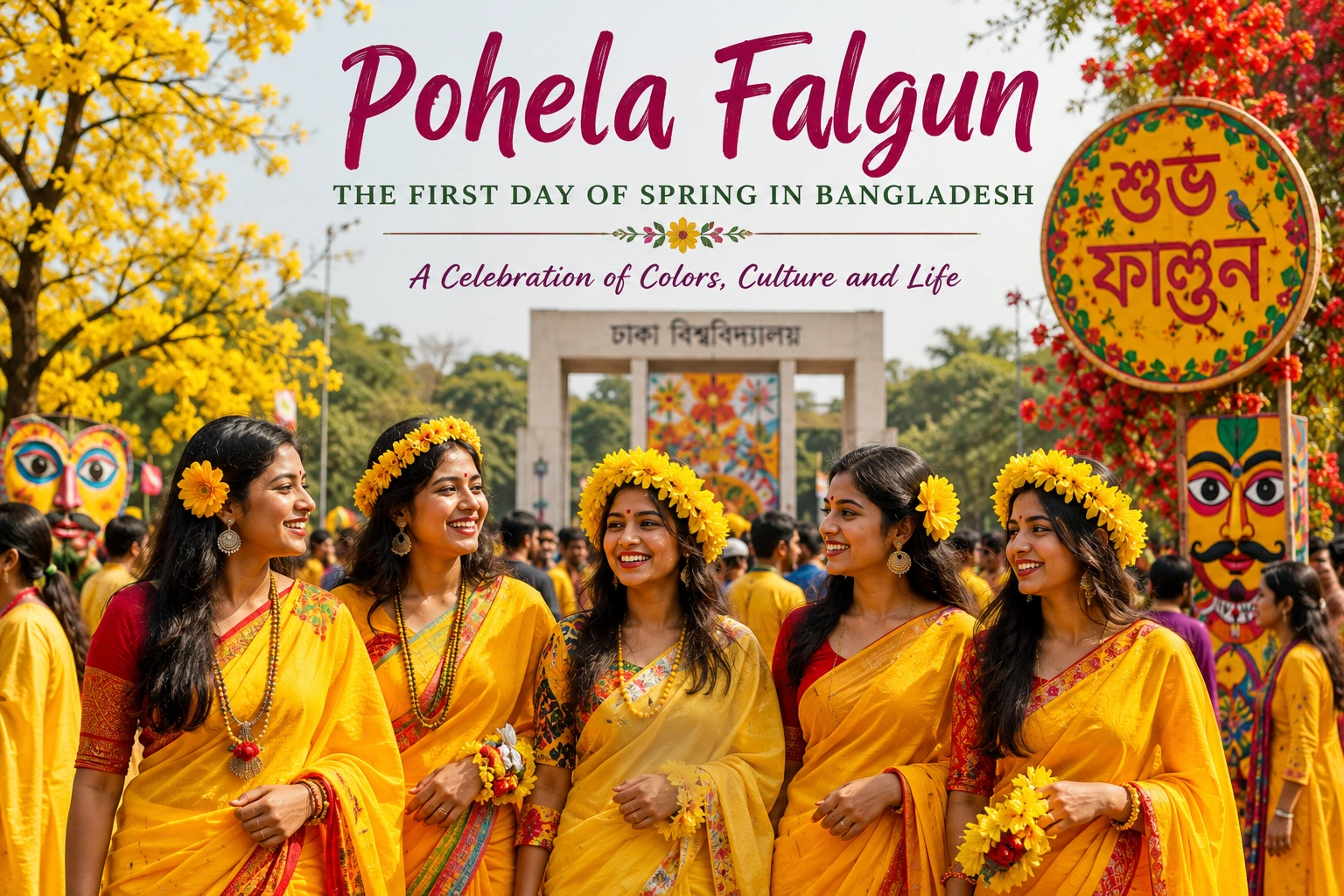
As winter slowly fades away and nature begins to awaken with new colors, Bangladesh welcomes one of its most joyful and visually stunning cultural celebrations—Pohela Falgun. Known as the first day of spring in the Bengali calendar, Pohela Falgun transforms cities, towns, and villages into vibrant landscapes filled with yellow flowers, traditional music, colorful clothing, and festive gatherings.
For locals, Pohela Falgun symbolizes renewal, hope, love, and the arrival of warmer days. For international travelers, it offers an extraordinary opportunity to experience authentic Bengali culture at its most colorful and expressive.
Unlike many festivals that are confined to religious communities, Pohela Falgun is celebrated by people from all backgrounds. Streets become open-air stages, university campuses burst into life, and families gather to welcome the beauty of spring. Whether you are interested in cultural tourism, photography, food, or local traditions, Pohela Falgun provides an unforgettable introduction to Bangladesh.
What Is Pohela Falgun?
Pohela Falgun marks the first day of the Bengali month of Falgun and officially welcomes spring to Bangladesh. The festival usually falls on February 13 or 14, depending on the Bengali calendar.
The name itself comes from two Bengali words:
- Pohela meaning “first”
- Falgun referring to the eleventh month of the Bengali calendar
For centuries, Bengalis have celebrated the arrival of spring as a symbol of renewal and prosperity. The festival reflects the deep connection between Bengali culture and nature, highlighting the changing seasons through music, art, fashion, and community gatherings.
Today, Pohela Falgun remains one of the most beloved cultural festivals in Bangladesh and continues to attract visitors from around the world.
Why Pohela Falgun Is Important in Bengali Culture
Pohela Falgun is much more than a seasonal celebration.
It represents:
- The arrival of spring
- New beginnings
- Joy and optimism
- Cultural identity
- Community connection
- Artistic expression
The festival embodies the spirit of Bengali culture, where literature, music, nature, and social gatherings play an important role in everyday life.
For many Bangladeshis, Pohela Falgun is an opportunity to reconnect with traditional customs while celebrating the beauty of their heritage.
The event also highlights the country’s vibrant cultural diversity and creative traditions.
The Arrival of Spring in Bangladesh
Spring is one of the most pleasant seasons in Bangladesh.
After the cooler winter months, the countryside begins to change dramatically.
New leaves emerge on trees.
Fields become greener.
Flowers bloom across the landscape.
The iconic red blossoms of Shimul and Polash trees create stunning natural scenery throughout the country.
The weather during Pohela Falgun is particularly attractive for travelers. Temperatures are comfortable, humidity remains relatively low, and outdoor activities become much more enjoyable.
This combination of favorable weather and cultural celebrations makes February one of the best times to visit Bangladesh.
Why Everyone Wears Yellow on Pohela Falgun
One of the most recognizable features of Pohela Falgun is the widespread use of yellow clothing.
Women traditionally wear yellow, saffron, orange, or golden sarees decorated with flowers. Men often wear colorful panjabis featuring bright spring-inspired designs.
The color yellow symbolizes:
- Spring flowers
- Sunshine
- Energy
- Happiness
- New life
The result is a breathtaking visual experience. Streets, parks, and cultural venues become filled with vibrant colors that create a festive atmosphere unlike any other event in Bangladesh.
For photographers, these scenes provide endless opportunities for capturing authentic cultural moments.
Dhaka University: The Heart of Pohela Falgun Celebrations
If there is one place that truly captures the spirit of Pohela Falgun, it is Dhaka University.
The university campus serves as the epicenter of spring celebrations in the capital. Thousands of students, artists, musicians, photographers, and families gather here to participate in cultural programs and festivities.
Visitors can experience:
- Traditional music performances
- Poetry recitations
- Folk dances
- Art exhibitions
- Flower decorations
- Community celebrations
The atmosphere is energetic yet welcoming, making it one of the most rewarding places for travelers seeking authentic cultural experiences.
Those interested in exploring more of the capital can combine the festival with a Discover Dhaka City experience to gain deeper insight into the culture and history of Bangladesh.
Music, Dance and Cultural Performances
Pohela Falgun celebrates the artistic soul of Bengal.
Throughout the day, cultural organizations organize performances featuring:
- Rabindra Sangeet
- Nazrul Geeti
- Folk music
- Baul songs
- Traditional dance
- Contemporary cultural presentations
Many performances take place outdoors, allowing visitors to engage directly with local traditions.
Music fills the air as performers and audiences come together to celebrate the changing season.
For travelers interested in culture, these performances provide valuable insight into the creative heritage of Bangladesh.
Traditional Food During Pohela Falgun
No Bengali festival is complete without food.
During Pohela Falgun, visitors can enjoy a variety of traditional dishes and seasonal delicacies.
Popular festival foods include:
- Pitha (traditional rice cakes)
- Jilapi
- Chotpoti
- Fuchka
- Sweet yogurt
- Traditional Bengali desserts
Street vendors and local restaurants often create special menus for the occasion.
Food lovers can enhance their cultural experience through a Dhaka Food Tour, which introduces travelers to both traditional and contemporary Bangladeshi cuisine.
Best Places to Experience Pohela Falgun
Dhaka University
The most famous celebration venue and the cultural heart of the festival.
Ramna Park
One of Dhaka’s largest green spaces, where visitors gather to enjoy springtime activities and cultural events.
Rabindra Sarobar
Popular among artists, musicians, and young people celebrating the arrival of spring.
Chhayanaut Cultural Programs
Renowned for organizing traditional performances that highlight Bengali heritage.
Old Dhaka
The historic neighborhoods of the city provide a unique perspective on how local communities celebrate Pohela Falgun.
Visitors interested in exploring these historic areas can join an Old Dhaka Tour and experience centuries of cultural heritage alongside modern festivities.
Pohela Falgun for Photographers
Few cultural events in Bangladesh offer as many photographic opportunities as Pohela Falgun.
The festival combines:
- Vibrant colors
- Traditional clothing
- Natural light
- Cultural performances
- Human emotion
- Street life
Photographers can capture everything from intimate portraits to large-scale cultural gatherings.
The visual richness of the event makes it particularly attractive for travel photographers and content creators.
A Street Photography Tour in Dhaka during Pohela Falgun provides exceptional opportunities to document authentic moments and create memorable visual stories.
Why International Travelers Love Pohela Falgun
Many international visitors are surprised by the warmth and accessibility of Pohela Falgun celebrations.
Unlike highly commercialized festivals found elsewhere, Pohela Falgun remains deeply rooted in local culture.
Travelers appreciate:
- Genuine cultural experiences
- Friendly interactions with locals
- Outstanding photography opportunities
- Affordable travel costs
- Rich artistic traditions
- Authentic festival atmosphere
The event allows visitors to experience Bangladesh beyond typical tourist attractions and develop a deeper understanding of Bengali society.
Combining Pohela Falgun With a Bangladesh Tour
Pohela Falgun can easily become part of a broader journey across Bangladesh.
Travelers often combine the festival with:
Old Dhaka and Sonargao Tour
Explore the historic capital and the ancient trading city of Sonargaon while learning about Bengal’s rich heritage.
A Cultural Tour
Experience traditional villages, local customs, crafts, music, and everyday life throughout Bangladesh.
Visiting Panam City
Walk through one of the country’s most fascinating historical sites, famous for its colonial architecture and heritage buildings.
These experiences provide valuable context and allow visitors to connect spring celebrations with the broader cultural story of Bangladesh.
Beyond Dhaka: Spring Across Bangladesh
Although Dhaka hosts the most famous celebrations, Pohela Falgun is observed throughout the country.
In tea-growing regions such as Sreemangal, spring brings lush green landscapes and pleasant weather.
A Sreemangal and Sylhet Tour offers opportunities to explore tea gardens, rainforests, waterfalls, and indigenous communities during one of the most beautiful seasons of the year.
Travelers interested in archaeology and history may also consider a North Bengal Tour, which showcases ancient cities, temples, mosques, and UNESCO heritage sites.
Why February Is One of the Best Times to Visit Bangladesh
February offers ideal travel conditions across Bangladesh.
Visitors can enjoy:
- Comfortable temperatures
- Clear skies
- Blooming landscapes
- Cultural festivals
- Excellent photography conditions
- Wildlife experiences
The month combines natural beauty with cultural activity, making it one of the most rewarding periods for international travelers.
Why Pohela Falgun Should Be on Every Traveler’s Bucket List
Pohela Falgun captures everything that makes Bangladesh special.
It is colorful without being commercial.
Traditional without feeling outdated.
Authentic without being inaccessible.
The festival allows visitors to witness Bengali culture at its most vibrant while engaging directly with local communities and traditions.
Whether you are a photographer searching for compelling visual stories, a culture enthusiast eager to learn about Bengal’s heritage, or simply a traveler looking for unique experiences, Pohela Falgun offers memories that will stay with you long after the celebration ends.
Experience the Colors of Spring with Bangladesh Explore
Pohela Falgun is more than a festival—it is Bangladesh welcoming spring with music, flowers, art, food, and community spirit. It is one of the most joyful cultural celebrations in South Asia and an excellent opportunity to experience the warmth and hospitality of the Bengali people.
Whether you choose a Discover Dhaka City experience, an Old Dhaka Tour, a Street Photography Tour in Dhaka, or a broader Cultural Tour, Pohela Falgun provides the perfect introduction to Bangladesh’s rich traditions and vibrant lifestyle.
Plan your journey with the Best Tour Agency in Bangladesh and discover why spring is one of the most magical times to visit this remarkable country.
Frequently Asked Questions
What is Pohela Falgun?
Pohela Falgun is the first day of spring in the Bengali calendar and one of Bangladesh’s most colorful cultural festivals.
When is Pohela Falgun celebrated?
The festival is usually celebrated on February 13 or 14 each year.
Why do people wear yellow during Pohela Falgun?
Yellow symbolizes sunshine, flowers, happiness, and the arrival of spring.
Where is Pohela Falgun most actively celebrated?
Dhaka University, Ramna Park, Rabindra Sarobar, and various cultural venues across Bangladesh host major celebrations.
Is Pohela Falgun a religious festival?
No. It is primarily a cultural and seasonal celebration enjoyed by people of all backgrounds.
Is February a good time to visit Bangladesh?
Yes. February offers pleasant weather, blooming landscapes, cultural festivals, and excellent travel conditions.
What should tourists wear during Pohela Falgun?
Light, comfortable clothing is recommended. Many visitors choose yellow or colorful outfits to participate in the festive atmosphere.
Is Pohela Falgun good for photography?
Absolutely. The colorful clothing, cultural performances, flowers, and street celebrations make it one of the best photography events in Bangladesh.