Most cities are photographed for their landmarks. Dhaka is photographed for its people.
At first glance, Bangladesh’s capital can feel overwhelming. Traffic moves with relentless energy, markets spill into narrow streets, and millions of people create a rhythm that rarely slows. For first-time visitors, it can seem chaotic. For photographers, however, that complexity is exactly what makes Dhaka one of South Asia’s most rewarding cities for documentary and street photography.
Unlike destinations known for grand monuments or postcard viewpoints, Dhaka offers something more meaningful—stories. Every railway platform, riverside dockyard, artisan workshop, wholesale market, and historic alley reveals the lives of people whose work keeps one of the world’s largest megacities moving. These are places where craftsmanship survives across generations, manual labour shapes entire industries, and everyday moments often become the strongest photographs of your journey.
This guide explores the best photography locations in Dhaka, not simply as places to visit but as opportunities to tell compelling visual stories. Along the way, you’ll learn what makes each location unique, when to visit, what to photograph, and how to approach people and situations with respect. Whether you’re planning an independent photo walk or considering a guided photography tour, this resource will help you photograph Dhaka with greater purpose, confidence, and creativity.
Why Dhaka Is a Dream Destination for Documentary Photography
Many photographers travel in search of dramatic landscapes or famous skylines. Dhaka offers something different: the chance to document the relationship between people, work, and the city they have built together.
Across the capital, life unfolds in layers. Before sunrise, wholesale markets come alive as porters unload vegetables, fish, and fruit destined for millions of households. As morning progresses, railway stations fill with commuters, rivers carry workers across the Buriganga, and workshops hidden inside Old Dhaka begin producing everything from brassware to traditional textiles. By evening, the streets take on a different rhythm as food vendors, rickshaw pullers, and night markets transform familiar locations into entirely new photographic scenes.
What makes Dhaka exceptional is not a single landmark but the extraordinary variety of stories that can be found within a relatively small area. Over the course of a few days, you can photograph heavy industry, heritage craftsmanship, street life, river transport, traditional weaving, informal economies, and the resilience of communities adapting to one of the fastest-growing cities in the world.
For documentary photographers, that diversity provides an endless source of inspiration. Rather than collecting isolated images, you’ll have the opportunity to build meaningful photo essays that explore movement, labour, tradition, and everyday life through an authentic local perspective.
Before You Raise Your Camera
Photographing Dhaka requires a different mindset than photographing many other cities.
Success rarely comes from walking quickly between locations or constantly searching for the next scene. Instead, it comes from slowing down. Spend time observing how people move through a space, how light changes across a street, or how workers repeat the same motion hundreds of times throughout the day. The longer you stay, the more the city begins to reveal itself.
It’s equally important to approach every subject with curiosity and respect. Some of the strongest photographs are created after a brief conversation, a smile, or simply spending a few minutes watching before taking out your camera. Building trust often leads to more natural expressions, richer stories, and a more rewarding experience for both photographer and subject.
Local Photographer’s Insight
Don’t arrive with a checklist of photographs to collect. Arrive with questions. Ask yourself what makes a place important, how people interact with it, and what story you want your images to tell. The photographs become stronger when you begin looking for meaning instead of simply looking for subjects.
Photography at a Glance
| Best For | Top Recommendation |
| Street Photography | Old Dhaka, Karwan Bazar |
| Documentary Photography | Keraniganj Shipyards, Kamalapur Railway Station |
| Environmental Portraits | Jamdani Weaving Villages, Artisan Workshops |
| Industrial Photography | Brickfields, Shipyards |
| Cultural Photography | Shankhari Bazar, Old Dhaka |
| Best Time | October to March |
| Ideal Lens | 35mm or 24–70mm |
| Recommended Duration | 4–6 Days |
1. Kamalapur Railway Station – Where Dhaka Begins Every Morning
If you want to understand the pace of Dhaka, start at Kamalapur Railway Station before sunrise. As Bangladesh’s largest railway hub, it offers an extraordinary cross-section of urban life, where long-distance travellers, daily commuters, railway workers, vendors, and informal communities intersect in a constantly changing environment.
From a photographer’s perspective, the station is far more than trains and platforms. It’s a place where movement, anticipation, and routine unfold simultaneously. Commuters hurry toward departing trains while tea sellers weave through crowds, porters carry oversized luggage, and families gather for emotional farewells or reunions. Every platform offers opportunities to capture human interaction within a dynamic urban setting.
What to Photograph
- Early-morning commuter rush
- Long-distance trains arriving and departing
- Environmental portraits of railway workers
- Vendors serving passengers on the platforms
- Layered street scenes showing movement and interaction
Best Time
5:30 AM – 8:00 AM, when the station is at its busiest and the softer morning light adds depth to the scene.
Photography Tip
Instead of chasing every passing moment, choose a single platform and spend time observing. As you become familiar with the rhythm of the station, you’ll begin anticipating interactions rather than reacting to them, resulting in stronger, more intentional photographs.
Think Like a Photojournalist
Don’t make the train your subject. Make the people your subject. The train provides context, but the human stories unfolding around it are what give the photograph lasting impact.
2. Karwan Bazar – Photographing the City Before It Wakes
Long before Dhaka’s streets fill with traffic, Karwan Bazar is already in full motion. As one of the largest wholesale markets in Bangladesh, it supplies fresh produce, fish, and everyday essentials to the capital. For photographers, it’s one of the few places where the story isn’t just the market itself—it’s the people whose work begins while most of the city is still asleep.
Arriving before dawn allows you to witness a fascinating transition. Trucks unload vegetables under harsh artificial lights, porters weave through narrow aisles carrying astonishing loads, traders negotiate prices at remarkable speed, and tea stalls become informal meeting points before another working day begins. As daylight slowly replaces fluorescent lighting, the atmosphere changes completely, offering two very different visual narratives within a single visit.
Why It Matters
Karwan Bazar isn’t simply about photographing a busy market. It’s about documenting the invisible workforce that feeds one of the world’s largest cities every day.
Best Subjects
- Porters carrying heavy loads through crowded walkways
- Vegetable traders negotiating prices
- Fish vendors preparing the morning’s catch
- Steam rising from roadside tea stalls
- Layers of movement as buyers, sellers, and transporters intersect
Local Photographer’s Tip
Don’t stand at the entrance trying to photograph everything. Choose one subject—a porter, vendor, or trader—and follow their routine for ten or fifteen minutes. You’ll begin to notice patterns, interactions, and expressions that are impossible to capture from a distance.
Think Like a Photojournalist
Instead of asking, “How busy is this market?” ask, “Who keeps this market running?” The answer often leads to a stronger story than the market itself.
3. Keraniganj Shipyards – Where Steel Meets Human Endurance
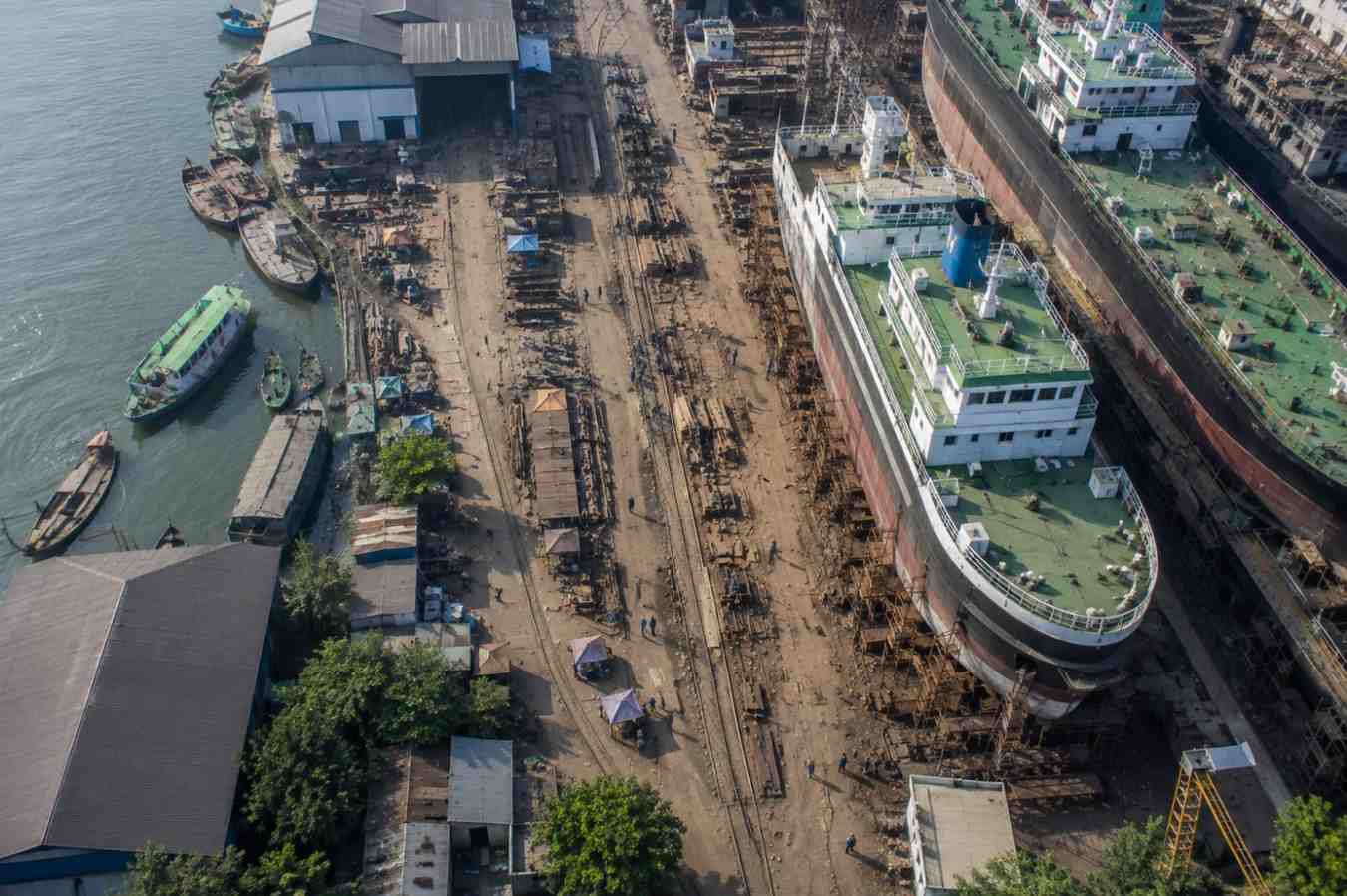
Few places in Dhaka communicate scale as powerfully as the shipyards of Keraniganj. Along the banks of the Buriganga River, massive cargo vessels rest on timber supports while teams of welders, riveters, painters, and labourers work across towering steel hulls. The contrast between the size of the ships and the people repairing them creates dramatic opportunities for documentary photography.
Unlike modern shipbuilding facilities, much of the work here still relies on manual skill and physical labour. Sparks fly from welding torches, rust-covered surfaces reveal years of service, and workers climb improvised scaffolding carrying heavy equipment. Every corner of the yard tells a story about craftsmanship, resilience, and the people behind Bangladesh’s river economy.
Photography Opportunities
Rather than focusing only on the ships, look for relationships between workers and their environment.
Good documentary photographs often include:
- A welder surrounded by sparks inside the hull.
- A worker climbing a towering ship with tools over one shoulder.
- Details of weathered steel, ropes, and machinery.
- Wide compositions showing the scale of the ship compared to the workers.
Best Time to Visit
Morning provides softer light, cooler temperatures, and more comfortable working conditions for both photographers and workers.
Safety & Respect
Shipyards are active industrial environments. Always stay aware of moving equipment, avoid entering restricted work areas, and follow the guidance of your local guide. Respect comes before the photograph.
Photography Assignment
Create a five-image photo essay titled “The Men Who Repair Giants.” Include:
- One establishing shot.
- One environmental portrait.
- One action photograph.
- One close-up detail.
- One closing image that brings the story together.
4. Old Dhaka – Where Every Alley Tells a Story
Most visitors come to Old Dhaka looking for historic buildings. Photographers come for something else entirely—the people who continue to give those buildings life.
Behind weathered facades and narrow alleyways lies a network of family-run workshops where skills have been passed from one generation to the next. In places like Shankhari Bazar and Islampur, artisans still shape brass by hand, carve conch shells, repair machinery, stitch garments, and produce goods using techniques that have changed little over the decades. These workshops are often small, dimly lit, and hidden behind unmarked doors, but they offer some of the most rewarding documentary photography opportunities in Bangladesh.
Unlike photographing monuments, photographing Old Dhaka is about slowing down. Spend time observing how an artisan works, how natural light enters through a doorway, or how a craftsman interacts with tools that have been part of daily life for years. These details often reveal more about the city’s character than its architecture ever could.
What Makes Old Dhaka Unique?
Old Dhaka isn’t just one photography location—it’s a collection of stories packed into a few square kilometres.
Within a short walk, you can photograph:
- Heritage craftsmanship in family-run workshops.
- Street vendors navigating crowded alleyways.
- Traditional rickshaws weaving through historic streets.
- Layers of architecture reflecting different periods of the city’s history.
- Everyday interactions that blend commerce, community, and culture.
Every turn offers a different visual narrative.
What to Photograph
Instead of searching for dramatic moments, look for scenes that reveal relationships between people and their environment.
Some ideas include:
- An artisan concentrating on intricate handwork.
- A craftsman surrounded by generations of tools.
- Narrow lanes framed by colourful shopfronts and passing rickshaws.
- Light streaming through workshop windows onto working hands.
- Environmental portraits that place the subject within their workspace.
These photographs often become the strongest images because they tell a story beyond the individual portrait.
Photography Tips
Old Dhaka rewards patience more than speed.
If you discover an interesting workshop, don’t immediately begin taking photographs. Introduce yourself, observe the work, and allow people to become comfortable with your presence. As conversations develop, expressions become more natural, movements more relaxed, and photographs more authentic.
A compact setup, such as a 35mm or 50mm lens, is often ideal for working in confined spaces while keeping enough of the environment in the frame to provide context.
Think Like a Photojournalist
When photographing a craftsman, don’t stop after the portrait. Ask yourself: “What does this person create?” Photograph the tools, the workspace, the hands, the finished product, and the surrounding environment. Together, these images tell a far richer story than a single frame ever could.
Photographer’s Field Assignment
Story Title: The Hands That Keep Tradition Alive
Challenge yourself to produce a 6-image photo essay that includes:
- An establishing photograph of the workshop.
- An environmental portrait of the artisan.
- A close-up of hands at work.
- The tools or materials being used.
- The finished craft or product.
- A final image showing the workshop within the wider streets of Old Dhaka
5. Turag River Brickfields – Photographing the Human Cost of a Growing City
At first glance, Dhaka’s brickfields appear almost cinematic. Towering chimneys rise through the haze, workers move in rhythmic lines carrying stacks of freshly moulded bricks, and clouds of red dust catch the late afternoon sunlight. For photographers, it’s one of the most visually striking environments around the capital.
Yet behind these dramatic scenes lies a more important story.
Every brick represents hours of physical labour. Men and women spend long days moulding clay, transporting heavy loads, stacking kilns, and working in challenging conditions that are essential to the city’s constant growth. Approaching the brickfields purely as an “interesting” place to photograph risks overlooking the people whose effort makes these landscapes possible.
The strongest photographs here don’t simply capture dust, smoke, or silhouettes. They reveal resilience, routine, and the relationship between people and their work.
What Makes the Brickfields Unique?
Unlike busy markets or railway stations, movement here follows a repetitive rhythm.
Workers repeat the same tasks hundreds of times throughout the day—lifting, carrying, stacking, and returning for another load. That repetition creates powerful opportunities for storytelling, especially when you focus on sequences rather than isolated moments.
Instead of photographing ten different workers, spend time with one team and observe how their day unfolds.
Best Time to Photograph
Late afternoon is often the most rewarding time to work in the brickfields.
As the sun drops lower, warm light filters through the dust, creating dramatic atmosphere and strong separation between the subject and the background. Shadows become longer, textures become more pronounced, and the environment itself begins to tell part of the story.
Cloudy days can also produce excellent results, especially for portraits, as the softer light reveals facial expressions and details without harsh contrast.
Photograph Beyond the Obvious
Many first-time visitors focus on the scale of the kilns or the dramatic clouds of dust. While these scenes are visually impressive, they rarely communicate the human story on their own.
Instead, look for moments such as:
- A worker pausing briefly between trips.
- Hands covered in clay after moulding bricks.
- A family working together across different stages of production.
- The contrast between the massive kiln structures and the individuals moving through them.
- Quiet interactions during short breaks from work.
These moments often carry more emotional weight than the busiest scenes.
Common Mistake
Many photographers arrive hoping to capture dramatic silhouettes against the smoke. While these images can be visually appealing, they often lack context. Before pressing the shutter, ask yourself what the photograph says about the people in front of your camera—not just the environment around them.
Ethical Reminder
Brickfields are active workplaces, not tourist attractions. Always seek permission where appropriate, avoid interrupting someone’s work, and never ask workers to repeat an action for the sake of a photograph. Documentary photography is at its strongest when moments are observed rather than staged.
Photographer’s Assignment
Story Theme: Building a City, One Brick at a Time
Challenge yourself to create a sequence that tells the complete journey of a single brick.
Photograph:
- Clay preparation.
- Brick moulding.
- Carrying fresh bricks.
- Drying and stacking.
- The finished kiln.
- A portrait of the worker behind the process.
By following the process rather than chasing isolated moments, you’ll return with a photo essay that explains not only what happens here, but how and why it matters.
6. Demra Jamdani Weaving – Photographing a Living Heritage
Not every powerful photograph depends on movement.
Sometimes the strongest images are created in silence.
On the eastern edge of Dhaka, near the banks of the Shitalakshya River, generations of master weavers continue producing Jamdani—one of Bangladesh’s most celebrated handwoven textiles and a tradition recognized by UNESCO as an Intangible Cultural Heritage of Humanity. Inside modest weaving workshops, the pace slows dramatically. Wooden pit looms creak rhythmically, fine cotton threads stretch across handcrafted frames, and intricate patterns emerge one careful movement at a time.
For photographers, this is an opportunity to document patience, precision, and craftsmanship in a way that’s completely different from the fast-moving energy of markets or railway stations.
Why Photograph Jamdani Weavers?
Jamdani weaving tells a story that extends far beyond the finished fabric.
Each saree requires days—or even weeks—of meticulous handwork, often produced by artisans who learned the craft from parents and grandparents. Photographing this process allows you to explore themes of heritage, family tradition, and the quiet dedication behind one of Bangladesh’s most treasured cultural art forms.
Instead of dramatic action, the beauty lies in subtle gestures: a hand guiding delicate threads, a quiet conversation between weavers, or soft morning light falling across a loom that has been in use for decades.
What to Photograph
Rather than focusing only on the finished textile, document the complete creative process.
Look for:
- Environmental portraits of master weavers at their looms.
- Hands guiding fine threads through the fabric.
- Repeating patterns and textures across the loom.
- Details of traditional wooden weaving tools.
- Finished Jamdani sarees displayed in natural light.
Together, these images create a visual story that celebrates both the craft and the people who preserve it.
Working with Light
Most weaving workshops rely on natural light entering through doors and small windows. Instead of introducing flash, embrace these softer conditions.
A wider aperture and careful positioning will help preserve the atmosphere while highlighting the relationship between the artisan and their workspace.
Photography here rewards observation rather than speed.
Storytelling Tip
Don’t think of the loom as a background element. It’s part of the story. Include enough of the workspace to show how the fabric is made, not just who is making it.
Photographer’s Assignment
Story Theme: The Hands That Weave Heritage
Create a six-image sequence that captures the journey of a Jamdani saree—from thread to finished textile.
Include:
- The weaving environment.
- An environmental portrait of the artisan.
- Hands weaving intricate patterns.
- Close-up details of the loom and threads.
- The finished fabric.
- A wider image showing the workshop within the local community.
The goal isn’t simply to photograph a beautiful textile. It’s to tell the story of the people and traditions behind it.
7. Buriganga River – Photographing the Lifeline of Old Dhaka
Long before roads connected the city, the Buriganga River shaped the growth of Dhaka. Even today, it remains one of the capital’s busiest transport corridors, carrying passengers, goods, and workers between the old city and Keraniganj. Spend an hour on its banks and you’ll quickly realise that the river is more than a backdrop—it’s a stage where thousands of everyday stories unfold.
From a photographer’s perspective, the Buriganga offers something few urban rivers can: constant activity. Wooden rowboats weave between steel cargo vessels, passengers step carefully from boat to shore, porters unload goods with practiced efficiency, and the skyline of Old Dhaka rises behind layers of smoke, water, and movement. Every crossing reveals a different angle on the city’s relationship with commerce and community.
More Than Boats and Water
Many first-time visitors focus on photographing the boats. They’re certainly photogenic—but the river is really about the people who depend on it.
Watch how a boatman guides passengers through heavy traffic, how laborers unload sacks of goods without pausing, or how families cross the river as part of their everyday routine. Those interactions give the river meaning and transform a simple travel photograph into a documentary image.
Photographing from the Water
One of the best ways to experience the Buriganga is from a traditional wooden rowboat, locally known as a dinghi. Shooting from the water changes your perspective completely, allowing you to frame the busy riverbanks, dockyards, and ferries from angles that aren’t possible on land.
The constantly shifting viewpoint also encourages you to think differently about composition. Instead of waiting for the perfect scene, you’ll need to anticipate movement and react quickly as boats pass one another.
Best Subjects
Rather than trying to photograph everything at once, concentrate on a single visual story.
Good subjects include:
- Boatmen navigating crowded waterways.
- Passengers boarding or leaving small boats.
- Porters loading goods along the riverbank.
- Reflections created by changing light on the water.
- Wide scenes showing the relationship between the river and the city beyond.
Composition Tip
Water naturally creates leading lines. Use the direction of boats, ropes, or jetties to guide the viewer’s eye toward your main subject instead of placing everything in the centre of the frame.
Photographer’s Challenge
Story Theme: Life Between Two Riverbanks
Instead of creating individual photographs, tell the complete story of a river crossing.
Capture:
- The boat before departure.
- Passengers boarding.
- The journey across the river.
- Daily life unfolding on the water.
- Arrival at the opposite bank.
- One quiet moment after everyone has left the boat.
This assignment encourages you to think about beginning, middle, and end—a fundamental principle of documentary storytelling.
Photographing People with Respect: Ethics Every Travel Photographer Should Know
Dhaka is one of the world’s most photogenic cities—not because of its buildings, but because of its people. From railway workers and artisans to boatmen, traders, and weavers, the city’s strongest photographs often revolve around human stories.
That opportunity comes with responsibility.
Documentary photography is not about collecting dramatic images. It’s about representing people honestly, respectfully, and with an understanding that every photograph reflects a real person’s life. The goal isn’t simply to create compelling images—it’s to create images that preserve dignity.
Whether you’re photographing a craftsman in Old Dhaka or a porter in Karwan Bazar, the way you approach people matters just as much as your camera settings.
Build a Connection Before You Take a Photograph
Some of the best documentary photographs happen after you’ve spent a few minutes simply observing or starting a conversation.
A smile, a greeting, or genuine interest in someone’s work often changes the entire interaction. People become more relaxed, expressions become more natural, and your photographs begin to reflect trust instead of curiosity from a distance.
Sometimes the right decision is to lower the camera and continue the conversation.
Photograph the Story, Not the Stereotype
It’s easy to be drawn to scenes of hardship because they’re visually powerful. But documentary photography should never reduce people to symbols of poverty or struggle.
Ask yourself:
- What is this person’s role?
- What are they creating?
- What can this photograph teach someone about their life?
A portrait of a Jamdani weaver isn’t only about the individual—it’s also about preserving a centuries-old tradition. A shipyard worker isn’t simply performing physical labour; they’re part of an industry that keeps Bangladesh’s waterways moving.
Context gives photographs meaning.
Respect the Workplace
Many of Dhaka’s most rewarding photography locations are working environments before they are photography locations. A shipyard is repairing vessels against tight schedules. A Jamdani workshop is preserving a craft that requires complete concentration. At Karwan Bazar, every minute before sunrise matters to traders preparing for the day ahead.
As photographers, we’re guests in these spaces. Take time to observe before lifting your camera, avoid interrupting someone’s work, and never ask people to repeat an action simply because you missed the moment. The most meaningful documentary photographs are rarely directed—they’re earned through patience, respect, and quiet observation.
Every Great Photograph Begins with Observation
Every location in Dhaka has its own rhythm.
At Kamalapur Railway Station, the busiest moments arrive in waves as trains pull into the platforms. In Old Dhaka, workshops gradually become more active as artisans settle into their daily routine. Along the Buriganga River, boats constantly arrive and depart, creating a changing pattern of movement that repeats throughout the day.
Instead of walking from scene to scene with your camera raised, spend a few minutes watching how a place works. Once you begin to recognise those rhythms, you’ll find yourself anticipating moments rather than reacting to them. That’s often the difference between capturing a busy scene and telling a meaningful story.
Bangladesh Explore Insight
One of the biggest advantages of photographing with a local guide isn’t access—it’s understanding. We can explain what’s happening, introduce you when appropriate, and help you recognise stories that might otherwise go unnoticed. That context often transforms a good photograph into a meaningful one.
Five Questions to Ask Before Pressing the Shutter
Professional documentary photographers often pause for a moment before taking a photograph. Instead of reacting immediately, they ask themselves whether the image has purpose.
Before you press the shutter, consider these five questions:
✔ What story am I trying to tell?
✔ Who is the real subject of this photograph?
✔ Does the background add context or create distraction?
✔ Am I photographing with respect?
✔ Will someone who has never visited Bangladesh understand why this moment matters?
If you can’t answer those questions, wait.
Observe a little longer.
Often, the strongest photograph hasn’t happened yet.
Think Like a Documentary Photographer
A memorable photograph doesn’t simply show what you saw.
It helps someone else understand why it mattered.
In Dhaka, that might be the concentration of a brass artisan shaping a piece by hand, the quiet determination of a porter carrying produce before sunrise, or the patience of a Jamdani weaver completing a pattern thread by thread.
When your photographs communicate that sense of purpose, you’ve done more than document a place—you’ve told a human story.
Should You Explore Dhaka Independently or Join a Guided Photography Tour?
Dhaka is an incredibly rewarding city to photograph, but it’s also one of the most challenging to navigate without local knowledge. Many of its most compelling photographic stories unfold beyond well-known landmarks—in active shipyards, family-run workshops, riverside communities, and wholesale markets that aren’t signposted on conventional travel maps.
Independent photographers can certainly explore many parts of the city on their own, particularly public areas such as Old Dhaka, Kamalapur Railway Station, and the Buriganga riverfront. However, reaching locations like traditional brickfields, Jamdani weaving villages, or working shipyards often requires careful planning, local introductions, and an understanding of how these communities operate.
For photographers with limited time, the biggest challenge isn’t finding interesting places—it’s knowing when to be there, who to photograph, and how to approach each location respectfully.
Independent Photography vs Guided Photography Tour
| Independent Exploration | Guided Photography Tour |
| Research locations yourself | Carefully planned photography itinerary |
| Navigate transport and logistics | Private transport between locations |
| Limited local introductions | Access through trusted local relationships |
| Learn through trial and error | Practical guidance in the field |
| Flexible schedule | Optimized around light, activity, and storytelling |
| May miss lesser-known locations | Discover places rarely visited by tourists |
Neither approach is right or wrong. It simply depends on how you want to experience Dhaka and what you hope to achieve with your photography.
Why Local Knowledge Matters
Knowing where to stand is only part of the equation.
Knowing when the light reaches a workshop, which alley becomes busiest after sunrise, or how to approach an artisan without interrupting their work often makes the difference between coming home with ordinary travel photos and creating a meaningful documentary portfolio.
Local knowledge also opens doors that guidebooks rarely mention. Some of the most memorable experiences happen inside small family workshops, weaving studios, or riverside communities where introductions and respectful communication are just as valuable as camera skills.
Is This Photography Tour Right for You?
This experience is ideal if you want to:
- Build a documentary or travel photography portfolio.
- Photograph authentic working communities with respect.
- Learn from local photographers and experienced guides.
- Explore locations that are difficult to discover independently.
- Spend more time creating photographs and less time planning logistics.
Whether you’re an enthusiast developing your storytelling skills or an experienced photographer looking for fresh perspectives, a guided photography tour provides the context and local insight that can elevate both your images and your understanding of the city.
Common Mistakes First-Time Photographers Make in Dhaka (and How to Avoid Them)
Photographing Dhaka is unlike photographing most cities. The pace is faster, the streets are busier, and meaningful moments often disappear within seconds. Many first-time visitors return with hundreds of photographs but very few that truly tell a story.
The good news is that most of these challenges are easy to overcome once you understand how the city works.
Trying to Photograph Everything
Dhaka is visually overwhelming. Every street corner offers a new scene, and it’s tempting to point your camera in every direction. The result is often a collection of busy images with no clear subject.
A better approach: Slow down and focus on one story at a time. Spend 20 or 30 minutes in a single location instead of rushing through five different places. You’ll begin to notice gestures, interactions, and moments that most visitors never see.
Arriving at the Wrong Time
A location can feel completely different depending on when you visit.
Karwan Bazar is at its most energetic before sunrise, while Kamalapur Railway Station comes alive during the morning commuter rush. Traditional workshops in Old Dhaka are often quieter early in the day as artisans prepare their tools, while the brickfields become far more dramatic when late afternoon light filters through the dust.
A better approach: Plan your day around the rhythm of each location—not simply around your travel schedule.
Photographing the Place Instead of the People
Many photographers leave Old Dhaka with hundreds of photographs of colourful streets and historic buildings but very few images that explain what makes the neighbourhood special.
The real story isn’t the architecture—it’s the people who bring these places to life.
A better approach: Look for the relationship between people and their environment. A craftsman in his workshop or a porter moving through Karwan Bazar usually tells a stronger story than an empty street.
Leaving Too Soon
One of the biggest mistakes is arriving, taking a few photographs, and moving on.
The first ten minutes are usually spent understanding a location. The next twenty minutes are when people become comfortable with your presence, routines become familiar, and stronger photographs begin to appear.
A better approach: Give every location time. Patience is often more valuable than visiting another destination.
Ignoring the Background
Busy cities create busy backgrounds. Signboards, vehicles, electrical wires, and passing pedestrians can easily distract from your subject.
A better approach: Before pressing the shutter, pause for a second and look beyond your subject. A small step to the left or right can simplify the composition without changing the moment.
Chasing Dramatic Images Instead of Meaningful Stories
Dhaka offers many visually striking scenes—welding sparks in a shipyard, workers moving through brickfield dust, or crowded railway platforms. While these moments are powerful, they shouldn’t become the only focus of your photography.
The most memorable documentary images often come from quieter moments: a weaver concentrating on a delicate pattern, a tea seller preparing the first cup of the morning, or an artisan checking the details of a finished piece.
A better approach: Ask yourself, “What will this photograph help someone understand about life in Dhaka?” If the answer is clear, you’re already thinking like a documentary photographer.
Bangladesh Explore Insight
Some of our guests return from the photography tour saying their favourite image wasn’t made at the busiest location or during the most dramatic moment. It was a quiet interaction they almost walked past. In Dhaka, those small, genuine moments often become the photographs that stay with you the longest.
Remember This Before You Press the Shutter
Technical skills matter. Good equipment helps. But neither replaces curiosity.
The photographers who leave Dhaka with the strongest portfolios are rarely the ones who take the most photographs. They’re the ones who spend time understanding the people, waiting for the right moment, and allowing the story to unfold naturally.
That’s the difference between documenting a destination and understanding it.
Frequently Asked Questions
Is Dhaka a good destination for photography?
Yes. Dhaka is one of South Asia’s most rewarding cities for documentary and street photography. Rather than iconic landmarks, it offers authentic stories of everyday life—from bustling wholesale markets and historic artisan workshops to river transport, railway stations, and traditional industries. Every neighborhood presents opportunities to document people, culture, and craftsmanship.
What is the best time to photograph Dhaka?
The cooler months between October and March generally provide the most comfortable conditions for photography. Within a day, early morning and late afternoon offer the best natural light, while locations such as Karwan Bazar are most active before sunrise.
Is street photography allowed in Dhaka?
Street photography is generally permitted in public spaces. However, always photograph respectfully, avoid sensitive government or military areas, and remember that building a connection with people often results in stronger and more meaningful images than photographing from a distance.
What camera gear should I bring?
A mirrorless camera or DSLR with a 24–70mm or 35mm prime lens is ideal for most situations. If you’re interested in portraits or compressed perspectives, a 70–200mm lens can be useful. Bring spare batteries, memory cards, and comfortable footwear—you’ll spend far more time walking than changing lenses.
Is Dhaka safe for photographers?
Like any major city, Dhaka requires common-sense precautions. Keep your equipment secure in crowded areas, remain aware of your surroundings, and avoid carrying unnecessary gear. Many photographers find that travelling with a knowledgeable local guide makes navigating unfamiliar neighborhoods much easier.
Can beginners join a photography tour?
Absolutely. You don’t need professional experience to enjoy photographing Dhaka. Whether you’re learning documentary photography for the first time or developing a long-term project, local guidance and thoughtful planning can help photographers of all skill levels make more meaningful images.
Can I visit these photography locations independently?
Many public locations, including Old Dhaka, Kamalapur Railway Station, and parts of the Buriganga River, can be explored independently. However, some working environments—such as artisan workshops, brickfields, weaving communities, and shipyards—are easier to photograph with local introductions, careful planning, and an understanding of cultural etiquette.
See Dhaka Through a Different Lens
The best photographs of Dhaka aren’t created by rushing from one attraction to the next.
They’re created by slowing down long enough to understand the people behind the city.
Whether it’s a porter beginning work before dawn, an artisan preserving a centuries-old craft, a boatman crossing the Buriganga, or a Jamdani weaver completing a pattern thread by thread, every photograph becomes more meaningful when you understand the story behind the scene.
If you’re looking for more than a sightseeing itinerary, Bangladesh Explore offers photography experiences designed around visual storytelling, cultural understanding, and responsible travel. Our local knowledge, carefully planned routes, and access to working communities allow photographers to spend less time worrying about logistics and more time creating images with purpose.
If your goal is to build a portfolio that goes beyond beautiful photographs and captures the real spirit of Dhaka, we’d be delighted to help you experience the city through a photographer’s lens.