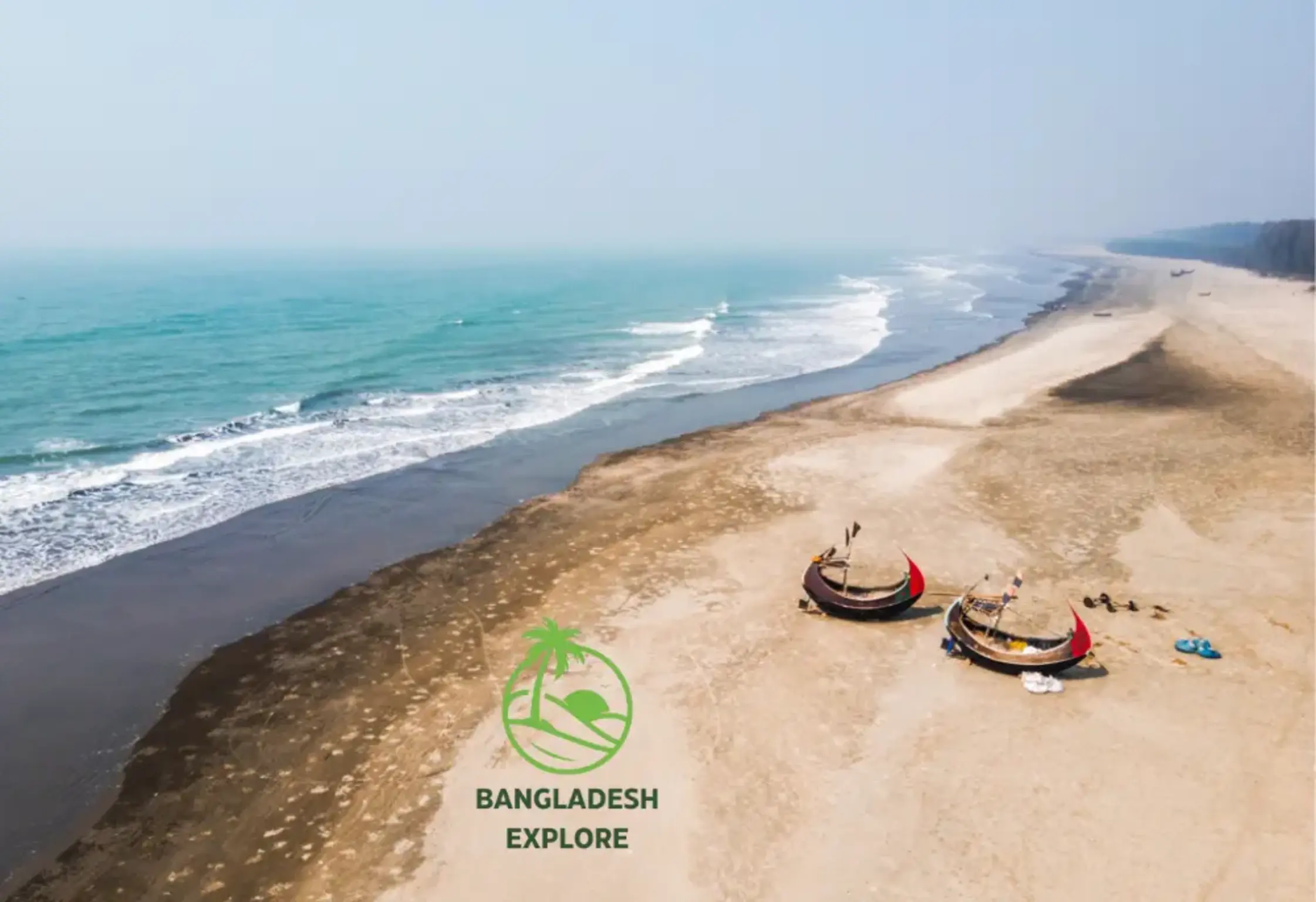
Just before sunset, the character of Cox’s Bazar begins to change. The heat softens, fishing boats become dark shapes against the Bay of Bengal, and families gather along the shoreline. Vendors prepare snacks while the final light stretches across the wet sand.
It is easy to describe Cox’s Bazar only through its length. The coastal district is widely promoted as having approximately 120 kilometers of continuous natural sandy beach. Yet its appeal is not measured only in kilometers.
Cox’s Bazar brings together a working coastline, fishing communities, Rakhine cultural influences, Buddhist heritage, forested hills, local markets and one of Bangladesh’s most important domestic tourism destinations.
For international visitors, however, the experience requires realistic planning. The main beach can become crowded, sea conditions can be dangerous, transportation takes longer than maps suggest and nearby islands or protected areas may have changing access rules.
This Cox’s Bazar travel guide explains when to visit, how to arrive, where to stay, what to experience and how to plan a practical three-day journey.
Information last reviewed: September 16, 2026
Location: Cox’s Bazar District, Chattogram Division, Bangladesh
Recommended duration: Three nights and three full days
Best general season: November through February
Important: Sea conditions, attraction access, train schedules and Saint Martin’s Island restrictions can change. Verify current information before departure.
Why Visit Cox’s Bazar?
Cox’s Bazar is worth visiting for its expansive shoreline, sunsets, seafood, coastal road journeys and access to surrounding natural and cultural landscapes.
The destination suits travelers who enjoy:
- Long beach walks
- Coastal scenery
- Seafood
- Fishing-community stories
- Landscape and documentary photography
- Buddhist heritage
- Local markets
- Scenic road trips
- Slower travel
- Family-friendly resort stays
It is not an isolated tropical island or a polished international beach resort. The central beach areas are busy, commercial and primarily designed for domestic tourism. Infrastructure, cleanliness and service standards vary considerably.
International visitors who arrive with accurate expectations often find Cox’s Bazar culturally interesting and visually rewarding. Those expecting an empty luxury beach may prefer to stay outside the busiest town area or dedicate more time to the Marine Drive coast.
Is Cox’s Bazar Really the World’s Longest Sea Beach?
Cox’s Bazar is widely described in Bangladesh’s tourism promotion and international travel coverage as the world’s longest unbroken natural sandy sea beach, extending for approximately 120 kilometers along the Bay of Bengal.
The coastline continues south from Cox’s Bazar town toward Teknaf and includes different beach sections, fishing areas, settlements and natural environments.
However, travelers should treat “world’s longest” as a widely used tourism description rather than a universally standardized scientific record. Definitions of a continuous beach and methods of measuring coastlines can differ.
The important travel reality is straightforward: Cox’s Bazar has an exceptionally long natural coastline, but visitors experience only selected sections during a normal trip.
Cox’s Bazar at a Glance
| Planning question | Practical answer |
| Where is Cox’s Bazar? | Southeastern Bangladesh on the Bay of Bengal |
| How long should I stay? | Three nights for the town, Marine Drive, Inani and nearby heritage |
| Best weather | November through February |
| Main arrival options | Flight, intercity train, long-distance bus or private vehicle |
| Main beach areas | Laboni, Sugandha and Kolatoli |
| Quieter coastal experience | Inani and selected Marine Drive sections |
| Best for | Beaches, sunsets, seafood, coastal culture and scenic drives |
| Swimming conditions | Potentially dangerous; obey warnings and avoid rough water |
| Is Saint Martin’s included? | No. It is a separate, restricted and seasonal island journey |
| Currency | Bangladeshi taka; carry cash for smaller businesses |
| Language | Bangla is dominant; English availability varies |
The Character of Cox’s Bazar
Cox’s Bazar town is more energetic than many foreign visitors expect. Hotels, restaurants, markets, battery-powered vehicles, auto-rickshaws, tour operators and beach vendors occupy the main tourism zone.
The experience changes as you travel south.
Central beach points offer convenience, crowds and easy access to restaurants. Marine Drive gradually reveals quieter shoreline sections, fishing boats, small communities, hills and less-developed landscapes. Inani introduces a rockier tidal environment, while Ramu and other nearby areas provide cultural experiences away from the beach.
A successful visit should include both sides of Cox’s Bazar:
- The busy public life of the main beach area
- The wider coastal and cultural landscape beyond the town
Best Time to Visit Cox’s Bazar
November to February
November through February generally offers the most comfortable conditions. Temperatures are milder, rainfall is lower and long outdoor journeys are easier.
This is also the busiest tourism season. Hotels may charge more during weekends, public holidays and school vacations.
Book transportation and accommodation early if traveling around:
- December holidays
- New Year
- Long weekends
- Public holidays
- Major festivals
- School vacation periods
March to May
March through May becomes increasingly hot and humid. Beach walks are more comfortable early in the morning or late in the afternoon.
The destination may be less crowded outside major holidays, but midday activities can be exhausting. Choose accommodation with reliable cooling and plan rest periods.
June to October
The monsoon brings heavy rain, rough seas, strong winds and possible transport disruption. Coastal landscapes become dramatic and green, but this is not the safest season for casual swimming or rigid sightseeing schedules.
Weather warnings should take priority over itineraries. Do not enter the sea simply because other visitors are doing so.
Weekdays or Weekends?
Weekdays are normally better for visitors who prefer fewer crowds.
Friday, Saturday and public holidays attract significant domestic tourism. Central beach points, restaurants, Marine Drive and popular attractions can become congested.
How to Reach Cox’s Bazar
By Air from Dhaka
Flying is generally the fastest option. Domestic services connect Dhaka’s Hazrat Shahjalal International Airport with Cox’s Bazar Airport.
Flight schedules and fares vary by date, airline and season. Allow sufficient connection time if arriving in Bangladesh on an international flight. Separate domestic tickets may not protect you if the international flight is delayed.
Cox’s Bazar Airport is close to the town, but road congestion can affect the transfer time. Arrange hotel pickup or a trusted vehicle in advance when arriving at night.
By Train
Bangladesh Railway operates services connecting Dhaka and other cities with Cox’s Bazar, subject to the current timetable.
Train travel offers a more local journey and avoids part of the highway congestion. However:
- Popular tickets sell quickly
- Not every service operates daily
- Classes vary
- Delays are possible
- Foreign online payment may not always work
- The railway station is not beside every hotel area
Use only the official Bangladesh Railway booking platform and verify the exact station, train, date and arrival time.
By Bus
Air-conditioned and non-air-conditioned long-distance buses connect Dhaka, Chattogram and other cities with Cox’s Bazar.
Bus quality varies by operator and vehicle. Before booking, confirm:
- Exact departure point
- Arrival point
- Seat type
- Air-conditioning
- Rest stops
- Luggage policy
- Cancellation terms
- Expected arrival period
Road journeys can take significantly longer because of congestion, weather, construction or holiday traffic. Avoid planning a tightly timed activity immediately after arrival.
By Private Vehicle
A private vehicle offers the greatest flexibility, particularly when combining Chattogram with Cox’s Bazar or traveling along Marine Drive.
The driver should be experienced with the route and current road conditions. Long road transfers require reasonable rest periods.
Where to Stay in Cox’s Bazar
Accommodation is concentrated around several main zones.
Laboni Beach Area
Laboni provides convenient access to the main public beach, shops and tourism facilities.
Choose this area if you want:
- A central location
- Easy evening walks
- Access to vendors and markets
- A lively atmosphere
Expect crowds and noise during busy periods.
Sugandha Beach Area
Sugandha is another active tourism zone with hotels, restaurants and beach access.
It can suit travelers who want a central base without being restricted to one resort, but conditions differ from street to street. Check the exact hotel location rather than relying only on the neighborhood name.
Kolatoli Area
Kolatoli has a large concentration of hotels and restaurants and provides access to the beginning of the Marine Drive corridor.
It is convenient for travelers planning day trips south, although road congestion can occur.
Marine Drive and Inani Area
Hotels and resorts outside the main town can provide a quieter coastal environment. This option is suitable for travelers prioritizing relaxation, landscape and less-crowded beach access.
The trade-offs may include:
- Longer travel to town
- Fewer independent restaurants
- Greater dependence on hotel transport
- Limited evening activity
- Higher transport costs
- More complicated access without a private vehicle
How to Choose a Hotel
Before reserving, confirm:
- Exact location
- Distance from the usable beach access
- Airport or station transfer
- Generator or backup power
- Hot water
- Wi-Fi reliability
- Breakfast
- Elevator access
- Accessibility
- Cancellation terms
- Taxes and service charges
- Construction activity
- Whether the room truly faces the sea
“Sea-view” may mean a partial or distant view. Request a current room image when the view matters.
Best Things to Do in Cox’s Bazar
Walk the Main Cox’s Bazar Beach
The central beach is the easiest introduction to the destination.
Laboni, Sugandha and Kolatoli are commonly used access areas. Each offers a slightly different mix of crowds, vendors, activities and hotels, but they form part of the wider coastline rather than completely separate beaches.
What to Expect
During the day, visitors may encounter:
- Families walking along the shore
- Food and tea vendors
- Horses and recreational vehicles
- Photographers
- Souvenir sellers
- Beach chairs
- Local tourism activities
- Large holiday crowds
Sunset is popular, but sunrise can feel calmer and cooler.
Keep valuables secure and agree on prices before using chairs, horses, recreational vehicles or photography services.
Experience the Cox’s Bazar Sunset
Sunset is one of the simplest and most memorable experiences in Cox’s Bazar.
Arrive before the final light rather than appearing at the moment the sun is expected to disappear. Weather, cloud and haze can affect visibility.
A good sunset experience does not require entering the water. The reflections across wet sand can be appreciated safely from the shore.
Travel Along Marine Drive
The Cox’s Bazar–Teknaf Marine Drive follows the coast south of town and passes beaches, hills, settlements and fishing areas.
The road is an experience rather than only a connection between attractions.
Plan stops according to:
- Weather
- Road conditions
- Daylight
- Tide
- Local access
- Community privacy
- The time required to return safely
Do not assume every open section of coastline is appropriate for swimming. Remote beaches may have no lifeguards or rescue support.
Road-Safety Considerations
Use a reliable vehicle and experienced driver. Seat belts should be used where fitted.
Avoid rushing to complete the entire route in one day. Night driving, heavy rain and fatigue can make the return journey less comfortable.
Visit Himchari
Himchari lies south of Cox’s Bazar town and combines coastal views, hills and a seasonal waterfall environment.
The waterfall should not be presented as a permanent dramatic cascade. Water flow depends heavily on recent rainfall and season.
What to Know Before Visiting
The viewpoint may involve stairs and physical exertion. Travelers with knee problems, limited mobility, heat sensitivity or heart conditions should ask about the current route before climbing.
Verify:
- Current opening status
- Entry charge
- Stair condition
- Weather
- Viewpoint access
- Toilet availability
- Crowd levels
Do not feed monkeys or other wildlife. Keep food secured and maintain distance.
Explore Inani Beach
Inani is known for a different coastal character from the central sandy beach. At suitable tide levels, rocky or coral-like formations become more visible along parts of the shore.
Plan Around the Tide
The appearance and accessibility of the rocks change with the tide. Wet surfaces can be slippery, sharp and uneven.
Wear secure footwear and avoid walking onto exposed formations when waves are rising. Do not remove shells, stones, coral material or marine life.
Inani is often described as quiet, but it can still become busy during weekends and holidays.
Learn About Rakhine Heritage
Cox’s Bazar District includes Rakhine Buddhist communities whose history, food, textiles, religious traditions and craftsmanship form an important part of the region’s cultural identity.
Visitors may encounter Rakhine products or influences in local markets. Cultural engagement should go beyond treating clothing or crafts as decoration.
When visiting a temple or community:
- Dress respectfully
- Remove shoes where required
- Ask before photographing people
- Do not interrupt worship
- Avoid entering private areas
- Purchase crafts directly and fairly where possible
- Listen to local explanations rather than relying on stereotypes
Visit Ramu
Ramu is known for Buddhist temples, monasteries and cultural heritage.
A respectful visit can add historical depth to a beach-centered itinerary. It should not be treated as a staged “ethnic village” experience.
Access conditions, religious events and photography rules vary. Visit with a knowledgeable local guide or confirm directly with the site authority.
Explore Local Markets
Markets provide insight into how Cox’s Bazar functions beyond tourism.
Depending on the market, visitors may find:
- Fresh fish
- Dried fish
- Spices
- Local produce
- Rakhine textiles
- Handicrafts
- Clothing
- Household goods
- Beach souvenirs
Ask before making close portraits. Vendors are working, not performing for cameras.
Dried-fish processing and markets may have strong odors and wet surfaces. Wear suitable footwear and avoid touching products without permission.
See the Working Coastline Responsibly
Fishing remains an important livelihood along the Cox’s Bazar coast.
Boats, nets, drying areas and fish markets can be visually compelling, but working communities require respect.
Do not:
- Climb onto boats without permission
- Interrupt unloading
- Ask workers to repeat actions for a photograph
- Enter processing areas without authorization
- Photograph identifiable children in sensitive working situations
- Describe poverty as a tourist attraction
- Promise payment after taking photographs and then leave
The strongest cultural experience begins with observation and conversation.
What About Dulahazara Safari Park?
Bangabandhu Sheikh Mujib Safari Park at Dulahazara is outside the main Cox’s Bazar tourism zone and requires a separate road journey.
The current article presents a visit as a guaranteed opportunity to see Bengal tigers and elephants. Wildlife sightings, enclosures, animal availability and operating conditions should never be guaranteed.
Before including the park:
- Confirm that it is open
- Check current animal-welfare and visitor conditions
- Verify the travel time
- Review recent official information
- Decide whether the experience matches your values and itinerary
Families should not add it automatically simply because it appears on an old attraction list.
Is Saint Martin’s Island a Day Trip from Cox’s Bazar?
Saint Martin’s Island should not be presented as a guaranteed fourth day of every Cox’s Bazar itinerary.
It is a separate and highly regulated island journey. Tourist access is seasonal, vessel operations can change, daily visitor limits may apply and environmental restrictions have become stricter.
Recent government rules have included:
- A limited tourism season
- Day visits only during part of the season
- Overnight stays only during specified months
- Complete tourism closure during other months
- Daily visitor limits
- Restrictions on motorized vehicles
- Prohibitions on loud beach activities and nighttime disturbance
As of September 2026, travelers should not assume that Saint Martin’s Island is open or that a boat departs from the location used in previous years.
Confirm current government rules, authorized vessel routes, weather and ticket procedures immediately before planning. Do not include Saint Martin’s in a fixed Cox’s Bazar itinerary until access is verified.
Cox’s Bazar Beach Safety
Sea safety is one of the most important omissions from the existing article.
Cox’s Bazar can experience strong waves, rip currents, sudden depth changes and dangerous monsoon conditions. Drownings have occurred along the coast.
Follow Warning Flags and Instructions
Enter the water only in an area currently supervised and approved for swimming.
Follow:
- Lifeguard directions
- Beach warning flags
- Local authority announcements
- Weather warnings
- Restricted-area signs
Do not assume that the presence of other swimmers proves that conditions are safe.
Do Not Swim at Night
Avoid swimming after dark. Visibility is limited, currents are difficult to identify and rescue assistance may be unavailable.
Supervise Children Closely
An adult should remain within immediate reach of a child near the water. Inflatable toys and flotation rings are not substitutes for supervision.
If Caught in a Rip Current
Do not attempt to fight directly against the current toward shore. Try to remain calm, float or tread water, signal for help and move parallel to the shoreline when possible until free of the current.
Prevention remains more reliable than self-rescue. Stay out of rough or unsupervised water.
Remote Beaches Have Less Support
Marine Drive and less-developed beaches may have no lifeguards, warning system, medical help or reliable mobile signal. Enjoy the shoreline without entering the sea when conditions are uncertain.
Food in Cox’s Bazar
Seafood is central to the visitor experience, but quality and pricing vary.
Common choices may include:
- Grilled fish
- Prawns
- Crab
- Fish curry
- Rice
- Lentils
- Vegetable dishes
- Bhorta
- Local snacks
- Tea
- Coconut water
Order Seafood Carefully
Before ordering:
- Ask whether the price is per item, portion or weight.
- Confirm the final price.
- Check whether preparation charges are separate.
- Ask about spice level.
- Choose a busy, clean establishment.
- Make sure seafood is thoroughly cooked.
- Avoid food that has remained unrefrigerated.
Panta ilish should not be presented as the everyday “local favorite” of Cox’s Bazar without context. It is culturally associated with Bengali food traditions and festive presentation, but it is not a defining daily dish of every coastal household.
Dietary Requirements
Travelers with allergies should carry a translated allergy card. Seafood, peanuts, mustard oil, dairy and cross-contamination may be difficult to identify from a menu.
“Vegetarian” may still involve fish-based ingredients or shared cooking oil. Explain dietary requirements clearly.
Responsible Travel in Cox’s Bazar
Reduce Plastic Waste
Carry a reusable bottle where safe refilling is available. Avoid leaving bottles, food packaging or cigarette waste on the beach.
Do Not Remove Marine Material
Leave shells, coral-like formations, stones and marine life where they are. Collecting small pieces still contributes to environmental damage when repeated by many visitors.
Respect Fishing Communities
Do not block boats, nets or unloading routes. Ask permission before entering a work area or photographing someone closely.
Do Not Treat Refugee Camps as Attractions
The Rohingya refugee settlements in Cox’s Bazar District are humanitarian sites, not tourism or photography destinations.
Do not attempt to enter, photograph or organize an informal “camp tour.” Access is controlled and requires legitimate humanitarian or official authorization. Protecting the dignity and safety of displaced people must come before curiosity or content creation.
Avoid Wildlife Exploitation
Do not pay for photographs involving restrained, drugged or mistreated wildlife. Never feed wild animals for a photograph.
A Practical 3-Day Cox’s Bazar Itinerary
Day 1: Arrival and the Main Beach
Afternoon
Starting Dateto the hotel and allow time to recover from the journey. Confirm the beach-safety conditions and explore the immediate neighborhood before committing to additional activities.
Late Afternoon
Walk along one of the main beach areas. Observe how local families, vendors and visitors use the shoreline.
Stay for sunset from a safe position above the active waterline.
Evening
Choose a reputable restaurant and confirm seafood prices before ordering. Discuss the following day’s vehicle, driver, weather and route.
Day 2: Himchari, Inani and Marine Drive
Morning
Leave after breakfast and travel south along Marine Drive. Visit Himchari if it is open and appropriate for the group’s mobility.
Do not climb the viewpoint during unsafe weather.
Midday
Continue toward Inani. Check the tide before approaching exposed rocks. Allow time for a relaxed lunch rather than rushing between stops.
Afternoon
Explore selected coastal viewpoints and communities only where access is permitted. Return before driving conditions become difficult.
Sunset
Stop at an appropriate beach or viewpoint based on current weather, tide and driver advice. Avoid entering the sea at an isolated location.
Day 3: Culture, Community and a Slower Coast
Morning Option 1: Ramu
Visit Buddhist heritage sites with respect for worship, dress and photography rules.
Morning Option 2: Working Coast
Arrange a consent-led visit connected with fishing or market life. Do not enter restricted workplaces or stage people for photographs.
Afternoon
Return to Cox’s Bazar town for a market visit, a quiet beach walk or rest at the hotel.
Evening
Enjoy a final sunset and prepare for the next morning’s flight, train or road transfer.
This itinerary deliberately excludes Saint Martin’s Island. Add it only as a separate journey after confirming current seasonal permission and authorized transportation.
What to Pack
Bring:
- Lightweight, breathable clothing
- Modest clothing for town and religious sites
- Secure walking sandals or shoes
- Sunscreen
- Hat
- Sunglasses
- Reusable water bottle
- Insect repellent
- Personal medication
- Small first-aid kit
- Rain protection during monsoon
- Dry bag or waterproof phone pouch
- Power bank
- Passport copy
- Hotel information
- Cash in Bangladeshi taka
Swimwear is best kept for appropriate hotel or beach settings. Cover up when moving through town, markets and cultural sites.
Practical Advice for Foreign Visitors
Money
Hotels and larger restaurants may accept cards, but payment systems can fail. Keep enough Bangladeshi taka for transport, food, tickets and small purchases.
Use established banks or reliable ATMs. Do not display large amounts of cash.
Internet
Mobile internet is generally available in the town, although service can weaken along remote sections of Marine Drive.
A local SIM requires the applicable identification and registration process. Hotels may provide Wi-Fi, but speed and reliability vary.
Language
Bangla is the main language. English is used at some hotels and tourism businesses, but not universally.
A local guide can assist with cultural interpretation and communication, particularly outside the main hotel zone.
Dress
Cox’s Bazar is socially conservative. Lightweight clothing is suitable, but modest dress is appreciated away from the immediate beach.
Cover shoulders and knees when entering Buddhist, Islamic or other religious sites.
Solo Travelers
Solo visitors should:
- Use verified transportation
- Avoid isolated beaches after dark
- Tell the hotel where they are going
- Keep the phone charged
- Agree on fares before travel
- Avoid carrying valuables openly
- Arrange late-night arrival transfers
- Follow weather and sea warnings
Women traveling alone may prefer a reputable central hotel or resort and prearranged transportation.
Is Cox’s Bazar Worth Visiting?
Cox’s Bazar is worth visiting when you want to understand Bangladesh’s coastal landscape rather than simply add another tropical beach to a travel list.
Its most memorable experiences often happen between the headline attractions: fishermen preparing boats, families gathering at sunset, tea shared during a road journey or the transition from crowded town beaches to the open Marine Drive coast.
The destination has challenges. Crowding, waste, changing access, inconsistent service and sea-safety risks require honest preparation. Yet Cox’s Bazar also offers a side of Bangladesh that cannot be understood from Dhaka alone.
Allow enough time, travel beyond the busiest beach point and approach local communities with respect. The coastline becomes far more meaningful when it is experienced as a living environment rather than only a record-breaking stretch of sand.
Frequently Asked Questions
What is Cox’s Bazar famous for?
Cox’s Bazar is famous for its exceptionally long natural sandy coastline along the Bay of Bengal. It is also known for Marine Drive, Inani Beach, fishing communities, seafood and nearby Buddhist and Rakhine cultural heritage.
How many days are enough for Cox’s Bazar?
Three full days and three nights are suitable for most first-time international visitors. This allows time for the main beach, Himchari, Inani, Marine Drive and a cultural or community-focused experience without rushing.
What is the best month to visit Cox’s Bazar?
November through February normally provides the most comfortable weather. December and major holiday periods are also the busiest, so weekdays are preferable when possible.
Is Cox’s Bazar safe for foreign tourists?
The main tourism areas can be visited with ordinary precautions, but sea conditions are a serious risk. Follow warning flags and lifeguard instructions, avoid swimming at night and do not enter rough or unsupervised water.
Can foreigners swim at Cox’s Bazar Beach?
Foreigners may use appropriate swimming areas, but permission does not mean conditions are safe every day. Swim only where current local guidance indicates it is safe, stay close to shore and obey every warning flag.
How do I travel from Dhaka to Cox’s Bazar?
Travelers can use a domestic flight, intercity train, long-distance bus or private vehicle. The best option depends on schedule, budget, comfort and ticket availability.
Is Inani Beach better than the main Cox’s Bazar beach?
Inani offers a less urban coastal setting and visible rocky formations at suitable tides. The main beach provides easier access to hotels, restaurants and tourism facilities. Neither is universally better; they serve different travel preferences.
Is Himchari waterfall active all year?
No. The waterfall is seasonal and depends on rainfall. Verify current conditions and do not plan the entire visit around seeing a strong waterfall.
Can I visit Saint Martin’s Island from Cox’s Bazar?
Only when current government rules permit tourist access and authorized vessels operate. Saint Martin’s is seasonal and regulated, so it should be planned separately rather than treated as a guaranteed Cox’s Bazar day trip.
Is Cox’s Bazar suitable for families?
Yes, but adults must supervise children closely near the sea. Families should choose accommodation carefully, use verified transportation and avoid rough or unsupervised water.
Is Cox’s Bazar suitable for travelers with limited mobility?
Accessibility is inconsistent. Sand, stairs, uneven surfaces and vehicle transfers can create barriers. Confirm step-free hotel access, elevators, suitable transport and attraction conditions before booking.