Bangladesh is often recognized for its lush rivers, colorful festivals, ancient archaeological sites, and the world’s largest mangrove forest. Yet one of the country’s greatest treasures remains surprisingly undiscovered by many international travelers—its incredible food.
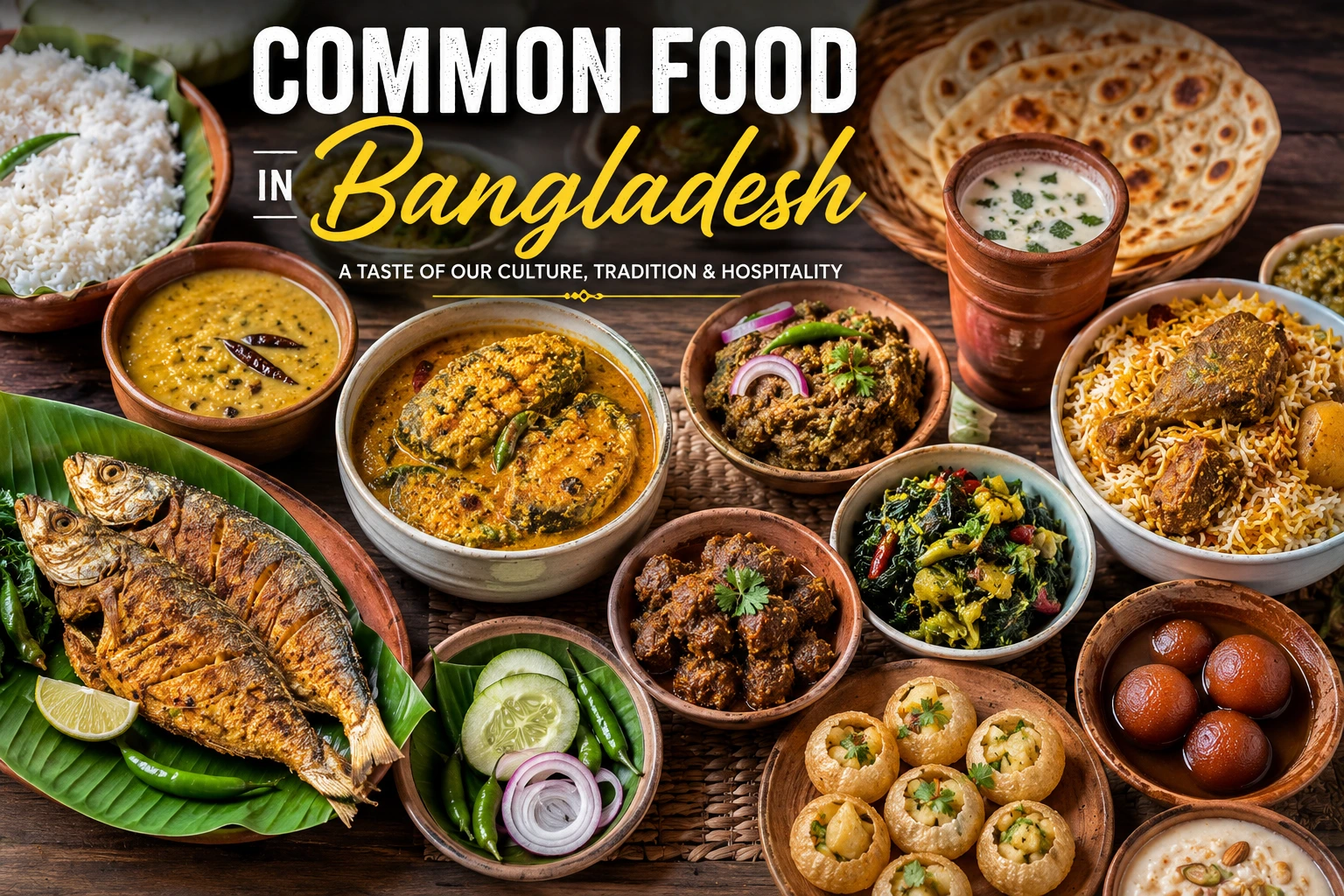
If you’re planning a trip to Bangladesh, tasting the common food in Bangladesh is one of the best ways to experience its culture. Meals here are more than daily nourishment. They reflect centuries of history, regional traditions, Mughal influences, river-based lifestyles, and warm hospitality.
Unlike many South Asian cuisines, Bangladeshi food focuses on balancing fresh ingredients, aromatic spices, fish, rice, seasonal vegetables, and slow cooking techniques. Every region offers its own specialties, creating an unforgettable culinary journey.
Whether you’re exploring bustling Dhaka, enjoying a Dhaka Food Tour, relaxing in Sylhet, cruising through the Sundarbans, or discovering rural villages, you’ll find authentic local dishes everywhere.
This guide introduces the most common foods eaten across Bangladesh, explains their cultural importance, highlights regional favorites, and helps international visitors know exactly what to order during their trip.
Why Bangladeshi Food Is Unique
Bangladesh sits on one of the world’s largest river deltas. Rivers shape not only transportation and agriculture but also daily meals.
Unlike neighboring countries, Bangladeshi cuisine emphasizes:
- Freshwater fish
- Seasonal vegetables
- Mustard oil
- Aromatic rice
- Lentils
- Fresh herbs
- Homemade spice blends
- Slow-cooked curries
Most meals combine several small dishes served with steamed rice, allowing diners to enjoy different flavors at once.
Food in Bangladesh also changes with:
- Seasons
- Religious festivals
- Harvest periods
- Family traditions
- Regional culture
This diversity makes Bangladeshi cuisine one of South Asia’s most underrated culinary experiences.
What Is the Most Common Food in Bangladesh?
Rice is unquestionably the most common food in Bangladesh.
Almost every household serves rice two or even three times a day.
Rice is usually accompanied by:
- Fish curry
- Lentils (Dal)
- Vegetable dishes
- Fried vegetables
- Pickles
- Meat curry
- Bhorta (mashed vegetables with mustard oil)
For Bangladeshis, rice is not simply a side dish—it is the center of nearly every meal.
Visitors quickly notice that lunch and dinner typically include several small dishes surrounding a generous serving of steamed rice.
Rice: The Foundation of Bangladeshi Cuisine
Rice has been cultivated in Bangladesh for thousands of years.
Thanks to fertile river plains, the country produces numerous rice varieties, each suitable for different dishes.
Popular varieties include:
- Miniket
- Chinigura
- Kataribhog
- Kalijira
- Basmati (for special occasions)
Rice is used for:
- Plain steamed rice
- Khichuri
- Pulao
- Biryani
- Pitha
- Desserts
- Breakfast dishes
Travelers will find rice served almost everywhere—from luxury restaurants to roadside eateries.
Fish: Bangladesh’s National Culinary Identity
Bangladesh is often called the “Land of Rivers.”
Naturally, fish has become one of the country’s defining foods.
Freshwater rivers produce dozens of fish species enjoyed throughout the year.
Popular fish include:
- Hilsa (Ilish)
- Rui
- Katla
- Boal
- Pabda
- Koi
- Shing
- Magur
Fish may be:
- Fried
- Cooked with mustard
- Prepared in light curries
- Steamed
- Smoked
- Mixed with vegetables
Every region prepares fish differently, making it one of the most exciting foods for travelers.
Shorshe Ilish: Bangladesh’s Signature Dish
No guide about common food in Bangladesh is complete without Shorshe Ilish.
Hilsa fish cooked in mustard paste represents the country’s culinary heritage.
The combination of:
- Fresh hilsa
- Mustard seeds
- Green chilies
- Turmeric
- Mustard oil
creates an unforgettable flavor unlike any other fish dish in South Asia.
For many Bangladeshis, this meal symbolizes family gatherings, monsoon season, and national pride.
Dal: The Everyday Comfort Food
Dal accompanies almost every traditional meal.
Made from lentils simmered with onions, garlic, turmeric, and spices, dal provides both nutrition and comfort.
Popular versions include:
- Masoor Dal
- Mug Dal
- Cholar Dal
Many families eat dal daily.
Its simplicity perfectly balances spicy curries and fried dishes.
Bhorta: Bangladesh’s Favorite Side Dish
One of the most distinctive features of Bangladeshi cuisine is Bhorta.
Bhorta consists of mashed vegetables or fish mixed with:
- Mustard oil
- Green chilies
- Onions
- Salt
- Fresh coriander
Popular varieties include:
- Potato Bhorta
- Eggplant Bhorta
- Shrimp Bhorta
- Dry Fish Bhorta
- Tomato Bhorta
- Pumpkin Bhorta
Each region has its own recipes, making bhorta one of Bangladesh’s most beloved comfort foods.
Popular Meat Dishes in Bangladesh
Although fish dominates everyday meals, meat dishes are equally important in Bangladeshi cuisine. Chicken, beef, mutton, and duck are commonly served during family gatherings, festivals, weddings, and special occasions. These dishes showcase the country’s rich culinary traditions, combining aromatic spices with slow-cooking techniques that create deep, memorable flavors.
Beef Bhuna
Beef Bhuna is one of the most beloved meat dishes in Bangladesh. Tender pieces of beef are slowly cooked with onions, garlic, ginger, and a blend of traditional spices until the gravy becomes thick and flavorful.
Unlike many curries, Beef Bhuna contains very little liquid, allowing the spices to coat every piece of meat perfectly. It is commonly served with steamed rice, naan, or paratha.
Kacchi Biryani
Kacchi Biryani is perhaps the most famous festive dish in Bangladesh. Layers of fragrant basmati rice and marinated mutton are cooked together over low heat, allowing every grain of rice to absorb the rich flavors.
Often served with Borhani and salad, Kacchi Biryani is a must-try for visitors exploring Bangladeshi cuisine.
Morog Polao
Morog Polao is a lighter alternative to biryani and is particularly popular during family celebrations.
Prepared with aromatic rice, tender chicken, clarified butter (ghee), and whole spices, Morog Polao offers delicate flavors that appeal to both local and international visitors.
Chicken Roast
Unlike Western roasted chicken, Bangladeshi Chicken Roast is cooked in a creamy, mildly spiced gravy.
It is traditionally served at weddings alongside Kacchi Biryani and remains one of Bangladesh’s most popular celebration dishes.
Duck Curry
During the winter months, duck curry becomes a seasonal favorite across rural Bangladesh.
Slow-cooked with potatoes and traditional spices, duck meat develops a rich flavor that pairs beautifully with steamed rice.
Bangladesh’s Famous Street Foods
Exploring local street food is one of the best ways to understand everyday life in Bangladesh. From busy markets in Dhaka to small roadside stalls in district towns, delicious snacks are available throughout the day.
If you join a Dhaka Food Tour, you’ll discover many of these authentic street food experiences while learning about the city’s culinary heritage.
Fuchka
Often called Bangladesh’s favorite street snack, Fuchka consists of crispy hollow shells filled with mashed potatoes, chickpeas, spices, tamarind water, and fresh herbs.
The explosion of sweet, sour, spicy, and tangy flavors makes it one of the country’s most addictive foods.
Chotpoti
Prepared with yellow peas, potatoes, boiled eggs, tamarind sauce, chopped onions, green chilies, and fresh coriander, Chotpoti is both hearty and flavorful.
It is especially popular during the evening when families gather at local food stalls.
Jhalmuri
Jhalmuri is a healthy, crunchy snack made with puffed rice, mustard oil, onions, roasted peanuts, fresh chilies, coriander, spices, and seasonal vegetables.
It’s inexpensive, delicious, and available almost everywhere.
Singara
Similar to a samosa but uniquely Bangladeshi, Singara is filled with spiced potatoes, peas, peanuts, or minced meat before being deep-fried until golden brown.
Fresh Singara paired with tea is a favorite afternoon snack across Bangladesh.
Egg Chop
Egg Chop features a boiled egg wrapped in seasoned mashed potatoes, coated in breadcrumbs, and fried until crispy.
It is commonly sold by roadside vendors during the evening.
Traditional Bangladeshi Breakfast Foods
Breakfast in Bangladesh is simple yet satisfying.
Popular morning dishes include:
- Paratha with vegetable curry
- Dal
- Fried eggs
- Ruti (flatbread)
- Khichuri
- Vegetable Bhaji
- Halim (during Ramadan)
- Chitoi Pitha (winter)
Tea is almost always served alongside breakfast.
Pitha: Bangladesh’s Traditional Rice Cakes
Pitha represents one of Bangladesh’s oldest culinary traditions.
Made primarily from rice flour, coconut, date palm jaggery, and milk, these traditional cakes are especially popular during winter.
Popular varieties include:
- Bhapa Pitha
- Patisapta
- Chitoi Pitha
- Teler Pitha
- Dudh Puli
- Pakan Pitha
Many rural communities organize Pitha festivals where visitors can sample dozens of traditional varieties.
For travelers interested in experiencing authentic Bangladeshi traditions, combining food experiences with A Cultural Tour provides an excellent opportunity to explore village life, seasonal festivals, and local hospitality.
Delicious Bangladeshi Desserts
Bangladesh has a remarkable tradition of sweets, many of which have been enjoyed for centuries.
Popular desserts include:
- Mishti Doi
- Rasmalai
- Rosogolla
- Cham Cham
- Sandesh
- Kheer
- Firni
- Payesh
Many districts have their own famous sweet shops, making dessert tasting an enjoyable part of traveling across the country.
Refreshing Drinks to Try in Bangladesh
Bangladesh’s tropical climate has inspired a variety of refreshing traditional beverages.
Popular drinks include:
- Borhani
- Sweet Lassi
- Salted Lassi
- Sugarcane Juice
- Green Coconut Water
- Lemon Sharbat
- Tamarind Juice
- Fresh Mango Juice (summer)
Borhani deserves special mention because it is uniquely associated with Bangladeshi wedding feasts and festive meals.
Seasonal Foods You Should Experience
One of the best aspects of Bangladeshi cuisine is its strong connection to the seasons.
Summer
- Mangoes
- Jackfruit
- Lychee
- Green mango curry
Monsoon
- Fresh Hilsa
- Pumpkin dishes
- Various river fish
Winter
- Pitha festivals
- Date palm jaggery
- Duck curry
- Fresh vegetables
Planning your visit during different seasons allows you to experience an entirely new side of Bangladeshi food culture.
Regional Food Specialties Across Bangladesh
Every region contributes something unique to Bangladeshi cuisine.
- Dhaka is famous for Kacchi Biryani, Bakarkhani, and traditional kebabs.
- Sylhet offers citrus-infused dishes, seven-layer tea, and tribal foods. Visitors combining culinary experiences with a Sreemangal and Sylhet Tour can also enjoy tea gardens and local village cuisine.
- Chattogram is known for Mezbani Beef and seafood.
- Khulna specializes in freshwater fish and shrimp.
- Rajshahi is famous for mangoes and sweets.
- North Bengal offers indigenous recipes, rice dishes, and seasonal vegetables that travelers often discover during a North Bengal Tour.
These regional flavors demonstrate why Bangladeshi cuisine is so diverse and rewarding to explore.
Vegetarian Foods in Bangladesh
Although Bangladesh is famous for fish and meat dishes, vegetarian cuisine is equally rich and deeply rooted in everyday life. Fresh vegetables are available year-round, and many traditional recipes are naturally vegetarian.
Popular vegetarian dishes include:
- Aloo Bhorta (Mashed Potatoes)
- Begun Bharta (Smoked Eggplant)
- Mixed Vegetable Curry
- Pumpkin Curry
- Spinach with Lentils
- Bottle Gourd Curry
- Fried Eggplant
- Cholar Dal
- Moong Dal
- Fried Seasonal Greens
Many Hindu festivals and family occasions also feature elaborate vegetarian meals prepared using locally grown ingredients and traditional cooking techniques.
Where to Experience Authentic Bangladeshi Food
One of the best things about Bangladesh is that authentic food can be enjoyed almost anywhere. From luxury restaurants in Dhaka to family-run eateries in rural villages, delicious local meals are easy to find.
Here are some of the best places to experience traditional Bangladeshi cuisine:
Dhaka
The capital city offers everything from historic Mughlai restaurants to modern Bangladeshi fusion cuisine. Travelers can combine food experiences with a Dhaka Food Tour or Discover Dhaka City to explore famous restaurants, bustling markets, and Old Dhaka’s legendary street food.
Old Dhaka
Old Dhaka is considered the culinary heart of Bangladesh. Its narrow streets are filled with famous biryani houses, kebab shops, sweet stores, and traditional bakeries.
Visitors often combine food experiences with an Old Dhaka Tour or an Old Dhaka and Sonargaon Tour, allowing them to enjoy both historical landmarks and authentic local cuisine.
Sylhet
Sylhet is known for fresh fish, citrus-based dishes, Khasi tribal cuisine, and the world-famous Seven Layer Tea.
Food lovers can experience these specialties during a Sreemangal and Sylhet Tour, where tea gardens and local villages offer unique culinary experiences.
Chattogram
Seafood lovers will enjoy Chattogram’s fresh fish, dried fish dishes, and the famous Mezbani Beef, a regional specialty with bold flavors.
Khulna and the Sundarbans
Travelers visiting the Sundarbans and Bagerhat Tour can enjoy fresh river fish, prawns, crabs, and traditional coastal recipes rarely found elsewhere in the country.
Food Etiquette in Bangladesh
Understanding local dining customs enhances your travel experience and shows respect for Bangladeshi culture.
Some common dining traditions include:
- Meals are often eaten with the right hand.
- Rice is usually served first, followed by several side dishes.
- Guests are frequently encouraged to take second or third servings as a sign of hospitality.
- Sharing food is considered an important cultural tradition.
- Tea is commonly offered after meals.
Visitors should not be surprised if hosts continue encouraging them to eat more—hospitality is an essential part of Bangladeshi culture.
Is Bangladeshi Food Spicy?
One of the most common questions international visitors ask is whether Bangladeshi food is extremely spicy.
The answer depends on the dish.
Traditional home-cooked meals are generally balanced rather than overwhelmingly hot. While green chilies are widely used, they often enhance flavor instead of overpowering it.
Restaurants serving international travelers can usually adjust spice levels upon request.
If you prefer mild food, simply ask for “less spicy,” and most restaurants will happily accommodate your preference.
Food Safety Tips for International Travelers
Bangladesh offers incredible culinary experiences, but first-time visitors should follow a few practical tips.
- Drink bottled or filtered water.
- Choose busy restaurants with a high customer turnover.
- Eat freshly cooked meals whenever possible.
- Wash fruits before eating.
- Be cautious with ice from unknown sources.
- Carry hand sanitizer while exploring street food markets.
Following these simple precautions allows travelers to enjoy local cuisine safely.
Why Food Should Be Part of Your Bangladesh Travel Experience
Food tells the story of Bangladesh better than almost anything else.
Every meal reflects the country’s rivers, fertile farmland, diverse communities, rich history, and centuries-old traditions. Whether you are enjoying Hilsa by the Padma River, tasting Pitha in a rural village, or eating Kacchi Biryani in Old Dhaka, every dish creates a deeper connection with Bangladesh.
If you want to experience Bangladesh beyond its famous landmarks, make local food a central part of your journey. Combining culinary experiences with cultural tours allows you to understand the country’s heritage through its flavors, traditions, and hospitality.
As one of the Best Tour Agency in Bangladesh, Bangladesh Explore designs authentic travel experiences that combine history, nature, culture, and local cuisine. Whether you’re joining a Half-Day Tour Dhaka, exploring heritage sites, or traveling across multiple regions, tasting traditional food will undoubtedly become one of the highlights of your trip.
The common food in Bangladesh represents far more than everyday meals—it reflects the country’s history, geography, traditions, and warm hospitality. From aromatic rice and flavorful fish curries to delicious street food, traditional sweets, and seasonal specialties, every dish offers visitors a genuine taste of Bangladeshi life.
Unlike many destinations where food is simply an attraction, in Bangladesh it is an essential part of family, celebration, and cultural identity. Every region contributes unique flavors, ingredients, and recipes that make the country’s cuisine incredibly diverse.
Whether you are planning your first visit or returning to explore more, don’t miss the opportunity to discover Bangladesh through its food. Every meal tells a story, and every bite brings you closer to understanding one of South Asia’s most authentic culinary traditions.
FAQ
What is the most common food in Bangladesh?
Rice is the most common food in Bangladesh. It is typically served with fish, lentils (dal), vegetables, meat curries, and bhorta, making it the foundation of almost every traditional meal.
What is the national food of Bangladesh?
Although Bangladesh does not officially declare a national dish, Shorshe Ilish (Hilsa fish cooked with mustard) is widely regarded as the country’s signature and most iconic food.
Is Bangladeshi food spicy?
Bangladeshi cuisine is flavorful rather than excessively spicy. While many dishes include fresh green chilies and aromatic spices, restaurants can usually prepare milder versions for international visitors.
What are the best street foods to try in Bangladesh?
Some of the most popular Bangladeshi street foods include Fuchka, Chotpoti, Jhalmuri, Singara, Egg Chop, and various grilled kebabs. These snacks are widely available in cities and local markets.
Is vegetarian food available in Bangladesh?
Yes. Bangladesh offers a wide variety of vegetarian dishes made with lentils, potatoes, eggplant, spinach, pumpkin, seasonal vegetables, and rice. Many traditional meals are naturally vegetarian.
What desserts should I try in Bangladesh?
Popular Bangladeshi desserts include Mishti Doi, Rasmalai, Rosogolla, Cham Cham, Firni, Payesh, and various traditional Pitha made from rice flour and date palm jaggery.
Where can tourists enjoy authentic Bangladeshi food?
Visitors can experience authentic Bangladeshi cuisine in Dhaka, Old Dhaka, Sylhet, Chattogram, Khulna, Rajshahi, and rural villages. Joining a guided food or cultural tour is one of the best ways to discover local specialties.
Is Bangladeshi food different from Indian food?
Yes. While the two cuisines share some spices and cooking techniques, Bangladeshi food places greater emphasis on freshwater fish, mustard oil, rice, seasonal vegetables, and lighter spice combinations, creating a unique culinary identity.
What drinks are popular in Bangladesh?
Traditional drinks include Borhani, Sweet Lassi, Salted Lassi, Sugarcane Juice, Lemon Sharbat, Green Coconut Water, Tamarind Juice, and fresh seasonal fruit juices.
Why should food lovers visit Bangladesh?
Bangladesh offers one of South Asia’s most authentic culinary experiences. Its combination of fresh ingredients, regional diversity, centuries-old recipes, warm hospitality, and affordable dining makes it an excellent destination for food-focused travelers.