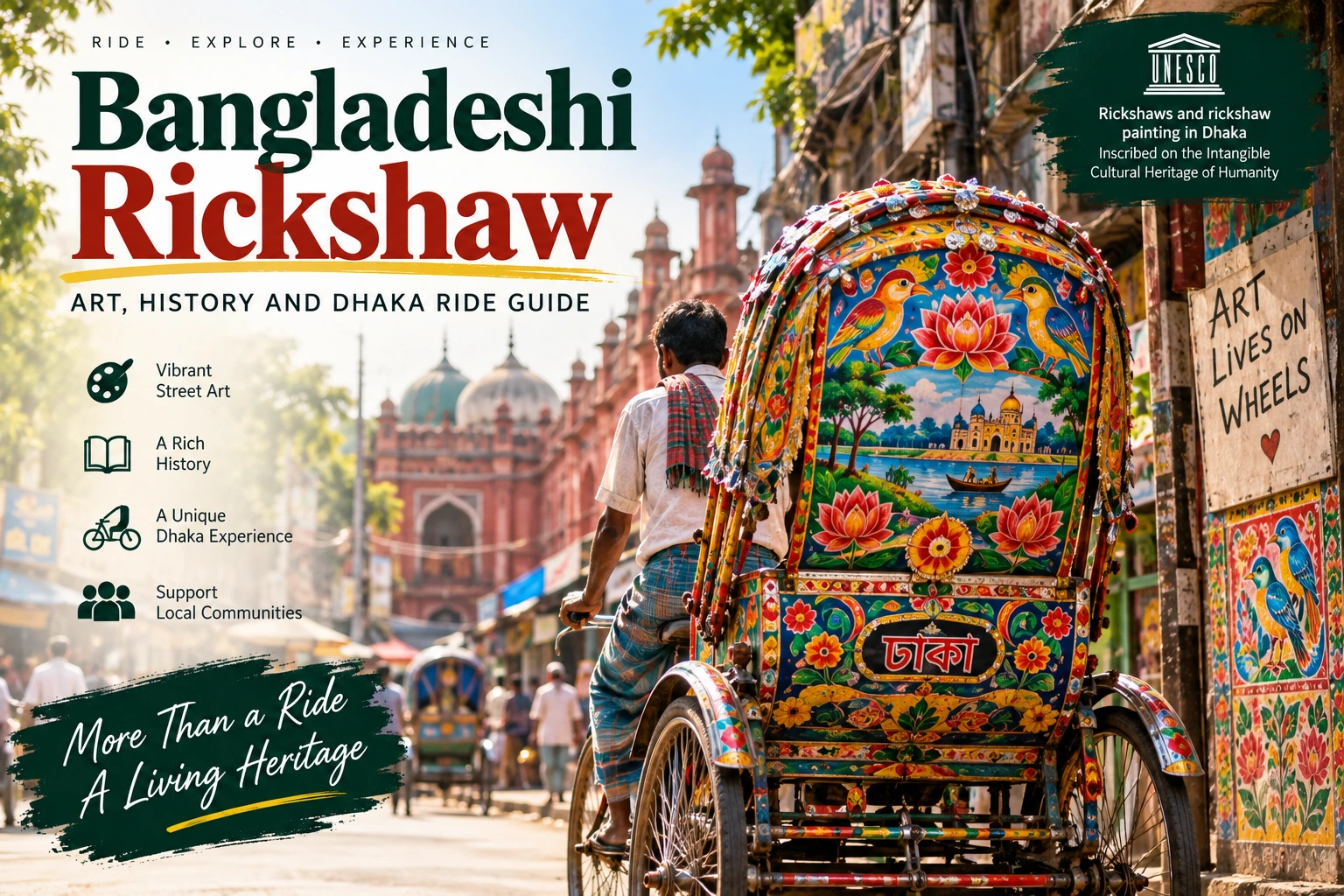
A Bangladeshi rickshaw is more than a short-distance vehicle. In Dhaka, the hand-built three-wheeler is everyday transport, a source of income and a moving canvas covered with painted flowers, birds, landscapes, film-inspired imagery, geometric patterns and bright metal ornament. A ride through the capital’s smaller streets places visitors inside the rhythm of the city rather than behind a car window.
In December 2023, UNESCO inscribed “Rickshaws and rickshaw painting in Dhaka” on the Representative List of the Intangible Cultural Heritage of Humanity. That recognition applies to a living cultural practice: the vehicle, its craftsmanship, its painting traditions and the communities that make, operate and use it. It does not turn every rickshaw into a museum object. These are working vehicles, and the person pedaling one is working too.
This guide is written for visitors from the United States and other international markets. It explains rickshaw history and art, how a Dhaka rickshaw ride works, how to agree a fare respectfully, where a ride makes sense, what to avoid, how to ask for photography consent and how a guided experience can connect travelers with artisans without treating people as props.
Quick Answer: What Should Foreign Visitors Know?
A cycle rickshaw is best for a short neighborhood journey, especially in Old Dhaka and other areas where narrow lanes suit slow-moving transport. Tell the driver your destination, agree on the total fare before boarding, confirm whether the price is for the whole rickshaw or per person, and pay in Bangladeshi taka at the end.
There is no universal tourist fare and usually no meter. Price changes with distance, congestion, rain, time, road restrictions and demand. Ask a hotel receptionist, guide or nearby shopkeeper for a reasonable current estimate before negotiating. If the driver’s price does not suit you, decline politely rather than arguing after the ride.
For safety, choose a short route away from fast traffic, sit centered, keep phones and bags secure, and avoid boarding or getting down in moving traffic. Ask before photographing the driver or making a close portrait. A fare pays for transport; it does not purchase a person’s image or story.
What Is a Bangladeshi Rickshaw?
The traditional Bangladeshi cycle rickshaw is a human-powered three-wheeled passenger vehicle. A driver pedals from the front while one or, commonly, two passengers sit on a raised cushioned seat beneath a folding or fixed canopy. Construction and decoration vary by city, workshop, owner and period.
Visitors should distinguish it from a CNG auto-rickshaw, the green motorized three-wheeler used for longer urban journeys. When this article says “rickshaw,” it means the pedal-powered cycle rickshaw unless stated otherwise.
Rickshaw, Cycle Rickshaw and Auto-Rickshaw
The words are sometimes mixed in international travel content:
- Cycle rickshaw: Pedal-powered, slow and suited to short local trips.
- CNG auto-rickshaw: Motorized and fueled by compressed natural gas; used for longer journeys.
- Hand-pulled rickshaw: A different form historically associated with parts of South Asia and not the standard Dhaka passenger vehicle.
Using the correct term helps when asking for directions, researching fares or briefing a guide. A “Dhaka rickshaw ride” in a heritage itinerary generally means a cycle rickshaw ride.
History of Rickshaws in Bangladesh
Banglapedia records that Dhaka received the cycle rickshaw through Calcutta. European jute exporters in Narayanganj and Netrokona imported cycle rickshaws for personal use in 1938, while Dhaka residents were then more accustomed to horse carriages, palanquins and city canal boats.
The new vehicle did not become culturally distinctive overnight. It entered an existing transport economy and gradually became embedded in urban life. As Dhaka expanded, rickshaws offered flexible door-to-door movement through streets that larger vehicles could not easily use.
How Rickshaw Art Developed
Banglapedia dates rickshaw art as an urban phenomenon from around the 1950s. It also notes a relationship with hand-painted cinema billboards: some rickshaw painters had worked on movie advertising or apprenticed with billboard artists. Skills were traditionally passed from an ustad, or master, to an apprentice.
That workshop system matters because rickshaw painting is not simply spontaneous decoration by a driver. A network of makers may build the frame, shape metal, upholster the seat, stitch the hood, paint panels and add ornament. The final vehicle brings several trades together.
Why Rickshaws Became a Symbol of Dhaka
Rickshaws are visually memorable, but their cultural importance comes from daily use. They connect homes, markets, schools, workplaces and transport stops. Drivers carry groceries, families, office workers and visitors. Painters and workshop craftspeople earn livelihoods through the vehicles.
For travelers, this creates an important distinction: rickshaw culture is not a staged performance. The best experience respects its ordinary function. A beautiful vehicle waiting for a passenger remains part of someone’s workday.
UNESCO Rickshaw Art Recognition
At its eighteenth session in Botswana, UNESCO’s Intergovernmental Committee inscribed “Rickshaws and rickshaw painting in Dhaka” in December 2023. UNESCO described the rickshaw as a human-propelled three-wheeled form of transport and highlighted its handmade construction, extensive decoration and role in the identity of Dhaka and its residents.
The element is also called Dhakar Rickshaw or Rickshawchitra. UNESCO noted that almost every part of a rickshaw can be painted or decorated and characterized the practice as an established form of urban folk art transmitted with passion.
What Intangible Cultural Heritage Means
UNESCO did not declare a particular vehicle a World Heritage Site. The Representative List recognizes knowledge, skills, practices and cultural expression carried by communities. In this case, safeguarding concerns the living ecosystem of rickshaw makers, painters, drivers, owners and users.
Why Recognition Matters
Recognition can create visibility for artisans whose names are often absent when their work is photographed or sold. It can also encourage documentation, training, fair commissions and public interest. However, a UNESCO label alone does not guarantee stable income or transmission to a new generation.
Responsible cultural tourism should therefore create value for practitioners. Travelers can commission work through credible channels, buy attributed pieces, pay agreed prices and ask who made an object. Photographing finished art without learning anything about its maker is a thinner form of engagement.
Understanding Rickshaw Art Bangladesh
Rickshaw art is often described as colorful, but color is only the first layer. It turns a functional vehicle into a public visual statement. Repeated motifs connect popular taste, workshop tradition, owner preference and the painter’s imagination.
Common Motifs and Materials
Visitors may notice:
- Flowers, leaves, birds and animals
- Rivers, villages, mountains and idealized landscapes
- City scenes, monuments and national symbols
- Film-inspired faces or dramatic compositions
- Religious or moral phrases
- Geometric borders and repeated patterns
- Reflective metal, tassels, plastic flowers and stitched canopy designs
Motifs change over time. A new subject can enter workshop vocabulary through cinema, television, politics, advertising or popular events. Repetition does not necessarily mean a lack of creativity; it can show apprenticeship, customer demand and a recognizable house style.
More Than the Painted Backboard
International photographs often isolate the painted rear panel, yet the entire vehicle can be designed. Look at the hood, side panels, seat, footrest, mudguards, frame and metal cutwork. The view from behind is only one part of the composition.
When comparing vehicles, notice how practical requirements shape the art. Paint and ornament must survive dust, rain, contact and continuous road use. A working rickshaw is repaired, repainted and modified, so it is never entirely static.
The People Behind the Paint
Rickshaw painting is learned through observation and practice. The ustad-apprentice relationship transmits brushwork, panel preparation, motif construction and workshop knowledge. Other specialists contribute construction, upholstery, metalwork or hood decoration.
If a guide introduces an artisan, ask open questions: How did they learn? Which part do they paint? How long does a panel take? Which motifs are popular now? What changes have they seen? Request permission before recording answers, and agree separately if the material will be used commercially.
How a Dhaka Rickshaw Ride Works
Cycle rickshaws usually serve short, flexible routes. A driver may wait near a market, residential lane, transit point or permitted junction. Some roads restrict rickshaws, so a driver may stop before the destination or take smaller parallel streets.
How to Hail a Rickshaw
Stand where the driver can stop without blocking moving traffic. Make eye contact or raise a hand, state the destination and wait for confirmation. Showing a map pin can help, but use a known landmark as well; local navigation often works through markets, mosques, intersections and neighborhood names.
If the driver seems unsure, ask a shopkeeper or guide to explain. Do not board until the destination and fare are settled.
Agree the Fare Before Boarding
Say the destination, ask “koto?” meaning “how much?”, and confirm the final amount. Repeat it clearly. If two people are riding, ask whether that is the total for the vehicle.
Cycle-rickshaw fares are informal and route-specific. Rain, a steep or congested route, waiting time and a difficult pickup can raise the price. A fixed national rate quoted in a blog will become misleading quickly. The most reliable method is to ask a local person what that exact journey costs at that time.
Paying and Tipping
Carry small Bangladeshi taka notes. Pay after reaching the agreed destination. Tipping is optional, but rounding up for careful service, help with directions, rain or waiting is considerate.
A generous tip should remain respectful rather than theatrical. Do not film yourself giving money without permission or use a driver’s reaction as content. If you want the driver to wait during a stop, agree on the waiting charge in advance.
Useful Bangla Phrases
- Koto? — How much?
- Jaben? — Will you go?
- Ekhane thamun. — Stop here.
- Dhonnobad. — Thank you.
- Aste chalan. — Please go slowly.
Pronunciation does not need to be perfect. A calm tone, a map pin and a written number can solve most communication gaps.
How Much Does a Rickshaw Ride Cost?
There is no single accurate answer for all of Dhaka. A fare depends on the exact route and current conditions, and cycle rickshaws do not use app-based dynamic pricing or a standard tourist meter.
Very short local rides may cost only a small amount, but figures published online become outdated and may not reflect rain, congestion or restrictions. Rather than promising a fixed 2026 price, Bangladesh Explore should teach the traveler how to verify a fair one.
The Best Fare-Check Method
Before leaving the hotel, show the route to reception and ask what a resident would normally offer. At a market, ask a shopkeeper or security guard. Compare that estimate with the driver’s quote, allowing reasonable variation for weather and demand.
If the gap is large, smile, state your offer and be willing to ask another driver. Do not threaten, shame or argue. A visitor’s small saving may represent meaningful income to a worker performing strenuous labor.
Common Fare Misunderstandings
Clarify whether:
- The quote is total or per passenger
- The driver will wait
- The route includes a return trip
- A restricted road requires an earlier drop-off
- Luggage creates an extra difficulty
- The amount is in tens or hundreds of taka
Write the number in a phone calculator if speech is unclear. This simple habit prevents most disputes.
Best Places for a Rickshaw Ride in Dhaka
The best route is not necessarily the longest. Choose a compact neighborhood where slow travel reveals street life and where a rickshaw is permitted.
Old Dhaka Backstreets
Old Dhaka offers historic lanes, workshops, markets, mosques and residential streets at close range. A short ride around areas such as Shakhari Bazaar or between selected heritage stops can be memorable, but roads are crowded and routes change.
An Old Dhaka Tour is useful for first-time visitors because a guide can select a legal pickup point, explain landmarks and combine riding with walking. Some lanes are better explored on foot, especially when congestion makes the rickshaw slower than pedestrians.
University, Market and Residential Areas
Depending on current restrictions, short rides around permitted streets near university districts, local markets or older residential areas can offer calmer observation than the busiest Old Dhaka corridors. Ask a local guide which routes are operating that day.
Do not ask a driver to enter a prohibited main road. Restrictions exist for traffic flow and safety, and enforcement can change.
When a Rickshaw Is the Wrong Choice
Choose a car, metro or CNG for:
- Airport transfers
- Cross-city journeys
- Fast arterial roads
- Travel with large luggage
- Severe rain or flooding
- Anyone unable to sit securely on the high passenger seat
- A fixed-time connection that cannot tolerate delays
A rickshaw is an experience and practical short-hop vehicle, not a substitute for every mode of transport.
Safety Tips for Foreign Visitors
Rickshaw travel is exposed: there is no seat belt, side door or crash protection. The slow speed can feel reassuring, but mixed traffic, sudden braking and uneven roads still require attention.
Choose the Route Carefully
Prefer short backstreet routes in daylight. Avoid fast main roads, flooded streets and places where passengers must board from active traffic. If a driver proposes a route you cannot assess, ask a guide or local contact.
Sit centered, keep feet inside and hold the side or seat when the road is uneven. Two adults plus bulky bags may overload the small passenger area.
Protect Bags and Phones
Keep a crossbody bag in front of you and away from the open side. Use a wrist strap if filming, but avoid holding an expensive phone into traffic. A passing vehicle or branch can knock it away even without theft.
Do not place a passport or wallet loosely on the seat. Carry only the cash needed for the day and keep emergency details offline.
Weather, Heat and Air Quality
Dhaka’s heat and humidity affect the driver more than the passenger. Avoid unnecessarily long leisure rides in extreme midday heat. During monsoon rain, visibility drops, roads become slippery and water may hide potholes.
Air pollution can be uncomfortable for visitors with respiratory conditions. A mask and shorter route may help. If conditions feel unsafe, end at a suitable stopping point, pay the agreed fare and use another mode.
Solo and Women Travelers
Many women use rickshaws routinely. Foreign solo travelers should apply normal urban precautions: ride in active areas, share a destination with a trusted contact, avoid isolated late-night routes and do not reveal accommodation details unnecessarily.
Modest clothing can be more comfortable culturally and physically. This is practical advice, not a claim that any outfit guarantees safety.
Photography Consent and Ethical Storytelling
Painted rickshaws are highly photogenic, but a beautiful frame may include a person at work. Consent protects dignity and often creates a better interaction.
Photographing the Vehicle
If an unattended rickshaw is in a public place, a general street photograph may be possible. However, ask before moving anything, entering a workshop, using flash or arranging the vehicle. Do not block trade or traffic to create a cleaner composition.
If the driver is identifiable, make eye contact, gesture to the camera and wait for a clear yes. Show the image afterward when practical.
Photographing Drivers and Artisans
A transport fare does not include portrait rights. Ask separately for a posed photograph, interview or video. Explain where the content will appear, particularly for a monetized channel, advertisement or brand campaign.
When visiting a workshop, seek permission from the person in charge and each identifiable worker. Avoid photographing customer records, private spaces or unfinished commissioned designs without approval.
Children and Vulnerable People
Do not photograph children closely without guardian consent. Avoid images that turn poverty, exhaustion or physical strain into spectacle. A respectful photograph gives context and agency rather than extracting an emotional reaction.
Photographers who want time, access and translation should book a Street Photography Tour in Dhaka. A good guide can help obtain consent and explain when not to shoot.
Visiting a Rickshaw Art Workshop
A workshop visit can deepen the subject beyond colorful vehicles in traffic. It may reveal panel preparation, brushwork, upholstery, metal cutting, repair and the collaboration behind a finished rickshaw.
Arrange Access Rather Than Walking In
Workshops are businesses, not public museums. Contact a knowledgeable guide or organization that already has a relationship with artisans. Confirm whether photography, interviews or purchases are welcome and whether the visit will interrupt paid work.
Groups should remain small. Large arrivals can overwhelm a narrow workspace and consume productive time.
Support Artisans Fairly
If an artisan offers painted panels, miniatures or commissioned work, ask the price directly and pay the agreed amount. Request the artist’s name and a short written description if the work is intended as a collectible or gift.
Do not ask for extensive demonstrations in exchange for “exposure.” When a guide arranges a paid demonstration, clarify how the artisan benefits.
Buying Rickshaw Art as a Souvenir
Rickshaw-style paintings are sold on metal, canvas, paper and decorative objects. Quality and attribution vary. Choose a piece because you value the maker’s work, not because it appears to be an “authentic bargain.”
For flights to the United States, avoid sharp untreated metal edges and pack painted surfaces so they do not rub. Ask the seller about drying time and materials. Commercial quantities or antique-looking items may require additional customs questions.
A Responsible Guided Dhaka Experience
A thoughtful guide adds cultural translation, route judgment and access. The purpose is not to shield visitors from Dhaka’s energy but to make the encounter safer and more meaningful.
Suggested Half-Day Route
- Begin with an introduction to UNESCO’s inscription and the difference between cycle rickshaws and CNGs.
- Walk through a heritage or market area where stopping is practical.
- Take a short, agreed rickshaw ride through permitted backstreets.
- Pause to examine the backboard, hood, metalwork and upholstery.
- Visit an artisan or rickshaw-related workshop only by prior arrangement.
- Finish with tea and a conversation about drivers, makers and changing urban transport.
A broader Discover Dhaka City itinerary can connect rickshaw culture with architecture and public life. Travelers focused on craft and heritage may prefer A Cultural Tour, while photographers need consent-led timing rather than a standard sightseeing schedule.
What to Ask a Tour Operator
Ask:
- Is the rickshaw fare included?
- How is the route selected for current restrictions and traffic?
- Is workshop access pre-arranged?
- Does the artisan receive payment?
- How does the guide obtain photography consent?
- Is there a walking or car alternative for mobility or weather?
- Does the guide explain UNESCO’s exact inscription accurately?
These questions reveal more than a generic claim to be the best operator.
Cultural Etiquette During the Ride
Greet the driver, agree clearly and avoid commanding language. Do not mock the vehicle, traffic or the driver’s English. If communication fails, use a map or ask for local help.
Remember the physical effort involved. Avoid asking for a long recreational ride in punishing heat simply to capture video. If the route becomes more demanding than expected, a fair additional payment can acknowledge that labor.
Never stand, lean far outside, demand risky maneuvers or ask the driver to violate restrictions for a photograph. Treat the vehicle as working transport, not an amusement ride.
Frequently Asked Questions
What is a Bangladeshi rickshaw?
A Bangladeshi cycle rickshaw is a human-powered three-wheeled passenger vehicle used mainly for short local journeys. In Dhaka, many are hand-painted and decorated, combining transport with a distinctive urban folk-art tradition.
Is Bangladeshi rickshaw art recognized by UNESCO?
Yes. UNESCO inscribed “Rickshaws and rickshaw painting in Dhaka” on the Representative List of the Intangible Cultural Heritage of Humanity in December 2023. It recognizes the living craft and cultural practice, not a World Heritage Site.
How do I take a rickshaw ride in Dhaka?
State the destination, show a map pin or landmark, ask the fare and agree on the total before boarding. Use the rickshaw for a short permitted route, keep belongings secure and pay in Bangladeshi taka after arrival.
How much is a Dhaka rickshaw ride?
There is no universal fare. Price depends on the route, distance, traffic, rain, demand and waiting time. Ask a hotel, guide or nearby local for a current route-specific estimate, then agree with the driver before boarding.
Should tourists tip rickshaw drivers?
Tipping is optional. Rounding up for careful service, waiting, rain or helpful directions is considerate. Give it respectfully without filming the exchange unless the driver has agreed.
Are rickshaws safe for foreign visitors?
They can be suitable for short backstreet journeys, but they have no seat belts or side protection. Avoid fast roads, severe weather, isolated late-night routes and large luggage. Sit centered and keep phones and bags away from traffic.
Can I photograph a rickshaw driver?
Ask first if the driver is identifiable. Paying a fare does not provide consent for a portrait, interview or video. Explain commercial use separately and respect a refusal.
Where is the best place for a rickshaw ride in Dhaka?
Selected backstreets of Old Dhaka can provide an atmospheric short ride when access and congestion allow. A local guide can choose an appropriate pickup point and combine the ride with walking through heritage lanes.
Can I visit a rickshaw painting workshop?
Some workshops may welcome pre-arranged visits, but they are working businesses rather than public attractions. Arrange access through a responsible local guide, keep the group small and clarify photography and artisan compensation.
What is the difference between a rickshaw and a CNG?
A cycle rickshaw is pedal-powered and best for short neighborhood trips. A CNG is a motorized auto-rickshaw used for longer urban journeys.