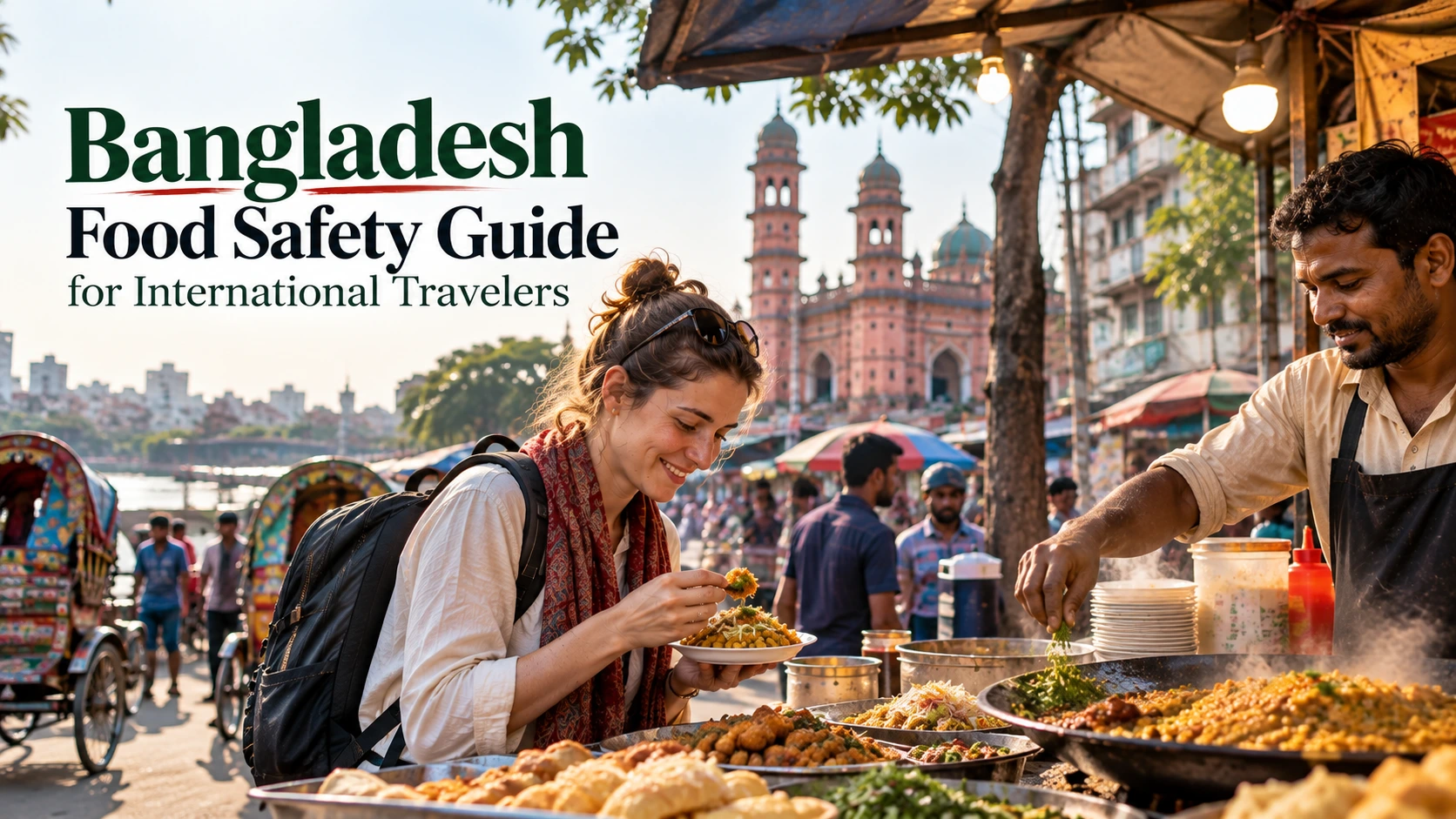
The pan is still sizzling when your food arrives.
You can see the steam rising from it. The vendor has been preparing the same snack for a steady line of customers, and another batch is already cooking. Beside the stall, Dhaka continues at full speed—rickshaws squeeze through the road, people gather around the counter and the scent of spice carries across the pavement.
For many visitors, moments like this become part of the story of Bangladesh. Food is woven into the country’s hospitality, family life and regional identity. Avoiding every unfamiliar dish would mean missing something important.
At the same time, international travelers need to make sensible decisions about food hygiene, drinking water and allergies with Bangladesh food safety. The answer is neither “eat everything without concern” nor “avoid all local food.”
A safer approach is to choose food that is thoroughly cooked, served hot, prepared at a busy and reasonably clean establishment and handled separately from raw ingredients. Drink factory-sealed water, pay attention to ice and raw garnishes, wash your hands and communicate allergies clearly.
Quick answer: Street food in Dhaka can be enjoyed, but no stall or restaurant can be guaranteed risk-free. Choose food cooked in front of you and served steaming hot. Avoid items that have been sitting uncovered, raw garnishes washed in uncertain water, unrefrigerated sauces and ice from an unknown source.
The CDC advises travelers to choose food that is cooked and served hot, avoid food that has been sitting at room temperature, peel fruit personally and drink from factory-sealed containers. Yellow Book
This article provides general travel-planning information, not personalized medical advice. Travelers with allergies, pregnancy, chronic medical conditions, compromised immunity or other health concerns should consult an appropriate healthcare professional before traveling.
Is Food in Bangladesh Safe for International Travelers?
Many international visitors eat well throughout Bangladesh without experiencing serious illness. However, contaminated food and water can transmit bacteria, viruses, parasites and toxins, and visual appearance alone cannot confirm whether something is safe.
Risk can exist at a street stall, restaurant, hotel buffet or private home. A polished dining room does not guarantee correct storage temperatures, while a modest but busy stall may cook each order fresh.
The practical objective is risk reduction rather than an impossible guarantee.
The five principles behind safer food
The World Health Organization’s Five Keys to Safer Food are:
- Keep clean
- Separate raw and cooked food
- Cook food thoroughly
- Keep food at safe temperatures
- Use safe water and raw materials
These principles apply to vendors, restaurants, hotels, homes and travelers.
As a customer, you cannot inspect every kitchen. You can still look for visible evidence that these principles are being followed.
Choose businesses where food moves quickly, raw and cooked ingredients appear separate, utensils are reasonably clean and the finished meal reaches you hot.
Is Street Food Safe in Dhaka?
Street food is part of everyday life in Dhaka, but safety conditions vary from one stall to another. It would be misleading to declare all street food safe or unsafe.
The cooking method, water source, storage time, handling and turnover matter more than whether the food is sold beside a road or inside a building.
Choose food cooked in front of you
Food coming directly from a hot pan, grill, oven or boiling pot is generally a more sensible choice than a cooked item that has been sitting uncovered for an unknown period.
Watch the process before ordering.
Positive signs include:
- Food cooked only after the customer orders
- Oil, pans and utensils that appear actively maintained
- Raw ingredients kept apart from cooked portions
- Separate utensils for uncooked and ready-to-eat items
- A steady flow of customers
- Covered ingredients
- A visible handwashing arrangement
- Plates and glasses cleaned with an appropriate water source
- Hot food served genuinely hot
A long queue is not proof of safety, but high turnover reduces the time cooked food spends standing at ambient temperature.
Be cautious with food sitting at room temperature
Temperature matters because microorganisms can multiply when cooked food remains warm rather than hot or properly chilled.
Exercise greater caution with:
- Cooked rice left standing for long periods
- Meat prepared earlier and reheated unevenly
- Curries displayed without sustained heat
- Open buffets with no temperature control
- Dairy-based sweets stored in heat
- Cut fruit exposed for long periods
- Sauces repeatedly used throughout the day
- Food uncovered near dust, traffic or insects
Ask for a fresh portion where possible. If the food is only lukewarm when it should be hot, choose something else.
Watch how money and food are handled
At small stalls, the same person may take payment and prepare food. That does not automatically mean the food is contaminated, but it increases the importance of hand hygiene or using separate utensils.
Observe whether the vendor touches ready-to-eat food directly after handling cash, phones, raw ingredients or waste.
Choose a stall where the vendor uses tongs, spoons, paper or another barrier for food that will not be cooked again.
Be selective with chutneys and sauces
Fresh chutneys, tamarind water and house-made sauces can be delicious, but they may contain water, raw herbs or other ingredients that receive no final heat treatment.
A sauce stored uncovered or at room temperature for many hours presents more uncertainty than a sealed condiment or freshly prepared cooked sauce.
Travelers with particularly sensitive stomachs may prefer to skip raw sauces during their first few days.
Which Foods Require Extra Caution?
There is no need to fear Bangladeshi cuisine. Instead, identify the items where preparation and storage are harder to evaluate.
Raw salads and garnishes
Raw cucumber, onion, coriander, tomato and other garnishes may have been washed in water that your digestive system is not accustomed to.
The CDC recommends eating raw fruit and vegetables only when they have been washed with safe water or peeled by the traveler. Travelers’ Health
If you cannot confirm the water source, request your meal without raw garnish.
Pre-cut fruit
Whole bananas, oranges, mangoes and similar fruits that you wash or peel yourself are generally more controllable than fruit cut before you arrive.
Pre-cut fruit may have been handled repeatedly, exposed to insects or washed with uncertain water. Fresh-looking fruit is not necessarily freshly cut.
Dairy products
Choose pasteurized milk and dairy products from reliable sources. Be cautious with products that require refrigeration when you cannot confirm that they remained consistently cold.
Traditional sweets may contain milk or dairy solids. Select a busy, established shop where stock moves quickly and storage conditions appear appropriate.
Eggs and meat
Choose eggs, poultry and meat that are cooked thoroughly. The center should not remain raw or cold.
Grilled food can become heavily browned outside before the middle reaches an appropriate temperature. Thick pieces require particular care.
Seafood and river fish
Fish is central to Bangladeshi cuisine. Fresh, thoroughly cooked fish from a reputable restaurant can be an excellent part of the journey.
Use additional caution with raw or undercooked seafood, shellfish, products with a strong unusual odor and cooked seafood that has remained unrefrigerated.
Buffets
Buffets are not automatically unsafe, but food temperature and turnover require attention.
Choose dishes that are:
- Actively steaming
- Kept in working hot-holding equipment
- Replenished in smaller fresh batches
- Protected from repeated customer contact
- Served with a dedicated utensil
Avoid combining a newly prepared batch with food that appears to have been standing for a long time.
Can Travelers Drink Tap Water in Bangladesh?
International visitors should not assume untreated tap water is safe to drink.
Factory-sealed bottled water is generally the simplest option for most short-term travelers. The CDC identifies factory-sealed bottled water as the safest choice for most travelers where water quality may be uncertain. Travelers’ Health
Check that the cap and tamper seal are intact before drinking.
Use safe water for more than drinking
Questionable water can create exposure through:
- Brushing teeth
- Ice
- Diluted juice
- Lassi or other mixed drinks
- Washing fruit
- Raw salads
- Reusable bottles
- Preparing infant formula
- Taking medication
- Cleaning contact lenses
Use sealed, boiled or properly treated water according to authoritative health guidance.
Is ice safe in Bangladesh?
Ice is only as safe as the water and handling used to produce it.
Ice from a reputable hotel, established restaurant or packaged commercial supplier may be produced from treated water. However, the shape of the ice alone does not prove its source.
If staff cannot confidently confirm that the ice came from safe water, order the drink without ice.
This is particularly important for crushed ice, which has a greater handled surface area and may be stored in open containers.
Tea and coffee
Freshly boiled tea or coffee is generally a more controlled option when the water has reached a sufficient boil and the drink is served hot.
Be more cautious when a hot beverage is mixed afterward with untreated water, questionable ice or dairy that has not been stored safely.
Bangladesh’s tea culture is worth experiencing; the sensible approach is to pay attention to preparation rather than avoid tea altogether.
Refillable water containers
Some hotels and tour operators provide purified water in large containers. Ask how the water is treated, stored and dispensed.
A high-quality refill system can reduce plastic waste, but the bottle and dispenser must also be clean. Do not refill a personal bottle that has developed an odor, residue or visible contamination without washing it properly.
How Can You Choose a Safer Restaurant?
Price, interior design and online popularity cannot guarantee food safety. Look at what the establishment does.
Consider turnover
A busy restaurant with frequent table service is more likely to prepare fresh batches. This is especially relevant for rice, meat, seafood, dairy and prepared sauces.
Turnover is one reason a well-selected local restaurant can be a more sensible choice than an empty restaurant displaying a large menu.
Observe cleanliness without expecting perfection
Consider:
- Whether tables are cleared properly
- Whether glasses smell or show residue
- Whether food is covered
- Whether raw meat is separated from finished dishes
- Whether staff handle waste and food without washing
- Whether washrooms have soap and running water
- Whether refrigerated products feel properly cold
- Whether insects have direct access to food
- Whether the restaurant appears organized during busy periods
A single imperfect detail does not prove the kitchen is unsafe. Several warning signs together should influence your decision.
Order what the restaurant prepares frequently
A restaurant known for one or two specialties may prepare them repeatedly throughout the day. An obscure menu item ordered rarely may have been stored longer.
Ask your guide, host or server what is prepared fresh and ordered most often.
How Can Travelers Enjoy a Dhaka Food Tour More Safely?
A properly designed food tour should do more than take guests to famous stalls. It should select locations according to preparation standards, turnover, water use and suitability for international visitors.
Before booking a Dhaka Food Tour, ask:
- How are vendors selected?
- Are locations rechecked regularly?
- Can dietary restrictions be accommodated?
- Is factory-sealed water included?
- Can raw garnishes and uncertain sauces be excluded?
- What happens if a venue’s standards appear different on the day?
- Does the guide understand common allergens?
- Is transportation available if a guest becomes unwell?
A responsible operator should be prepared to change a food stop when conditions are not satisfactory. A published itinerary should not be treated as more important than the guest’s health.
Start gently
International visitors do not need to taste everything during their first evening in Bangladesh.
Begin with freshly cooked dishes, familiar ingredients and moderate portions. Introduce richer, spicier or more complex foods gradually.
This does not mean that spices cause food poisoning. However, a sudden change in oil, chili, meal size and eating schedule can create digestive discomfort even when the food is microbiologically safe.
Avoid stacking several uncertainties together
A freshly fried snack may be a reasonable choice. Adding raw chutney, ice from an uncertain source and a dairy drink stored at room temperature creates several separate risk points.
Choose where you want to be adventurous and keep the rest of the meal controlled.
Food Safety in Old Dhaka
Old Dhaka offers some of the country’s most important culinary traditions. Its busy markets and historic restaurants can also feel overwhelming to a first-time visitor.
During an Old Dhaka Tour, look for establishments with visible turnover and dishes that are prepared continuously.
Crowded lanes can make it difficult to assess water sources and storage conditions quickly. This is where an experienced local guide adds practical value—not by claiming that every stop is guaranteed safe, but by knowing which establishments maintain consistent preparation and which foods are best ordered at particular times.
Wash or sanitize your hands before eating, but remember that hand sanitizer does not remove every type of contamination. Soap and safe water remain preferable when available. The CDC recommends washing with soap and water and using sanitizer containing at least 60% alcohol when handwashing is unavailable. wwwnc.cdc.gov
Traveling With Food Allergies in Bangladesh
Food allergies require more preparation than ordinary preferences.
Ingredients are not always listed, recipes can change and cross-contact may occur even when a dish does not normally contain your allergen.
Street stalls and small restaurants may use shared oil, utensils, pans, chopping boards and serving containers. A vendor can be honest about the main ingredients but unaware that a prepared spice mixture or sauce contains an allergen.
Prepare before leaving home
Travelers with medically diagnosed food allergies should discuss their plans with their clinician.
Depending on the traveler’s care plan, preparation may include:
- Carrying prescribed emergency medication
- Bringing more medication than the minimum required
- Keeping medication in hand luggage
- Carrying a physician-signed emergency plan
- Checking medication-storage requirements
- Confirming travel-insurance coverage
- Identifying suitable medical facilities
- Traveling with safe snacks
- Teaching companions how to recognize a reaction
- Wearing medical identification
FARE recommends carrying an emergency-care plan and bringing familiar, non-perishable food because similarly branded products in another country may contain different ingredients. foodallergy.org
Carry a Bengali allergy card
Do not rely only on a spoken English explanation.
Prepare a Bengali card that clearly states:
- The exact allergen
- That even a small amount can cause a serious reaction
- That shared oil or utensils may be unsafe
- That the ingredient cannot simply be removed after cooking
- What should happen in an emergency
Show the card to the person preparing the food, not only the server.
FARE recommends chef cards as a way to communicate allergens to restaurant staff.
Be aware of common hidden ingredients
Depending on the dish, allergens may appear in:
- Ground nuts or nut pastes
- Mustard
- Milk, ghee or yogurt
- Eggs
- Wheat flour
- Semolina
- Soy-based sauces
- Shrimp or dried fish
- Spice blends
- Desserts
- Shared frying oil
- Garnishes and chutneys
A dish that appears vegetarian may still contain dairy, egg, fish-based seasoning or shared cooking oil.
Severe allergies and street food
Travelers at risk of anaphylaxis should recognize that a small street stall may be unable to prevent cross-contact, verify packaged ingredients or communicate every stage of preparation.
Choosing an established restaurant with a manager, clean preparation area and simplified order may be more appropriate.
No guide or tour operator should pressure a guest with an allergy to “just try a little.”
Vegetarian, Vegan, Gluten-Free and Halal Requirements
Bangladesh offers many vegetable, lentil and rice-based foods, but travelers should communicate what their dietary label means in practical terms.
Vegetarian and vegan travelers
The word “vegetarian” may not automatically communicate whether you avoid:
- Fish
- Dried fish
- Shrimp
- Eggs
- Dairy
- Ghee
- Chicken stock
- Shared cooking oil
State the specific ingredients you cannot eat.
For vegan meals, ask whether the dish contains ghee, butter, milk, yogurt or egg. Vegetable curries can be prepared with dairy or cooked beside non-vegan dishes.
Gluten-free travelers
Rice is naturally gluten-free, but sauces, spice mixes, fried coatings, bread crumbs and shared fryers may create exposure.
Travelers with celiac disease require stricter precautions than someone avoiding wheat by preference. Cross-contact in a shared kitchen can be difficult to prevent.
Carry translated instructions and select simple dishes with individually identifiable ingredients.
Halal food
Most meat served in Bangladesh is halal, particularly in Muslim-owned establishments. Travelers who require verified certification or have a specific standard should ask the restaurant directly rather than relying on a general assumption.
Food Safety Outside Dhaka
The same decision-making principles apply across Bangladesh, but refrigeration, transport time and medical access may change outside major cities.
Rural areas and long road journeys
On a long journey, avoid carrying perishable food without adequate cooling. Choose packaged snacks, whole fruit you can peel and sealed drinks.
At roadside restaurants, select dishes with high turnover and request food that is served hot. Be careful with prepared food displayed during quiet periods.
Tea country and Sylhet
A Sreemangal and Sylhet Tour may include roadside tea, village meals and regional food experiences.
These can be memorable, but travelers should still verify water, dairy storage and allergy ingredients. Ask whether milk has been boiled or pasteurized and whether a drink contains ice.
A home-cooked meal should be approached respectfully, but you can still communicate medical dietary needs in advance.
River and forest travel
For longer journeys to wetlands, forests or river areas, carry enough sealed or reliably treated water. Do not depend on being able to purchase your preferred food at every stop.
Pack safe snacks, oral rehydration salts recommended for your circumstances and any prescribed medication. Keep food protected from heat, moisture, animals and insects.
Who Should Take Additional Precautions?
Some travelers face a greater risk of complications from dehydration or foodborne illness.
These may include:
- Young children
- Older adults
- Pregnant travelers
- People with weakened immune systems
- Travelers with kidney or liver conditions
- People with diabetes
- Travelers with inflammatory bowel disease
- People taking certain medications
- Anyone with a serious food allergy
These travelers should obtain individualized medical guidance before departure rather than relying entirely on a general article.
The CDC’s Bangladesh traveler page provides current destination-specific health recommendations and should be reviewed before traveling.
What Should You Pack for Food and Water Safety?
A practical travel-health kit may include:
- Prescribed medication
- Allergy medication prescribed for you
- Copies of prescriptions
- A written allergy or medical-action plan
- Bengali allergy cards
- Alcohol-based hand sanitizer
- Oral rehydration salts
- A thermometer
- Safe snacks
- A reusable bottle suitable for treated water
- Disinfecting wipes
- Travel-insurance information
- Local emergency and medical contacts
Discuss anti-diarrheal medicines, antibiotics and other treatments with a qualified clinician before travel. Do not begin antibiotics based on a blog article or another traveler’s medication.
Unnecessary antibiotic use can cause side effects and contribute to antimicrobial resistance.
What Should You Do If You Develop Diarrhea or Vomiting?
Many episodes are mild and resolve, but dehydration can become serious.
Prioritize hydration
Drink safe fluids. Oral rehydration solution can replace water and electrolytes lost through diarrhea and vomiting. The CDC advises fluid replacement and notes that oral rehydration solution may be used in more serious cases. CDC
Prepare oral rehydration salts exactly according to the packet instructions and use safe water. Do not make the solution more concentrated in the belief that it will work faster.
Rest and avoid preparing food for others
Stay in your accommodation where possible and wash your hands carefully. Gastrointestinal infections can spread to companions through contaminated hands and shared surfaces.
Do not prepare meals for other people while experiencing diarrhea or vomiting.
Be careful with anti-diarrheal medication
Certain medicines may not be suitable for children, pregnant travelers or people with fever, bloody diarrhea, chronic conditions or medication interactions.
The CDC Yellow Book notes that antimotility medicines alone are not recommended when diarrhea is accompanied by fever or blood.
Ask a qualified healthcare professional or pharmacist for guidance appropriate to the patient.
When to seek medical care
Seek prompt medical attention for:
- Bloody diarrhea
- High fever
- Severe or persistent abdominal pain
- Frequent vomiting that prevents fluid intake
- Very little or no urination
- Severe weakness, confusion or faintness
- Dizziness when standing
- A very dry mouth
- Symptoms of a serious allergic reaction
- Diarrhea lasting more than several days
- Symptoms in a vulnerable traveler
- Illness that continues after returning home
The CDC identifies bloody diarrhea, diarrhea lasting more than three days, high fever, inability to keep liquids down and signs of dehydration as reasons to seek medical care.
If you become ill after returning home, tell the healthcare professional that you recently traveled to Bangladesh and describe where you went, what you ate and how long symptoms have continued.
A Simple Food-Safety Checklist
Before eating
- Wash your hands with soap and safe water
- Check whether the establishment is busy
- Observe food preparation
- Identify raw ingredients
- Explain allergies clearly
- Confirm the water and ice source
- Check whether food is freshly cooked
- Avoid visibly questionable storage
While eating
- Make sure hot food arrives hot
- Avoid undercooked meat, eggs and seafood
- Be cautious with raw garnish
- Do not use sauces with uncertain storage
- Stop if the food tastes spoiled or unusually sour
- Do not let social pressure override an allergy or health concern
After eating
- Wash your hands
- Keep leftovers only when they can be refrigerated promptly
- Monitor serious allergy symptoms
- Begin safe hydration if gastrointestinal symptoms appear
- Seek professional care for warning signs
How Bangladesh Explore Should Apply This Guidance
Food safety should be part of tour operations, not only blog content.
Bangladesh Explore should:
- Maintain a documented vendor-screening checklist
- Recheck food stops regularly
- Record known allergen and cross-contact limitations
- Train guides in basic food-allergy communication
- Carry factory-sealed water
- Keep an updated list of suitable medical facilities
- Allow guests to skip any tasting
- Change venues when conditions are unsatisfactory
- Ask about allergies before the tour
- Never promise that a food stop is completely risk-free
- Record incidents and review the vendor afterward
This operational evidence should be included on the Dhaka Food Tour product page. It demonstrates genuine experience and builds more trust than repeatedly claiming that the company is the best.
Frequently Asked Questions
Is street food safe in Dhaka with Bangladesh food safety?
Some street food can be enjoyed more safely when it is cooked in front of you, served steaming hot and purchased from a busy, reasonably clean stall. Avoid food that has been sitting uncovered, lukewarm dishes, questionable ice, raw garnishes and sauces stored without refrigeration.
Can tourists drink tap water in Bangladesh?
International visitors should not assume untreated tap water is safe to drink. Factory-sealed bottled water, properly boiled water or reliably treated water are safer options. Use safe water for brushing teeth, taking medicine and washing food.
Is ice safe in Bangladesh?
Ice may be safe when made and handled using treated water, but travelers cannot determine its source by appearance alone. Ask the restaurant or hotel. When uncertain, order drinks without ice.
Is food in hotels always safer than street food?
No establishment can be guaranteed safe solely because it is a hotel. Check buffet temperatures, food turnover, cleanliness and storage. A busy stall cooking food to order may present fewer observable risk points than a poorly maintained buffet.
Which street foods are safer for travelers?
Food cooked thoroughly in front of the customer and served immediately is generally a more controllable choice. Safety depends on preparation, ingredients, water, handling and storage—not the name of the dish.
Should tourists avoid all raw vegetables?
Raw produce carries more uncertainty when the washing water is unknown. Choose fruit you can peel yourself and eat raw vegetables only when you are confident they were washed and handled safely.
Can I brush my teeth with tap water?
When local water quality is uncertain, use factory-sealed, boiled or appropriately treated water for brushing your teeth.
Is Bangladeshi food very spicy?
Some dishes are spicy, while many are mild or adjustable. Spice can cause discomfort for an unaccustomed traveler, but chili itself is not evidence of contamination. Ask for less chili and begin with modest portions.
How can I communicate a food allergy in Bangladesh?
Carry a Bengali allergy card naming the exact allergen and explaining cross-contact. Show it directly to the person preparing the food. Travelers at risk of anaphylaxis should carry prescribed medication and a professional emergency-care plan.
Is Bangladesh suitable for vegetarian travelers?
Yes, but explain whether you avoid fish, eggs, dairy, ghee, shrimp-based seasoning or shared cooking oil. The word “vegetarian” may be interpreted differently between restaurants.
What should I do if I develop traveler’s diarrhea?
Prioritize hydration with safe fluids and use properly prepared oral rehydration solution when appropriate. Seek medical care for blood in the stool, high fever, severe pain, persistent vomiting, dehydration, prolonged symptoms or illness affecting a vulnerable traveler.
Should I take antibiotics for food poisoning?
Do not self-prescribe antibiotics or use another traveler’s medication. Treatment depends on the cause and severity of the illness. Consult a qualified healthcare professional.