Some Countries Are Photographed. Bangladesh Is Observed. Let’s get to know the Bangladesh for photographers.
Photography often begins long before the shutter is pressed. It starts with noticing how light changes across a landscape, how people move through a city, or how a quiet moment gradually unfolds into something worth remembering. That’s one of the reasons Bangladesh leaves such a strong impression on photographers. It’s not a destination built around iconic viewpoints or instantly recognizable landmarks. Instead, it rewards those who are willing to slow down, watch carefully, and allow the story to develop in front of the lens.
Many first-time visitors arrive expecting Bangladesh to be challenging to photograph. They soon discover the opposite. The country offers an extraordinary variety of visual experiences within a relatively compact area: rivers that define everyday life, centuries-old neighborhoods where craftsmanship still thrives, mist-covered tea estates, mangrove forests alive with wildlife, and hill landscapes that change dramatically with the seasons. More importantly, these scenes rarely feel staged. They exist because this is how Bangladesh lives.
That authenticity shapes every photograph. A ferry crossing the Padma River, a rickshaw weaving through Old Dhaka, fishermen returning at sunrise, or children playing beside a village road aren’t isolated travel moments created for visitors. They’re ordinary scenes that become extraordinary when viewed with patience and curiosity. Rather than chasing famous landmarks, photographers often leave Bangladesh with portfolios filled with moments they never expected to find.
Whether you’re a professional travel photographer, an enthusiastic hobbyist, or simply someone who enjoys documenting journeys through a camera, Bangladesh offers something increasingly uncommon: the opportunity to create images that feel personal rather than predictable.
Why Bangladesh Looks Different Through a Camera Lens
Every destination has beautiful landscapes. Every city has historic streets. Every country has places worth photographing. What makes Bangladesh different isn’t simply what appears in front of the lens—it’s how those scenes come to life.
Photographing Bangladesh requires observation more than speed. Light changes quickly, streets constantly reinvent themselves, and some of the strongest images emerge from ordinary moments that would be easy to overlook. A photographer who spends thirty minutes in one location will often leave with a stronger portfolio than someone who rushes through five different attractions in a single day.
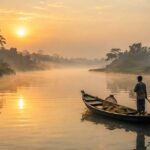
Rather than chasing iconic viewpoints, you’ll find yourself watching how people move through a market, waiting for a fishing boat to emerge from the morning mist, or noticing how the first rays of sunlight transform a quiet riverside into something entirely different. Bangladesh doesn’t demand technical perfection; it rewards patience, curiosity, and an eye for stories that unfold naturally.
Light Is Your Greatest Subject
Ask experienced travel photographers about Bangladesh, and many will mention the light before they mention a destination.
The soft haze of a winter morning, the golden glow reflecting off the rivers at sunrise, dramatic monsoon skies rolling over the countryside, or the warm evening light filtering through Old Dhaka’s narrow streets all create photographs with remarkable atmosphere. Even familiar locations can feel completely different depending on the season and the time of day.
That makes timing just as important as location. Instead of arriving at midday and hoping for the best, plan your photography around the first and last hours of daylight whenever possible. Bangladesh often reveals its most compelling colours before the crowds arrive and long after the afternoon heat begins to fade.
Everyday Life Creates the Strongest Images
One of the reasons photographers return to Bangladesh is that extraordinary photographs are often hidden within ordinary routines.
A barber opening his shop in Old Dhaka, fishermen repairing nets beside a river, tea workers moving quietly through the plantations of Srimangal, or passengers settling onto the deck of an overnight launch all tell stories that cannot be recreated. These aren’t performances for visitors. They are genuine moments that happen whether a camera is present or not.
The challenge isn’t finding subjects.
It’s learning to slow down long enough to notice them.
Some of the most memorable images you’ll take in Bangladesh won’t feature famous landmarks at all. Instead, they’ll capture gestures, expressions, textures, and fleeting moments that reveal something honest about the country and the people who live there.
Patience Often Produces the Best Photograph
It’s tempting to move quickly from one location to another, especially when time is limited. Bangladesh quietly rewards the opposite approach.
Spend a little longer at a riverside ghat, and you’ll notice the rhythm of boats arriving and departing. Wait in a market after the initial bustle, and the light begins to soften while everyday interactions unfold naturally. Pause on a mountain road in Bandarban instead of rushing to the viewpoint, and drifting clouds may transform the landscape within minutes.
The difference between a good photograph and a memorable one is often measured in patience rather than distance travelled.
Bangladesh doesn’t ask photographers to collect locations.
It invites them to observe a country that reveals itself gradually, one frame at a time.
The Best Photography Experiences in Bangladesh
Bangladesh doesn’t offer just one style of photography. Within a relatively short distance, you can move from centuries-old streets and bustling river ports to quiet tea estates, mangrove forests, and mountain landscapes. The result is a country where every region offers a different visual language, allowing photographers to build a portfolio that feels remarkably diverse without spending weeks on the road.
Rather than asking where the “best” photograph can be taken, it’s often more useful to ask what kind of story you want to tell. Bangladesh rewards photographers who choose experiences rather than simply chasing famous locations.
Photographing Life Along the Rivers
If there is one subject that defines Bangladesh, it is water.
The country’s vast network of rivers shapes everything from transportation and commerce to agriculture and daily life, making it one of the most rewarding places in South Asia for documentary and landscape photography. Sunrise on the Padma or Meghna feels entirely different from sunset on the Buriganga, while smaller rivers reveal quieter moments that often go unnoticed by casual visitors.
An overnight river launch is particularly rewarding because it offers changing scenes throughout the journey. Before dawn, soft mist settles over the water as fishing boats begin their day. By afternoon, ferries, cargo vessels, and country boats weave together in a rhythm that has changed little over generations. As darkness falls, riverside towns glow beneath scattered lights, creating reflections that transform the landscape once again.
The rivers aren’t simply a backdrop to Bangladesh.
They are one of its most compelling visual stories.
Capturing the Energy of Old Dhaka
Old Dhaka challenges photographers in the best possible way.
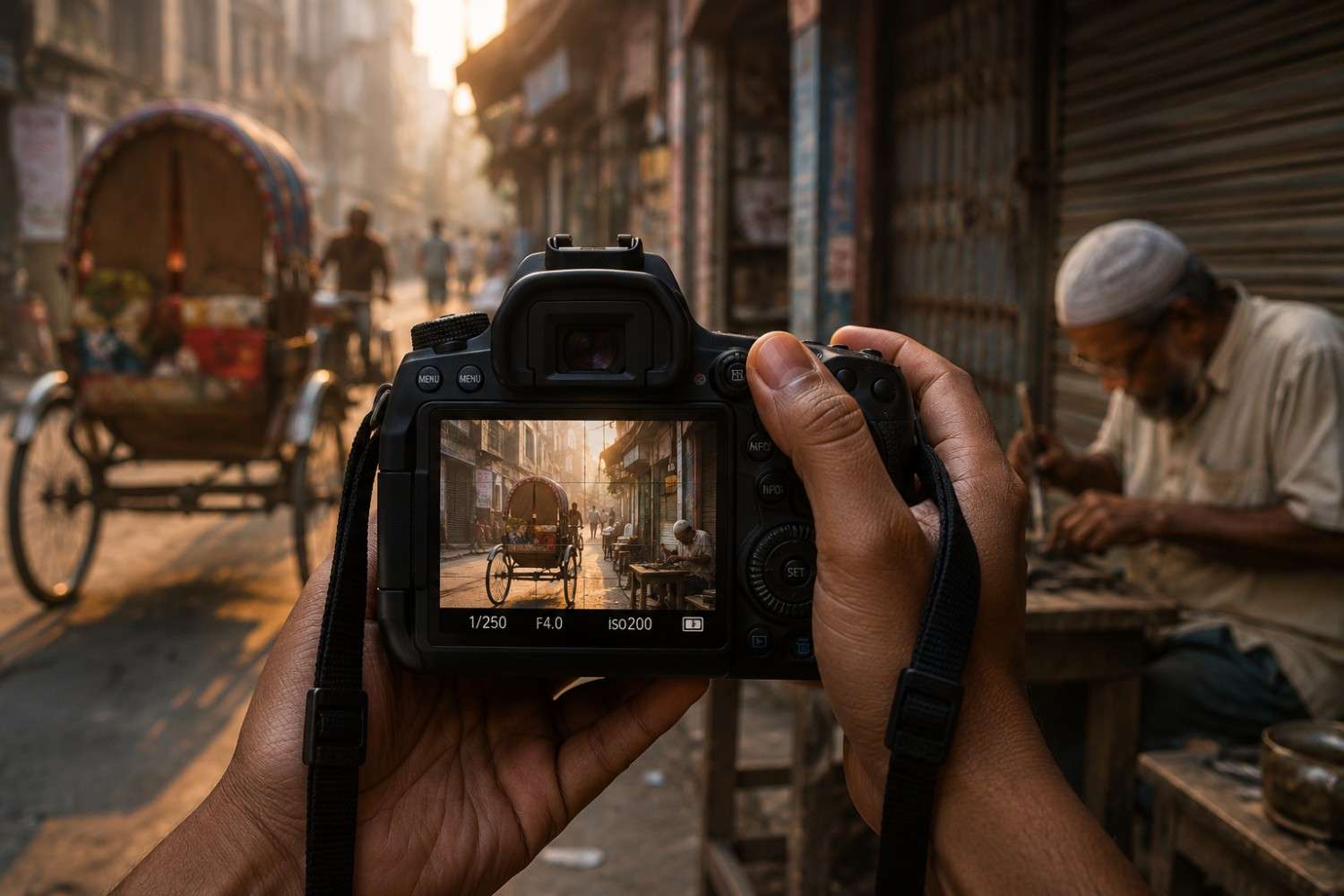
Its narrow streets, historic buildings, workshops, markets, and endless movement demand observation rather than speed. Every corner presents another layer of the city, where rickshaws share space with centuries-old architecture, artisans continue traditional crafts, and neighbourhood life unfolds in full view of anyone willing to pause and watch.
Instead of trying to photograph everything, choose one street or one market and spend time there. The strongest images often emerge after the initial excitement fades, when everyday routines begin to reveal themselves naturally. Morning light filtering through old buildings, a craftsman concentrating on his work, or a quiet conversation between shopkeepers can become far more memorable than another wide photograph of a busy intersection.
Old Dhaka rewards photographers who enjoy storytelling as much as street photography.
Photographing Nature in the Sundarbans
The Sundarbans asks photographers to slow down.
Unlike destinations where wildlife appears on schedule, the world’s largest mangrove forest offers no guarantees. That uncertainty is part of its appeal. Every boat journey becomes an exercise in observation, whether you’re watching spotted deer emerge from the forest edge, kingfishers diving into quiet waterways, or shafts of sunlight filtering through dense mangrove trees.
Even without dramatic wildlife encounters, the forest provides endless photographic opportunities. The geometry of winding creeks, reflections on still water, textured mangrove roots, and the changing mood of the landscape throughout the day create images that are subtle rather than spectacular.
The best photographs from the Sundarbans rarely rely on luck alone.
They come from patience, careful observation, and an appreciation for the atmosphere of the forest itself.
The Quiet Beauty of Sreemangal
Sreemangal offers an entirely different pace.
Early mornings often begin with mist drifting across tea gardens, while soft sunlight gradually reveals neat rows of emerald-green plantations stretching across gentle hills. Unlike the energy of Old Dhaka or the movement of the rivers, photography here becomes an exercise in simplicity, shape, and light.
Tea workers, winding estate roads, forest trails, and small villages all contribute to the region’s visual identity. Rather than searching for dramatic compositions, photographers often discover that the quieter scenes—the curve of a pathway, the texture of tea leaves after rain, or a lone worker moving through the plantation—tell the strongest stories.
The Layers of Bandarban
Bandarban is often associated with panoramic viewpoints, but its appeal extends well beyond sweeping landscapes.
The winding roads leading into the hills, changing cloud formations, local markets, and mountain villages all provide opportunities to photograph a side of Bangladesh that feels entirely different from the river delta. During the cooler months, early morning light reveals remarkable layers of hills, while the monsoon transforms the landscape into an endless palette of deep greens.
Landscape photographers will naturally be drawn to the viewpoints, but some of the region’s most memorable photographs are found between them—along quiet roads, in village markets, or wherever changing weather reshapes the mountains from one moment to the next.
Bandarban reminds us that great landscape photography is rarely just about the view.
It’s about waiting for the landscape to come alive.
Planning a Photography Trip to Bangladesh
Great travel photography often begins long before you arrive at your destination. Choosing the right season, understanding how light changes across different regions, and preparing for Bangladesh’s climate can have a far greater impact on your images than carrying the latest camera equipment.
While memorable photographs can be made throughout the year, each season presents a different side of the country. Rather than asking when Bangladesh looks its “best,” consider what you hope your portfolio will capture.
Winter Brings Soft Light and Clear Skies
For many photographers, October through March offers the most comfortable conditions for exploring Bangladesh. Cooler temperatures, lower humidity, and generally clearer skies create ideal conditions for long days outdoors, whether you’re wandering through Old Dhaka, exploring the Sundarbans, or photographing the layered hills of Bandarban.
Morning light during winter is particularly rewarding. Rivers often wake beneath a thin veil of mist, while the softer angle of the sun adds depth and texture to landscapes that can appear much flatter under the harsher light of midday. Wildlife is also easier to observe in many parts of the country, making this an excellent season for nature photographers.
If you’re planning your first photography journey through Bangladesh, winter provides the greatest variety of opportunities with the fewest weather-related challenges.
The Monsoon Tells a Different Story
Many travelers avoid the monsoon.
Many photographers don’t.
Between June and September, Bangladesh transforms into a country of saturated greens, dramatic cloud formations, overflowing rivers, and constantly changing light. Rain showers arrive quickly, disappear just as fast, and often leave behind atmospheric conditions that are impossible to recreate during the drier months.
This season demands a little more preparation. Waterproof protection for your camera, extra patience, and a willingness to adapt your plans become essential. In return, you’ll find landscapes that feel more dramatic and photographs that carry a stronger sense of mood and atmosphere.
For photographers who enjoy storytelling through weather and light, the monsoon can be one of the most rewarding times to visit.
Pack for the Conditions, Not the Checklist
Travel photographers often spend too much time thinking about equipment and not enough time thinking about the environment they’ll be working in.
Bangladesh rarely demands specialist gear. What it does require is practical preparation. Comfortable footwear, lightweight clothing, weather protection for your camera, spare batteries, and a power bank will usually prove more valuable than carrying every lens you own. The country’s humid climate and frequent travel between regions also make a dry bag, microfiber cloths, and silica gel packets worthwhile additions to your camera bag.
Most importantly, travel light enough that your equipment never becomes a barrier to exploring. The best photographs often appear unexpectedly, and it’s much easier to respond when your camera is ready rather than packed away beneath unnecessary gear.
Respect Always Makes Better Photographs
Some of the strongest images you’ll create in Bangladesh will include people. That makes respect just as important as technical skill.
Whenever possible, ask permission before photographing individuals, particularly in villages, religious sites, or quieter communities. A smile, a greeting, or a brief conversation often leads to more natural portraits than photographing someone from a distance without interaction.
It’s also worth remembering that not every meaningful moment needs to be captured. Some experiences are better appreciated without raising a camera at all. The photographers who leave Bangladesh with the strongest portfolios are often the same ones who spend as much time connecting with people as they do composing the perfect frame.
Common Mistakes Photographers Make in Bangladesh
Even experienced travel photographers occasionally approach Bangladesh with the wrong expectations. The country is generous with photographic opportunities, but it doesn’t always reward the habits that work elsewhere. A few small adjustments can make a remarkable difference to both your experience and the photographs you bring home.
Trying to Cover Too Much
Bangladesh may appear compact on a map, but every region has its own rhythm and character. Trying to photograph Old Dhaka, the Sundarbans, Srimangal, and Bandarban in a single week usually results in more time travelling than photographing. A slower itinerary almost always produces a stronger portfolio because it gives you time to understand the light, revisit locations, and wait for moments that can’t be planned.
Photographing Too Soon
It’s natural to raise your camera the moment you arrive somewhere interesting. Instead, spend a few minutes simply watching. Notice how people move through the space, where the light falls, and how the scene changes over time. In Bangladesh, the photograph you’re hoping for often appears after you’ve stopped looking for it.
Carrying More Gear Than You Need
Bangladesh rarely rewards the photographer with the largest camera bag. Long walks through busy streets, ferry terminals, markets, and villages are often easier with a lightweight setup. A camera you know well and one or two versatile lenses will usually serve you better than carrying equipment you never have time to use.
Build a Photography Journey, Not Just a Shot List
It’s easy to plan a photography trip by listing destinations.
History of Old Dhaka.
The exotic Sundarbans.
Serene Srimangal.
MOuntain calls in Bandarban.
A more rewarding approach is to plan around the kind of photographs you hope to create.
If documentary photography interests you, combine Old Dhaka with the river ports and launch journeys of southern Bangladesh. Landscape photographers may prefer pairing Bandarban’s mountain scenery with the tea estates of Srimangal, where changing light and weather create very different moods. Wildlife photographers can build an itinerary around the Sundarbans, allowing enough time to appreciate both the forest itself and the river journeys that lead through it.
Thinking in terms of stories rather than locations often results in a portfolio that feels more complete. Instead of returning home with isolated images from five different destinations, you’ll come back with photographs that connect to one another and reflect a deeper understanding of the country.
A Photographer’s Tip
Before lifting your camera, spend five minutes simply observing.
Watch how the light changes. Notice how people move through the scene. Listen to the rhythm of the place. More often than not, the strongest photograph appears after you’ve stopped chasing it and started paying attention.
Choosing the Right Destination for Your Photography Style
Different regions of Bangladesh naturally suit different photographic interests. Rather than trying to photograph everything, choose destinations that match the kind of work you enjoy creating.
| Photography Style | Recommended Destination |
| Street & Documentary | Old Dhaka |
| Wildlife | The Sundarbans |
| Landscapes | Bandarban |
| Tea Gardens & Nature | Srimangal |
| River Life | Dhaka–Barisal River Route |
| Architecture & Heritage | Old Dhaka, Bagerhat |
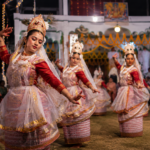
| Portraits & Cultural Life | Rural Bangladesh |
Many photographers discover that combining two complementary regions—such as Old Dhaka and the Sundarbans, or Srimangal and Bandarban—creates a far richer portfolio than trying to visit every major destination in a single journey.
The Photographs You’ll Remember Most
Every photographer begins a trip with a mental shot list. You picture sunrise over the rivers, the narrow streets of Old Dhaka, the tea estates of Srimangal, or the rolling hills of Bandarban. Those photographs are worth planning for, but Bangladesh has a habit of quietly changing your priorities. Somewhere along the journey, the images you carefully imagined begin to share space with moments you never expected—a fisherman pausing to untangle his net, a craftsman absorbed in his work, or the warm light spilling across a village road just as the day begins.
That’s because Bangladesh rarely asks photographers to chase landmarks. It encourages you to pay attention instead. Spend a little longer in one place and the scene begins to change. The morning mist lifts from the river, conversations unfold naturally in a local market, and familiar streets reveal details that weren’t there a few minutes earlier. The strongest photographs often come from waiting rather than moving, observing rather than searching.
When you look back through your photographs months later, you’ll probably remember those unexpected moments most clearly. Not because they were technically perfect, but because they captured something genuine about the country and your time there. In Bangladesh, the images that stay with you are often the ones that couldn’t have been planned—they simply happened because you were patient enough to notice them.
Final Thoughts
Bangladesh isn’t a destination that reveals itself in a single photograph.
Its character is found in the spaces between destinations, in the rhythm of its rivers, the energy of its streets, the quiet beauty of its forests, and the everyday moments that rarely appear on postcards. The longer you spend here, the more you realise that the country’s greatest photographic strength isn’t a single landmark—it’s the remarkable variety of stories unfolding around you every day.
Whether your interests lie in documentary photography, landscapes, wildlife, street scenes, or cultural storytelling, Bangladesh offers an uncommon degree of diversity within a relatively compact country. More importantly, it gives photographers the opportunity to create work that feels personal rather than predictable. Instead of returning home with images that resemble thousands already shared online, you’ll leave with photographs shaped by your own observations, patience, and encounters.
If you’re planning a photography journey through South Asia, don’t overlook Bangladesh simply because it isn’t the region’s most photographed destination.
It may well become the one that challenges you most creatively—and the one you remember long after you’ve packed your camera away.
Frequently Asked Questions About Bangladesh for Photographers
Is Bangladesh good for travel photography?
Yes, particularly if you enjoy storytelling rather than simply collecting landmark photographs. Bangladesh offers remarkable variety within a relatively small area, from river life and bustling historic streets to tea estates, mangrove forests, and mountain landscapes. More importantly, many of its strongest photographic opportunities come from everyday life, giving photographers the chance to create images that feel authentic rather than staged.
What is the best time of year for photography in Bangladesh?
For most photographers, October through March offers the most comfortable conditions. Cooler temperatures, lower humidity, and softer morning light make it easier to photograph cities, wildlife, rivers, and landscapes throughout the day.
The monsoon season (June to September) presents a different kind of opportunity. Dramatic skies, lush green landscapes, and atmospheric light can produce striking images, although photographers should be prepared for frequent rain and changing weather.
Which region of Bangladesh is best for photography?
That depends on the kind of photography you enjoy.
- Old Dhaka is ideal for street and documentary photography.
- The Sundarbans offers wildlife and atmospheric landscapes.
- Srimangal is known for tea estates, forests, and soft morning light.
- Bandarban provides mountain scenery and dramatic landscapes.
- The southern rivers are perfect for photographing boats, river life, and sunrise or sunset scenes.
Many photographers combine two or three regions to build a more diverse portfolio.
Is street photography easy in Bangladesh?
Street photography can be incredibly rewarding, largely because public life is so visible. Markets, ferry terminals, riverside ghats, and neighbourhood streets are full of activity throughout the day.
As with any destination, respect is essential. A friendly smile, a simple greeting, or asking permission before taking close portraits often leads to more relaxed interactions and stronger photographs.
Can I photograph people in Bangladesh?
In most situations, yes—provided you do so respectfully.
For candid street scenes, photographing everyday public life is generally accepted. When making portraits or photographing individuals up close, it’s good practice to ask permission whenever possible. Many people are happy to be photographed, especially when approached politely and shown genuine interest rather than simply pointing a camera.
Do I need professional camera equipment?
Not at all.
Bangladesh rewards observation far more than expensive gear. A camera you know well, a versatile zoom or prime lens, and a willingness to spend time in one location will often produce stronger photographs than carrying a heavy bag of equipment. Light, timing, and patience usually matter far more than the latest camera body.
Is Bangladesh suitable for solo photographers?
Yes. Many photographers explore Bangladesh independently, while others prefer travelling with a local guide, particularly in destinations such as the Sundarbans or Bandarban where logistics are more complex.
Whichever approach you choose, allowing enough time in each destination and remaining flexible often leads to the most rewarding photographic experiences.
What makes Bangladesh different from other photography destinations?
Bangladesh rarely relies on iconic landmarks to create memorable images. Instead, it offers photographers something more subtle: everyday moments, genuine human interactions, and landscapes that continue to function as part of daily life rather than as attractions designed for visitors.
For photographers who enjoy observation, storytelling, and authentic travel, that’s precisely what makes Bangladesh such a compelling destination.