Every country has defining moments that shape its identity, culture, and future. For Bangladesh, no date holds greater significance than March 26. Known as Bangladesh Independence Day, this historic occasion marks the beginning of the nation’s struggle for freedom and the birth of an independent country.
While many travelers visit Bangladesh for its vibrant cities, UNESCO World Heritage Sites, tea gardens, rivers, and the Sundarbans, understanding Independence Day offers a deeper connection to the country’s people and history. It is a day that combines celebration with remembrance, pride with reflection, and history with hope.
For international visitors, Bangladesh Independence Day provides a unique opportunity to witness the spirit of a nation that fought courageously to preserve its language, culture, and identity. From patriotic ceremonies and cultural performances to historical landmarks and museums, March 26 reveals an important side of Bangladesh that many travelers never experience.
Why Bangladesh Independence Day Is Important
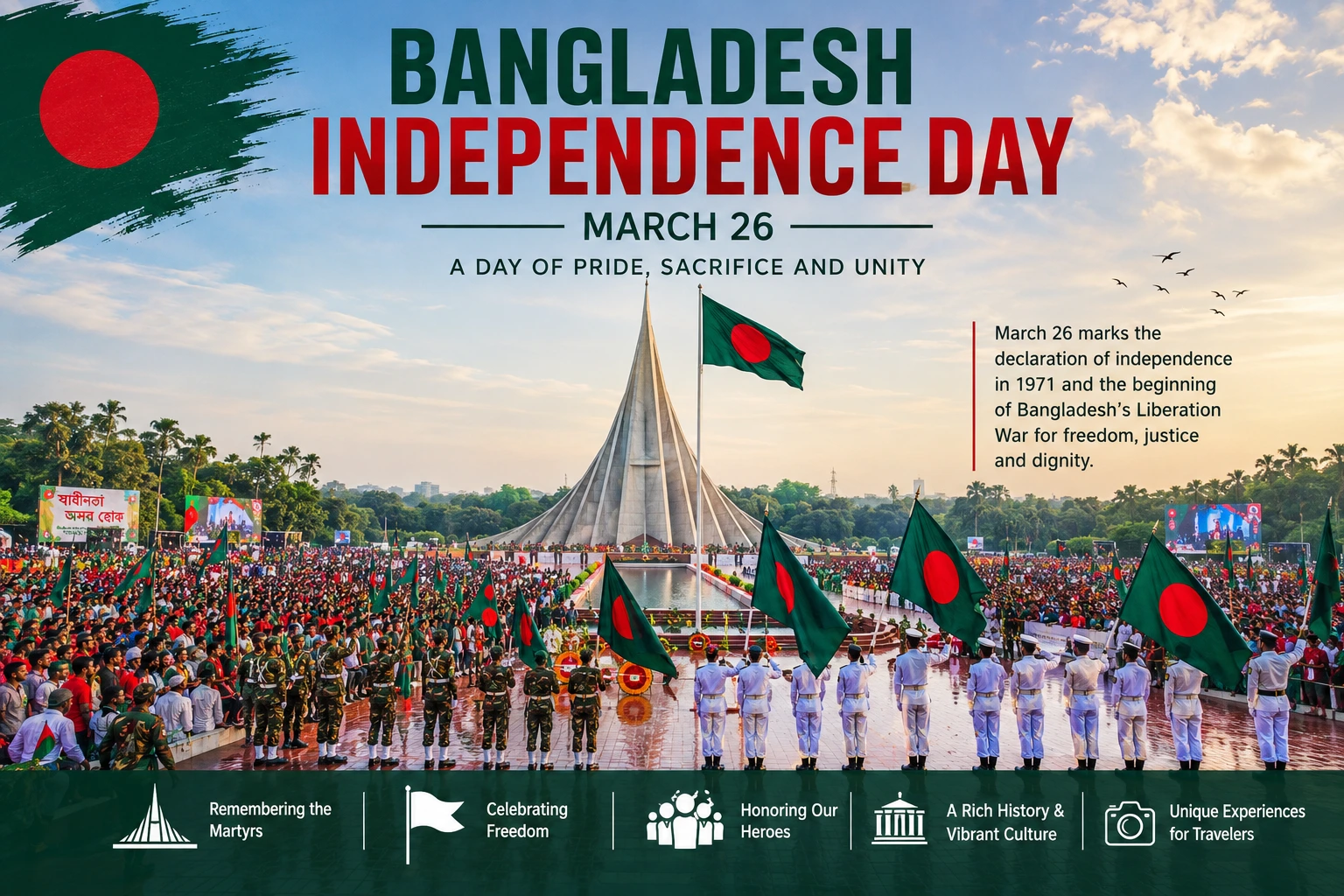
Bangladesh Independence Day is celebrated every year on March 26. It commemorates the declaration of independence in 1971 and the beginning of the Liberation War, a historic struggle that ultimately led to the creation of Bangladesh as a sovereign nation.
The day is not only a national holiday but also a symbol of resilience, sacrifice, and unity. Across the country, people honor the millions who contributed to the independence movement and remember those who sacrificed their lives during the Liberation War.
For Bangladeshis, Independence Day represents:
- Freedom and sovereignty
- National identity
- Cultural pride
- Democratic values
- Respect for the sacrifices of freedom fighters
Throughout the country, government institutions, schools, universities, and cultural organizations organize events that celebrate the nation’s history and achievements.
The Historical Journey Toward Independence
The story of Bangladesh Independence Day begins long before 1971.
After the partition of British India in 1947, Pakistan was created with two geographically separated regions: West Pakistan and East Pakistan, now Bangladesh.
Despite having a larger population, East Pakistan faced political, economic, and cultural discrimination for many years. The people of East Pakistan increasingly felt that their language, culture, and interests were not being adequately represented.
One of the earliest signs of resistance came during the Language Movement of 1952. When the government attempted to impose Urdu as the sole state language, Bengali students and activists protested. Several lost their lives while defending the right to speak their mother tongue.
The Language Movement became a powerful symbol of cultural identity and laid the foundation for future demands for autonomy.
The Rise of the Independence Movement
By the late 1960s, demands for political and economic rights had intensified.
Sheikh Mujibur Rahman emerged as the leading voice of the Bengali people and became the central figure in the movement for greater autonomy. His leadership inspired millions and transformed the political landscape of East Pakistan.
The situation reached a critical point following the 1970 general election. The Awami League secured a clear majority, but political power was not transferred as expected.
Public frustration grew rapidly.
On March 7, 1971, Sheikh Mujibur Rahman delivered his historic speech at the Racecourse Ground in Dhaka. The speech inspired the nation and prepared the people for the struggle ahead.
Today, this speech is recognized globally and is included in UNESCO’s Memory of the World Register.
March 26, 1971: The Beginning of a New Nation
The night of March 25, 1971, remains one of the darkest chapters in Bangladesh’s history.
Military operations were launched against civilians, resulting in widespread violence across East Pakistan.
In response, the declaration of independence was issued, and the Liberation War officially began.
March 26 is therefore recognized as the official start of Bangladesh’s journey toward freedom.
The war continued for nine months and witnessed extraordinary courage from freedom fighters, students, farmers, workers, and ordinary citizens who united in pursuit of independence.
The conflict ended on December 16, 1971, when Bangladesh achieved victory and emerged as an independent nation.
How Bangladesh Celebrates Independence Day Today
Bangladesh Independence Day is observed across the country with great enthusiasm and respect.
The celebrations begin early in the morning with the hoisting of the national flag and the singing of the national anthem.
Government officials, military personnel, educational institutions, and community organizations organize events that include:
- Flag-raising ceremonies
- Cultural performances
- Historical exhibitions
- Discussions and seminars
- Art competitions
- Patriotic concerts
- Wreath-laying ceremonies
Television channels broadcast special programs highlighting the history of the Liberation War and the sacrifices of freedom fighters.
The entire nation comes together to celebrate its freedom while remembering the cost of achieving it.
National Martyrs’ Memorial: A Place of Remembrance
One of the most important places associated with Bangladesh Independence Day is the National Martyrs’ Memorial in Savar, near Dhaka.
This iconic monument honors the millions who sacrificed their lives during the Liberation War.
On March 26, thousands of people visit the memorial to pay tribute to the martyrs.
The striking architecture and peaceful surroundings make it one of the most meaningful historical sites in Bangladesh.
For travelers interested in understanding the country’s history, the National Martyrs’ Memorial is an essential destination.
Liberation War Museum: Understanding Bangladesh’s Story
Another important place to visit is the Liberation War Museum in Dhaka.
The museum preserves documents, photographs, personal belongings, and historical records from the Liberation War.
Visitors can learn about:
- The Language Movement
- Political developments leading to independence
- The Liberation War
- Personal stories of freedom fighters
- International support during the conflict
The museum offers valuable insights into the struggles and sacrifices that shaped modern Bangladesh.
For travelers interested in history and culture, it provides an educational and emotional experience.
Experiencing Independence Day as a Traveler
For international visitors, Bangladesh Independence Day offers a unique cultural experience.
Unlike many national celebrations that focus primarily on entertainment, Independence Day combines history, patriotism, and community participation.
Visitors can observe:
- Patriotic processions
- Traditional music performances
- Cultural exhibitions
- Historical reenactments
- Public gatherings
- National ceremonies
The atmosphere is both festive and respectful, creating opportunities to understand the values that define the nation.
Travelers interested in Bangladesh’s heritage often combine Independence Day experiences with an Old Dhaka Tour, where historic neighborhoods reveal the city’s rich cultural past.
Those seeking a broader introduction to the capital may also enjoy the Discover Dhaka City experience, which showcases major landmarks, local life, and cultural attractions.
For visitors who want to explore both history and heritage, the Old Dhaka and Sonargao Tour provides an excellent journey through centuries of Bengali civilization.
Best Places to Visit During Bangladesh Independence Day
Several destinations become especially meaningful during Independence Day celebrations.
Dhaka
The capital city hosts many official ceremonies, cultural events, and public programs.
National Martyrs’ Memorial
The most important memorial site associated with the Liberation War.
Liberation War Museum
An essential destination for understanding Bangladesh’s history.
Suhrawardy Udyan
A historic location connected to important events during the independence movement.
Central Shaheed Minar
A symbol of the Language Movement and cultural identity.
Old Dhaka
Offers a fascinating blend of history, culture, architecture, and local traditions.
Independence Day and Cultural Tourism
Understanding Bangladesh Independence Day helps travelers appreciate many aspects of Bengali culture.
The values celebrated on March 26 continue to influence:
- Literature
- Music
- Art
- Architecture
- Education
- Cultural traditions
Travelers interested in cultural exploration often extend their journey beyond Dhaka to destinations such as:
- Panam City
- Sonargaon
- North Bengal heritage sites
- Sreemangal tea gardens
- Sundarbans mangrove forest
These destinations reveal different chapters of Bangladesh’s rich cultural story.
Why March Is a Great Time to Visit Bangladesh
March is one of the most pleasant months to explore Bangladesh.
Visitors can enjoy:
- Comfortable temperatures
- Lower humidity
- Clear skies
- Cultural events
- Outdoor sightseeing
The weather makes it ideal for exploring historical sites, photographing local life, and participating in cultural experiences.
Experience Bangladesh Beyond Independence Day
While March 26 is one of the most important dates in the national calendar, it also serves as a gateway to discovering Bangladesh itself.
Travelers who come to learn about the country’s history often stay to explore its rivers, villages, tea gardens, wildlife, archaeological sites, and welcoming communities.
Whether you are interested in history, photography, culture, food, or nature, Bangladesh offers experiences that remain largely undiscovered by mass tourism.
As one of the most authentic destinations in South Asia, it rewards curious travelers with meaningful connections and unforgettable memories.
For more information about Bangladesh’s history, UNESCO heritage sites, and cultural significance, you can explore resources from UNESCO and Encyclopaedia Britannica.
Frequently Asked Questions
When is Bangladesh Independence Day celebrated?
Bangladesh Independence Day is celebrated annually on March 26, commemorating the declaration of independence in 1971.
Why is March 26 important in Bangladesh?
March 26 marks the beginning of the Liberation War and the nation’s struggle for independence from Pakistan.
What is the difference between Independence Day and Victory Day?
Independence Day marks the declaration of independence on March 26, while Victory Day on December 16 celebrates the final victory of Bangladesh in the Liberation War.
What are the main Independence Day celebrations in Bangladesh?
Celebrations include flag-raising ceremonies, cultural performances, memorial visits, patriotic concerts, and educational events.
What historical places should travelers visit to learn about Bangladesh Independence Day?
The National Martyrs’ Memorial, Liberation War Museum, Suhrawardy Udyan, Central Shaheed Minar, and Old Dhaka are among the most significant sites.
Is March a good time to travel to Bangladesh?
Yes. March offers pleasant weather, cultural celebrations, and excellent conditions for sightseeing throughout the country.
Why should travelers learn about Bangladesh Independence Day?
Understanding Independence Day provides valuable insight into Bangladesh’s history, culture, identity, and the resilience of its people.