Pohela Boishakh, the Bengali New Year, is not just a festival—it is the heartbeat of Bangladesh. Celebrated every year on April 14, this day marks a fresh beginning, a cultural awakening, and a nationwide celebration that brings millions of people together regardless of religion, class, or background.
For travelers from the United States, Pohela Boishakh offers something rare—an authentic cultural experience that is not staged or commercialized. It is raw, vibrant, emotional, and deeply rooted in tradition. You don’t just observe this festival—you become part of it.
Why Pohela Boishakh Feels Different From Other Festivals Around the World
Many cultural festivals around the world are organized for audiences.
Pohela Boishakh feels different because the entire country participates naturally.
From the early morning processions in Dhaka University to small village fairs beside rivers and tea gardens, the Bengali New Year transforms Bangladesh into a celebration of music, art, food, tradition, and community. Streets fill with people wearing traditional red-and-white clothing, local musicians perform in public spaces, and families gather to celebrate new beginnings together.
For international travelers, the experience feels deeply human rather than commercialized.
You are not separated from the celebration as an observer. Instead, you walk through the middle of it:
- sharing traditional food with locals
- hearing live folk music in crowded streets
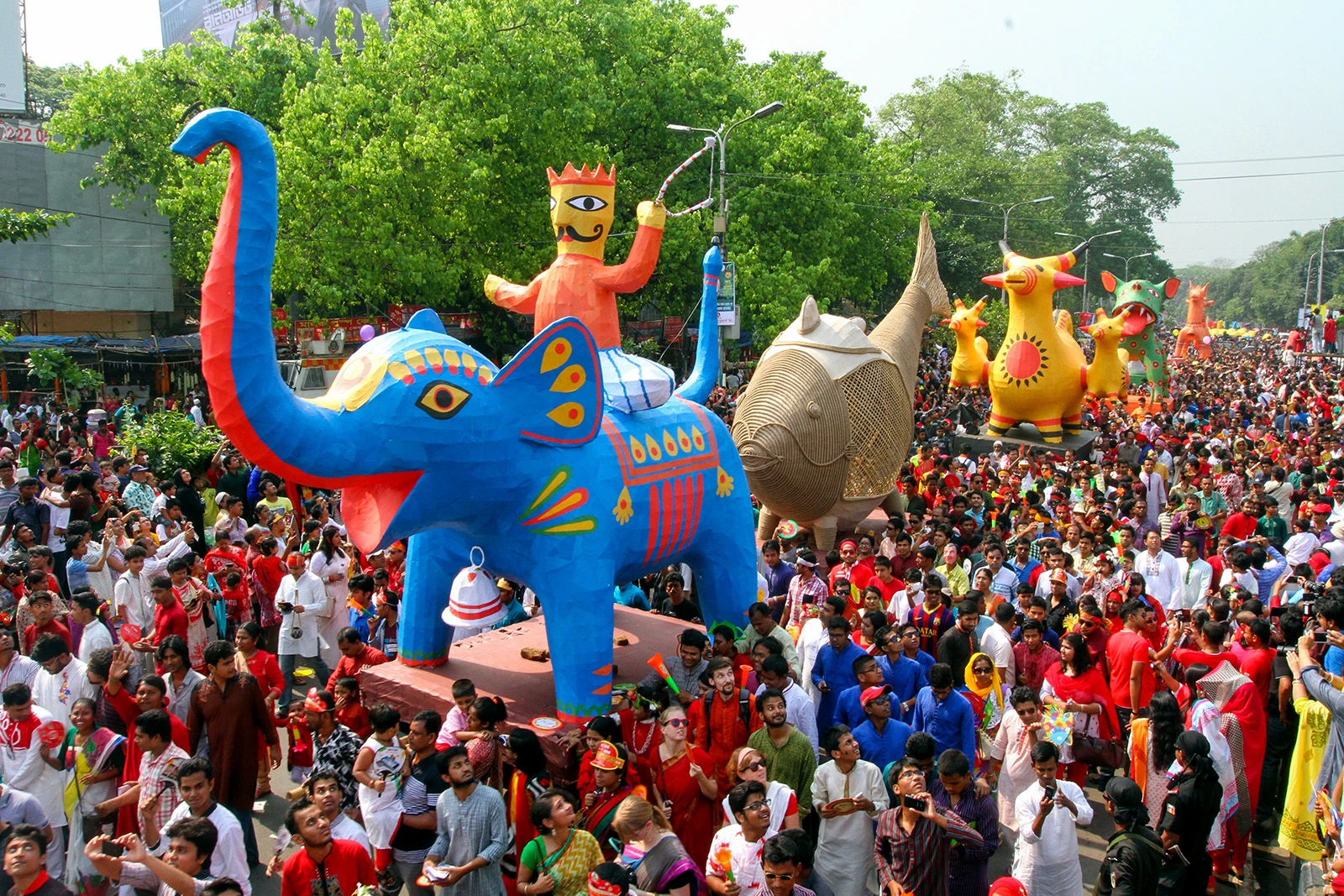
- watching giant handmade masks during Mangal Shobhajatra
- experiencing Old Dhaka at its most energetic and colorful
What makes Pohela Boishakh especially rewarding for photographers and cultural travelers is the visual contrast between heritage, emotion, and everyday life. Every corner of the city becomes photographically alive.
Many travelers combine the festival with experiences like the Old Dhaka Tour, Dhaka Food Tour, or Street Photography Tour in Dhaka to experience the cultural atmosphere more deeply.
Why Pohela Boishakh Feels Different from Any Festival in the World
Pohela Boishakh is not confined to a venue or a ticketed event. The entire country celebrates it together. Streets become lively, parks turn into cultural stages, and neighborhoods transform into open festivals.
What makes it unique:
- Everyone participates—from children to elders
- No barriers between locals and visitors
- Culture is expressed through music, art, and food
- It carries both joy and deep meaning
For USA travelers, this feels completely different from structured festivals back home. It’s immersive, spontaneous, and deeply human.
The Meaning Behind Pohela Boishakh
Pohela Boishakh marks the first day of the Bengali calendar. Historically, it was linked to agriculture and tax collection during the Mughal era, but over time it evolved into a celebration of identity, culture, and renewal.
Today, it symbolizes:
- A fresh start
- Cultural unity
- Hope and positivity
People greet each other with “Shubho Noboborsho,” meaning Happy New Year, creating a sense of shared joy across the country.
The Morning of Pohela Boishakh: Where Everything Begins
The day begins early, often at sunrise. One of the most iconic places to experience the start of Pohela Boishakh is Ramna Park in Dhaka.
Here, thousands gather under the open sky as cultural performances begin. Traditional songs, especially those of Rabindranath Tagore, fill the air, creating a peaceful yet powerful start to the day.
This moment is not just entertainment—it’s emotional. You feel the connection between people, culture, and history.
Mangal Shobhajatra: The Iconic Procession
One of the most famous highlights of Pohela Boishakh is the Mangal Shobhajatra procession.
Organized by art students, this vibrant parade includes:
- Giant colorful masks
- Symbolic figures
- Artistic displays
Recognized by UNESCO as a cultural heritage, this procession represents unity, resistance, and hope.
Walking alongside the procession, you don’t feel like an outsider. You feel included.
The Colors of Pohela Boishakh: Red and White
One of the first things you’ll notice is the dominance of red and white outfits.
Women wear white sarees with red borders, while men wear traditional kurtas with red accents. These colors are not random—they carry meaning.
- White represents purity and new beginnings
- Red symbolizes energy, strength, and life
Together, they reflect the spirit of the festival.
Street Life During Pohela Boishakh
As the day progresses, the streets come alive.
You will see:
- Music performances on every corner
- Street artists painting and performing
- Vendors selling traditional crafts
- Crowds moving together in celebration
The energy is intense but joyful. It may feel overwhelming at first, especially for travelers from the USA, but it quickly becomes exciting and unforgettable.
Traditional Food: A Celebration of Flavor
Food plays a major role in Pohela Boishakh. One of the most iconic dishes is panta bhat, served with fried fish and traditional sides.
Street food becomes a big part of the experience. You’ll find:
- Local snacks
- Sweet treats
- Freshly prepared traditional dishes
To explore this safely and authentically, joining a Dhaka Food Tour allows you to taste the best of Bangladeshi cuisine during the festival.
Exploring Old Dhaka During Pohela Boishakh
Old Dhaka offers one of the most intense and authentic festival experiences.
The narrow streets, historic buildings, and vibrant crowds create a unique atmosphere that feels like stepping back in time.
An Old Dhaka Tour during Pohela Boishakh helps you navigate this area while understanding its history and significance.
You can also combine this with an Old Dhaka and Sonargao Tour, where Visiting Panam City gives you a glimpse into Bangladesh’s rich past.
Photography Opportunities You Should Not Miss
Pohela Boishakh is a dream for photographers.
Every moment is visually rich:
- Colorful crowds
- Artistic masks
- Cultural performances
For those interested in capturing authentic moments, a Street Photography Tour in Dhaka provides guidance on how to photograph respectfully and effectively.
Experiencing the Cultural Depth of the Festival
Beyond the visuals and celebrations, Pohela Boishakh is deeply cultural.
You can:
- Watch traditional dance and music
- Participate in local customs
- Learn about Bengali heritage
A guided A Cultural Tour helps you understand the deeper meaning behind what you are experiencing.
Exploring Beyond Dhaka During Pohela Boishakh
While Dhaka is the center of celebration, other regions offer different experiences.
A Sreemangal and Sylhet Tour provides a peaceful environment where the festival feels more relaxed and nature-focused.
Similarly, a North Bengal tour introduces you to rural celebrations that are deeply traditional and less crowded.
How to Experience Pohela Boishakh Comfortably
For travelers from the USA, the festival can feel intense due to large crowds and energy levels.
Here are some simple tips:
- Start early in the morning
- Stay hydrated
- Keep your belongings secure
- Move with the crowd, not against it
Booking with the Best Tour Agency in Bangladesh ensures you have guidance, safety, and a structured experience.
Combining Pohela Boishakh with Other Experiences
To make the most of your trip, combine the festival with other cultural experiences.
You can:
- Discover Dhaka City beyond the festival
- Take a Half-Day Tour Dhaka for quick exploration
- Explore historical sites through World Heritage and Historical Places Tours
These additions turn your trip into a complete cultural journey.
The Emotional Experience of Pohela Boishakh
What stays with you after the festival is not just what you saw—but what you felt.
You remember:
- The sound of music filling the streets
- The warmth of strangers welcoming you
- The shared joy of celebration
It’s not just a festival—it’s a connection.
Why USA Travelers Should Experience Pohela Boishakh
If you are looking for:
- Authentic cultural immersion
- Meaningful travel experiences
- A break from commercial tourism
Then Pohela Boishakh is something you should not miss.
It offers a rare opportunity to see a country celebrating its identity with pride, passion, and unity.
Experience Bangladesh Beyond Pohela Boishakh
Pohela Boishakh may be the most famous cultural celebration in Bangladesh, but it is only the beginning of the country’s deeper cultural story.
Beyond the Bengali New Year, travelers can explore Old Dhaka’s historic riverfront, abandoned merchant mansions in Panam City, traditional food markets, tea gardens in Sreemangal, indigenous hill communities in Bandarban, and river villages that still preserve centuries-old lifestyles.
Many international visitors who arrive for Pohela Boishakh later continue their journey through:
- heritage tours in Old Dhaka
- photography experiences in Sonargaon
- Bangladeshi food trails
- cultural village explorations
- river cruises and local markets
- tea garden tours in Sylhet and Sreemangal
Popular Bangladesh Explore experiences include:
- Bangladesh Cultural Tour
- Visiting Panam City & Folklore Museum
- Half Day Tour Dhaka
- Dhaka Food Tour
- Bangladesh Photography Tour
For travelers searching for authentic cultural experiences instead of staged tourism, Bangladesh remains one of South Asia’s most emotionally rewarding destinations.
Frequently Asked Questions (FAQ)
What is Pohela Boishakh?
Pohela Boishakh is the Bengali New Year, celebrated on April 14 with cultural events, processions, and nationwide celebrations.
Where is the best place to experience Pohela Boishakh?
Dhaka, especially Ramna Park and Old Dhaka, offers the most vibrant celebrations.
Is Pohela Boishakh suitable for international travelers?
Yes, it is welcoming and inclusive, making it a great experience for visitors.
What should I wear during Pohela Boishakh?
Light, comfortable clothing is recommended. Traditional red and white outfits are commonly worn.
How can I explore the festival safely?
Joining guided tours and staying aware in crowded areas helps ensure a safe and enjoyable experience.