
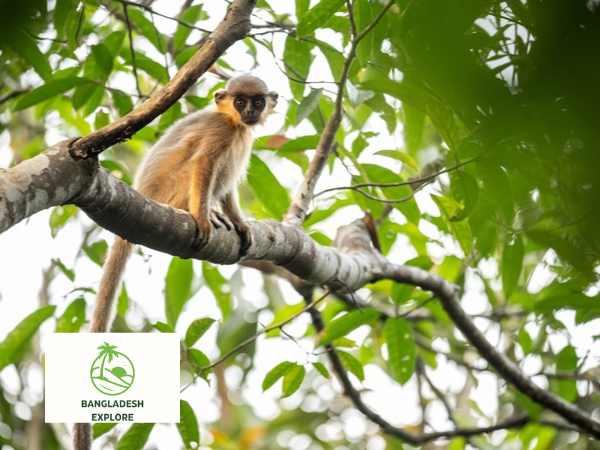
The forest sounds different before you see anything.
Leaves move high above the trail. Birds call somewhere beyond the canopy. Then, if you are fortunate, the unmistakable call of a hoolock gibbon carries through the trees.
This is Lawachara National Park, one of Bangladesh’s most important remaining areas of mixed evergreen and semi-evergreen forest and one of the most rewarding nature experiences near Sreemangal.
Located in Kamalganj Upazila of Moulvibazar District, Lawachara offers something very different from Bangladesh’s busy cities and historic monuments. Here, the experience is about walking slowly beneath the forest canopy, listening for wildlife, watching birds and understanding how people, tea estates and protected forest have shaped this corner of northeastern Bangladesh.
For international travelers staying in Sreemangal, Lawachara National Park is one of the easiest places to experience Bangladesh’s remarkable biodiversity at close range.
Lawachara National Park at a Glance
Location: Kamalganj Upazila, Moulvibazar District, Bangladesh
Nearest tourism base: Sreemangal
Park area: Approximately 1,250 hectares
Established: 1996
Forest type: Mixed evergreen and semi-evergreen forest
Known for: Hoolock gibbons, primates, birdwatching, rainforest trails and biodiversity
Ideal visit: Half day
Best comfortable season: November to March
Best experience: Early-morning guided forest walk
Lawachara lies within the larger West Bhanugach Reserved Forest and is surrounded by a landscape of tea estates, villages and forest habitat.
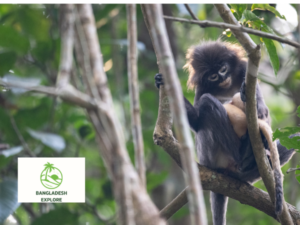
Phayre’s Langur – Lawachara National Park – Bangladesh PC:Sichao Ma
Why Visit Lawachara National Park?
Lawachara is not a wildlife park where animals wait beside the trail.
That is exactly what makes visiting worthwhile.
You enter a living forest where wildlife sightings depend on timing, patience, season and luck. A branch moving above the canopy may reveal a monkey. A distant call may lead your guide to stop and listen. Hornbills can cross above the trees before disappearing almost immediately into the forest.
For travelers accustomed to highly managed wildlife attractions, Lawachara offers a more natural experience. There are no guarantees, and the forest should not be treated like a zoo.
Instead, its appeal comes from observation.
Walk slowly, listen carefully and allow the forest to reveal itself.
The Hoolock Gibbon: Lawachara’s Most Famous Resident
The western hoolock gibbon is the animal most closely associated with Lawachara National Park.
Gibbons spend most of their lives high in the forest canopy and move between trees using their long arms. Visitors are often more likely to hear their powerful calls before seeing them.
Lawachara is particularly important because Bangladesh has lost much of the continuous forest habitat on which gibbons depend. Remaining populations are therefore highly significant for conservation.
Seeing one in the wild should never be expected or guaranteed. An experienced local guide may recognize calls, feeding areas and movement patterns, improving your chances without disturbing the animals.
If you encounter gibbons, keep your distance, remain quiet and avoid trying to attract their attention.
A brief natural sighting is far more meaningful than forcing an interaction.
Wildlife in Lawachara National Park
Hoolock gibbons may receive most of the attention, but Lawachara supports a much broader forest ecosystem.
Several primate species are associated with the park, including capped langurs and Phayre’s leaf monkeys. Macaques, squirrels and other small mammals may also be encountered.
Reptiles, amphibians, insects and an extraordinary variety of forest plants contribute to the ecosystem even when larger animals remain hidden.
Wildlife encounters vary considerably. Some visitors may have several memorable sightings; others may spend most of their walk experiencing birds, butterflies, insects and the forest itself.
That unpredictability is part of genuine wildlife travel.
Birdwatching in Lawachara
Lawachara is also one of Bangladesh’s notable forest birding destinations.
The combination of tall forest, secondary vegetation, bamboo, streams and surrounding tea-country habitat creates opportunities to observe a wide range of species.
Oriental pied hornbills are among the birds visitors particularly hope to encounter. Forest birding may also reveal woodpeckers, barbets, drongos, bulbuls and other species depending on season and conditions.
Early morning is generally the best time to explore.
Serious birdwatchers should consider starting around sunrise with a guide familiar with bird calls rather than arriving during the busiest part of the day.
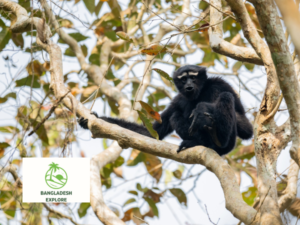
Capped Langur – Lawachara National Park – Bangladesh P:C: sichao Ma
Walking Through Lawachara Rainforest
The best way to understand Lawachara National Park is on foot.
Walking trails lead beneath bamboo, tall trees and dense tropical vegetation. Sunlight filters unevenly through the canopy while vines and understory plants create layers of green around the path.
This is not a dramatic mountain trek. The reward comes from slowing down.
Stop occasionally.
Listen.
Look upward.
Some of the most interesting wildlife remains above eye level, and walking too quickly can mean passing through the forest without really experiencing it.
Trail conditions can change after rain, so shoes with reasonable grip are preferable to sandals. During warmer months, humidity can also make even an easy walk tiring.
Should You Hire a Local Guide?
For a first visit, a knowledgeable local nature guide is highly recommended.
A guide can help identify bird calls, locate primates, explain forest ecology and select a suitable trail based on your available time and interests.
More importantly, a responsible guide can help visitors understand how to behave around wildlife and communities.
For photographers and birdwatchers, local knowledge can make the difference between simply walking through a forest and actually understanding what is happening around you.
Photography in Lawachara National Park
Lawachara rewards patience more than equipment.
The forest can be challenging to photograph because the canopy creates low and uneven light. Wildlife often appears high above the trail or moves quickly between branches.
A telephoto lens is useful for birds and primates, while a wider lens can capture forest trails, bamboo and the scale of the vegetation.
Avoid flash photography around wildlife.
Do not play recorded animal calls simply to attract birds or primates for photographs, and never chase an animal off the trail to obtain a clearer angle.
For photographers, the objective should be to document natural behavior rather than manufacture a photograph.
Indigenous Communities Around Lawachara
The landscape around Lawachara is also home to Indigenous communities whose relationship with the forest predates modern tourism.
Khasi communities, among others, live within or around the wider forest landscape. Betel-leaf cultivation is particularly associated with Khasi settlements in this region.
However, a village is somebody’s home—not an attraction created for visitors.
Community visits should therefore be arranged respectfully and, where appropriate, through someone who has an established relationship with residents.
Ask before photographing people, homes, religious spaces or agricultural work. Do not assume that traditional clothing, dances or private activities will be performed for tourists.
A respectful visit should create an opportunity for genuine interaction rather than turn community life into a staged experience.
Purchasing locally produced crafts or goods can also help ensure that tourism provides direct economic value to residents.
Tea Gardens Around Lawachara
One of the pleasures of visiting Lawachara is that the rainforest forms part of a much broader Sreemangal landscape.
Tea estates stretch across rolling green terrain around the region, creating a striking contrast with the denser forest.
A morning in Lawachara can therefore be combined with an afternoon exploring Sreemangal’s tea country, local markets or other nearby natural attractions.
For international visitors with limited time, this combination provides a useful introduction to both the ecological and agricultural landscapes of northeastern Bangladesh.
How to Get to Lawachara National Park
From Sreemangal
Sreemangal is the most convenient base for visiting Lawachara National Park.
The park is approximately 8–10 kilometers from Sreemangal town, depending on the starting point and route.
Travelers commonly reach the entrance using a reserved CNG auto-rickshaw, private car or tour vehicle.
The journey itself passes through the tea-growing landscape, so the transition from town to forest becomes part of the experience.
Arrange return transport before entering the park rather than assuming a vehicle will always be waiting when you finish.
From Dhaka
Most international visitors should travel from Dhaka to Sreemangal first and use the town as their base.
Train, intercity bus and private vehicle options connect Dhaka with Sreemangal. Schedules and journey times can change, particularly around public holidays and periods of heavy traffic.
If using public transport, confirm the current departure point and schedule before traveling.
For travelers carrying photography equipment or visiting several attractions around Sreemangal, a private vehicle can provide greater flexibility.
From Sylhet
Lawachara can also be reached from Sylhet, although staying in Sreemangal is more convenient if the national park is a priority.
Visitors combining Sylhet and Sreemangal should plan the route according to their wider itinerary rather than repeatedly traveling between the two cities.
Best Time to Visit Lawachara National Park
November to March: Best for Comfortable Walking
The cooler and generally drier months are the easiest period for most international travelers.
Humidity is lower, trails are typically easier to walk and spending several hours outdoors is more comfortable.
This period is particularly suitable for first-time visitors, photographers and travelers combining Lawachara with other Sreemangal experiences.
April to May: Hotter Conditions
Temperatures and humidity rise before the monsoon.
Forest walks are still possible, but early morning becomes increasingly important. Carry sufficient water and avoid rushing through longer trails during the hottest part of the day.
June to October: Green and Rainy
The monsoon transforms Lawachara into an intensely green landscape.
Rain creates atmospheric forest conditions, but trails may become muddy and slippery. Leeches and insects can also be more noticeable.
Visitors during this period should carry rain protection, wear suitable footwear and keep cameras and electronics protected from moisture.
What to Bring to Lawachara
You do not need specialist expedition equipment for a normal visit, but a few items make the experience considerably more comfortable.
Bring lightweight breathable clothing, comfortable walking shoes, drinking water, insect repellent, sun protection and a small rain cover or umbrella depending on the season.
Binoculars are highly recommended for birdwatchers.
Photographers should carry only the equipment they can comfortably manage while walking. A telephoto lens can be useful for wildlife, but protecting equipment from humidity and sudden rain is equally important.
Avoid carrying unnecessary single-use plastic into the forest.
Responsible Travel in Lawachara
Protected forests are vulnerable to the cumulative behavior of thousands of visitors.
Stay on established trails and follow instructions from forest officials or guides.
Never feed wildlife.
Keep noise low, particularly when animals are nearby. Do not remove plants, flowers, insects or other natural material from the park.
Carry your rubbish out with you and avoid leaving plastic bottles or food packaging behind.
Wildlife photography should never involve touching, feeding, chasing or deliberately frightening an animal.
The same principle applies to people.
Ask permission before taking close photographs of residents, workers or children in communities around the forest.
Responsible tourism is not an additional activity at Lawachara. It is part of visiting the park properly.
A Suggested Half-Day Lawachara Experience
For most first-time visitors, an early start provides the strongest experience.
Leave Sreemangal around sunrise and reach the forest while bird and primate activity may still be high.
Meet a local nature guide and spend approximately two to three hours walking through an appropriate forest trail. Rather than trying to cover as much distance as possible, focus on wildlife calls, vegetation, birdlife and the atmosphere of the forest.
After leaving Lawachara, continue through the surrounding tea landscape.
Depending on your interests and current access arrangements, the rest of the day can include tea-country experiences or other nature-focused locations around Sreemangal.
This slower itinerary works particularly well for travelers interested in photography, wildlife and local landscapes.
Is Lawachara National Park Worth Visiting?
Yes—particularly if you are interested in wildlife, birdwatching, forests or responsible nature travel.
Lawachara is not Bangladesh’s largest wilderness area, and visitors should not expect safari-style wildlife encounters.
Its importance is more intimate.
You walk beneath one of the country’s remaining mixed evergreen forest canopies. You listen for gibbons somewhere above the trees. You watch hornbills cross an opening before disappearing into the forest. Outside the park, tea gardens and communities reveal how closely human life and the forest landscape are connected.
For travelers willing to slow down, Lawachara offers a side of Bangladesh that is easy to miss from the country’s cities and major historical sites.
Explore Lawachara with Bangladesh Explore
A visit to Lawachara becomes more rewarding when the journey is planned around the forest rather than simply adding it as another sightseeing stop.
Bangladesh Explore can arrange Lawachara as part of a Sreemangal and Sylhet itinerary, including transportation, accommodation and a knowledgeable local guide.
Our approach prioritizes realistic wildlife expectations, responsible photography and respectful interaction with communities.
Whether you have a single night in Sreemangal or several days to explore northeastern Bangladesh, the itinerary can be adapted around your interests in wildlife, birding, photography, tea culture and local life.
Frequently Asked Questions About Lawachara National Park
Where is Lawachara National Park?
Lawachara National Park is in Kamalganj Upazila of Moulvibazar District in northeastern Bangladesh. Sreemangal is the most convenient tourism base and is approximately 8–10 kilometers from the park.
What is Lawachara National Park famous for?
Lawachara National Park is best known for its mixed evergreen forest, western hoolock gibbons, threatened primates, diverse birdlife and rainforest walking trails. It is one of Bangladesh’s best-known protected areas for biodiversity.
How long do I need at Lawachara National Park?
Allow around two to four hours for a first visit. A half-day trip from Sreemangal provides enough time for a guided forest walk without rushing.
What is the best time to visit Lawachara National Park?
November through March generally offers the most comfortable weather for forest walking. Early morning is usually the best time of day for birdwatching and the possibility of observing primates.
Can I see hoolock gibbons in Lawachara?
Hoolock gibbons live in Lawachara, but sightings are never guaranteed. Visiting early with an experienced nature guide can improve your chances of locating them by their calls and known movement areas.
Do I need a guide for Lawachara National Park?
A guide is strongly recommended for first-time visitors, birdwatchers and wildlife photographers. Local guides can identify calls and species, explain the forest ecosystem and help visitors follow responsible wildlife-viewing practices.
Can foreign tourists visit Lawachara National Park?
Lawachara is a recognized tourism destination in Bangladesh. International visitors should nevertheless confirm current entrance procedures, fees, opening conditions and any local requirements shortly before visiting, as operational arrangements can change.
Can I visit Lawachara from Sreemangal in one day?
Yes. Lawachara is close enough to Sreemangal for a half-day excursion, leaving plenty of time to experience tea gardens and other attractions around the region on the same day.