
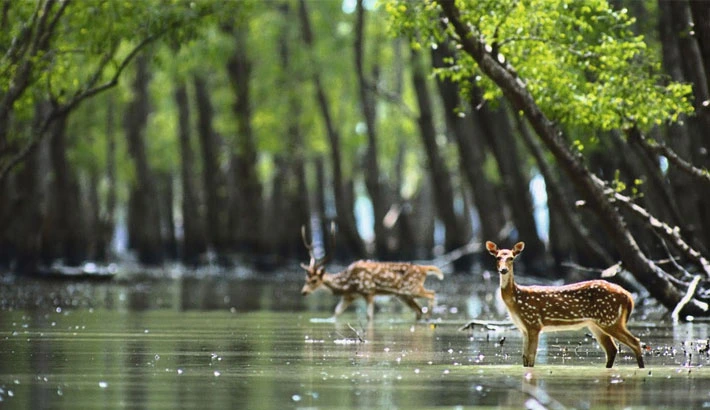
When most travelers think about Bangladesh, they imagine crowded streets, tea gardens and ancient cities. But one of the country’s greatest natural treasures is far from the noise of Dhaka – a vast mangrove forest in Bangladesh called the Sundarbans. This tidal jungle is wild, mysterious and surprisingly peaceful once your boat leaves the last town behind.
For nature lovers from the USA and around the world, Bangladesh’s Sundarbans offer something rare: quiet waterways, real wilderness and the chance (if you’re lucky) to glimpse the legendary Royal Bengal tiger in its only mangrove habitat on Earth.
Understanding the Sundarbans Mangrove Forest
The Sundarbans Mangrove forest lies in the south-west of Bangladesh, where the Ganges, Brahmaputra and Meghna rivers meet the Bay of Bengal. Here, fresh river water mixes with salty seawater and creates a maze of tidal channels, mudflats and islands covered by salt-tolerant trees.
This is the world’s largest single-block halophytic mangrove forest, stretching over thousands of square kilometres and shared between Bangladesh and India. Around 60% of this ecosystem lies on the Bangladeshi side, which is quieter, wilder and less commercial than the Indian section – perfect if you want an authentic nature experience.
Three wildlife sanctuaries form the core of Sundarbans Bangladesh National Park (on the Bangladesh side, these are part of the Sundarbans Reserve Forest). The area is recognised as:
- A UNESCO World Heritage Site
- A Ramsar wetland of international importance
- A crucial natural “green wall” protecting millions of people from cyclones and storm surges
When you step onto a Sundarban tour boat, you are not just visiting another park – you are entering one of the most important mangrove ecosystems on the planet.
Why the Mangrove Forest in Bangladesh Is So Unique
Several things make the mangrove forest in Bangladesh different from other forests you may have visited:
A Living Delta Laboratory
The Sundarbans sit on an active river delta. Every tide rearranges mudbanks, deposits silt and carves new channels. Trees must constantly adapt to salty water, unstable soil and changing landforms. You’ll notice:
- Tree roots sticking up like pencils to breathe (pneumatophores)
- Stilt roots that help plants hold onto the muddy banks
- Forest edges that move slowly as land sinks or rises
For biology or geography lovers, this is a natural classroom where you can literally see how a delta grows and changes.
A Strong, Silent Storm Shield
Bangladesh is often hit by cyclones from the Bay of Bengal. The Sundarbans Mangrove forest acts as a natural barrier:
- Mangrove roots hold soil together and reduce coastal erosion
- Dense vegetation slows down storm surges and high waves
- Forest belts protect inland villages by absorbing wind energy
When you cruise along the forest edge, it’s easy to understand why conservationists say that protecting this mangrove forest in Bangladesh also means protecting millions of human lives.
A Giant Blue-Carbon Store
Mangroves are among the most efficient carbon sinks on Earth. Their roots trap organic matter in mud, locking carbon away for centuries. By visiting and supporting responsible Sundarban tours, you also support climate-friendly conservation efforts in one of Asia’s most important blue-carbon ecosystems.
Wildlife of Bangladesh’s Sundarbans – Beyond the Tiger
Most people know the Sundarbans for one reason: tigers. But this mangrove forest in Bangladesh is much more than a tiger reserve. It’s a living web of animals, plants and people.
The Royal Bengal Tiger
Bangladesh’s Sundarbans are one of the last strongholds of the Royal Bengal tiger. These cats are:
- Strong swimmers, perfectly adapted to mangrove channels
- Expert at hunting spotted deer and wild boar along muddy riverbanks
- Shy and very elusive – a tiger sighting is always a matter of luck
Responsible guides will never guarantee a tiger encounter. Instead, they focus on reading tracks, listening for alarm calls and teaching you how the whole ecosystem keeps this top predator alive.
Estuarine Crocodiles and Reptiles
The tidal rivers are home to large estuarine crocodiles, often seen sunbathing on mudbanks. You may also see:
- Monitor lizards walking slowly along the shore
- Various snakes, including the occasional python resting on a tree branch
- Mudskippers – small fish that “walk” on mudflats with their fins
Your boat keeps a safe distance so you can watch these creatures without disturbing them.
Dolphins and Aquatic Life
Keep your eyes on the water surface and you might spot:
- Irrawaddy dolphins, with their rounded heads and shy surfacing style
- Ganges river dolphins in certain channels
- Schools of fish jumping when a predator passes
On a well-planned Sundarbans and Bagerhat Tour, boats often slow down in dolphin-rich areas so you can enjoy these gentle animals without chasing them.
Birds – A Paradise for Birdwatchers
Bangladesh’s Sundarbans are heaven for bird lovers:
- Several species of kingfisher flash blue and orange along the creeks
- White-bellied sea eagles soar over wide channels
- Egrets, herons and storks feed in tidal pools
- Migratory ducks, waders and birds of prey visit during winter
If you enjoy photography, the low golden light on early-morning creeks is perfect for bird portraits.
People of the Sundarbans – Life at the Edge of the Forest
The mangrove forest in Bangladesh is not an empty wilderness. For centuries, local communities have depended on it for survival.
Honey Collectors and Fisherfolk
Every spring, traditional honey collectors – called mawalis – enter the forest to collect wild honey, always asking Bonbibi, the guardian deity of the forest, for protection. Fishermen cast nets in tidal creeks, crab collectors walk along muddy banks, and shrimp fry catchers work in brackish channels.
A responsible A Cultural Tour or extended Sundarbans itinerary gives you the chance to observe these livelihoods from a respectful distance and understand how people and forest are deeply connected.
The Myth of Bonbibi
Locals from both Hindu and Muslim backgrounds worship Bonbibi, the “Lady of the Forest”, who protects honest people from tigers and forest spirits. Temples and shrines dedicated to Bonbibi stand along the forest edge, decorated during the Bonbibi Mela – a colourful festival that expresses the spiritual relationship between people and the Sundarbans.
Best Time to Visit the Mangrove Forest in Bangladesh
You can technically visit the Sundarbans year-round, but conditions vary a lot. To plan your Sundarbans adventure wisely, keep these seasonal patterns in mind:
Winter (October to February) – Best Overall Season
- Mild temperatures and lower humidity
- Clear skies and pleasant evenings on deck
- Ideal for wildlife viewing, birdwatching and photography
Most international travelers choose this window for Sundarban tours, especially from November to February.
Summer (March to May)
- Hot and humid weather
- Forest is lush, and chances of seeing reptiles and some birds increase
- You must be comfortable with heat and mosquitoes
Monsoon (June to September)
- Heavy rainfall, strong currents and occasional cyclones
- Some areas may be closed for safety or regeneration
- Only specialised research or photography trips usually operate
When you book with the Best Tour Agency in Bangladesh, they’ll advise the best dates based on your interests – wildlife, festivals, photography or simply a quiet escape into nature.
How to Reach the Sundarbans from Dhaka and Overseas
For visitors from the USA or Europe, the journey to the mangrove forest in Bangladesh usually looks like this:
- Fly into Dhaka – the capital, connected with major hubs like Doha, Dubai, Istanbul or Singapore.
- Spend a day or two to Discover Dhaka City or join an Old Dhaka Tour or Dhaka Food Tour to shake off jet lag and experience urban culture.
- Travel from Dhaka to Khulna or Mongla, where most Sundarbans boats are based.
Dhaka to Khulna / Mongla
You can choose several options:
- Domestic flight to Jessore, then private car or shuttle to Khulna (2–3 hours)
- Intercity train from Dhaka to Khulna (around 8–10 hours) – comfortable but slower
- AC bus via the Padma Bridge (about 4–5 hours) – the most common option
From Khulna, it’s roughly an hour by road to Mongla, the main river port where many Sundarban tour boats start and end their journeys.
Types of Sundarban Tours – Choosing the Right Experience
Most travellers experience the mangrove forest in Bangladesh on a small cruise boat that serves as both transport and accommodation.
Classic 2-Night / 3-Day Tour
The most popular option includes:
- Boarding the boat early in Mongla or Khulna
- Two nights sleeping in simple cabins with shared or basic attached bathrooms
- Full-day explorations in creeks, watchtower visits, forest walks on raised paths, and night anchoring near forest stations
This length is ideal if you’re combining the Sundarbans with other Bangladesh highlights like Sreemangal and Sylhet Tour or North Bengal tour.
Extended 3-Night / 4-Day Tour
If you have more time and want a deeper nature immersion:
- Extra day allows access to quieter, less-visited creeks
- Better chances for birdwatching and dolphin encounters
- Slower pace, perfect for photographers and wildlife lovers
Special Interest Tours
Some operators (including Bangladesh Explore) can arrange:
- Bird-focused itineraries targeting rare species
- Trips that follow honey collectors or fishing communities during specific seasons
- Custom routes combined with World Heritage and Historical Places Tours, such as visiting the mosque city of Bagerhat before or after your cruise
What a Typical Day in the Sundarbans Looks Like
A day inside the mangrove forest in Bangladesh usually feels calm, structured and surprisingly comfortable:
Early Morning
- Boat starts moving at first light
- Guests enjoy tea or coffee on deck while watching mist over the river
- Small country boat ride into narrow creeks for sunrise birdwatching
Late Morning
- Breakfast on board
- Visit a forest station, walk along a raised trail or climb a watchtower
- Interpretive talk by your guide about mangrove ecology and wildlife signs
Afternoon
- Lunch while the boat slowly cruises through wider channels
- Stop at a sandy char (river island) if tides allow, or explore another creek by smaller boat
Evening
- Sunset from the open deck – one of the most peaceful moments of the trip
- Dinner under the stars while listening to jungle sounds
- Optional slideshow or informal Q&A about conservation challenges facing Bangladesh’s Sundarbans
You sleep in simple but clean cabins, with gentle rocking of the boat and distant calls of night birds.
Responsible Tourism in Bangladesh’s Sundarbans
The Sundarbans Mangrove forest is fragile. Good tour operators follow strict guidelines to minimise impact:
- Using smaller groups to reduce noise and disturbance
- Keeping distance from wildlife, especially tigers, crocodiles and nesting birds
- Avoiding plastic waste and bringing back all trash
- Hiring local crew, cooks and guides so that tourism directly supports nearby communities
As a visitor, you can help by:
- Travelling with ethical operators instead of the cheapest mass-tour boats
- Limiting single-use plastics and using refillable bottles
- Respecting forest rules – no loud music, no drones without permission, no feeding animals
Why Explore the Mangrove Forest in Bangladesh with Bangladesh Explore
Planning a Sundarbans trip from overseas can feel complicated: permits, boats, seasons, transport and safety issues are all very specific here. This is where a specialist operator makes a big difference.
Bangladesh Explore designs itineraries that combine the mangrove forest in Bangladesh with cultural, historical and photographic experiences across the country. You can:
- Start with a Half-Day Tour Dhaka or full Old Dhaka and Sonargao Tour to understand urban and medieval history.
- Continue south to join a carefully planned Sundarbans and Bagerhat Tour, visiting both the mangrove forest and the UNESCO-listed mosque city on the same journey.
- Add extra days for Visiting Panam City, a historic merchant street in Sonargaon, or extend to tea gardens with a Sreemanagal Tour and hill landscapes on a Sreemangal and Sylhet Tour.
By choosing a company that many international travellers regard as the Best Tour Agency in Bangladesh, you benefit from:
- English-speaking guides trained in wildlife interpretation
- Licensed boats that follow safety and environmental standards
- Thoughtful itineraries that balance comfort with authentic, off-the-beaten-path experiences
In short, you get to experience Bangladesh’s Sundarbans as a true adventure – but with the logistics already solved.
Frequently Asked Questions (FAQ)
What is the mangrove forest in Bangladesh called?
The main mangrove forest in Bangladesh is called the Sundarbans. It is the world’s largest single-block halophytic mangrove forest and a UNESCO World Heritage Site shared between Bangladesh and India.
Is the Sundarbans safe to visit for international travelers?
Yes, when you travel with a licensed operator, the Sundarbans is generally safe. Boats must take forest guards on board, follow specific routes and respect park regulations. Good operators provide life jackets, clear safety briefings and experienced crew.
How many days do I need for a Sundarban tour?
For most visitors, a 2-night / 3-day cruise is ideal to explore the mangrove forest in Bangladesh without rushing. If you are very interested in wildlife, birdwatching or photography, a 3-night / 4-day itinerary offers more time in quiet areas.
Can I see Royal Bengal tigers on a Sundarbans tour?
It is possible but never guaranteed. Tigers are shy and the forest is dense. Many guests do not see tigers, but they still enjoy crocodiles, dolphins, birds, deer and the unique atmosphere of Bangladesh’s Sundarbans. Any operator promising “guaranteed tiger sightings” is not being honest.
What should I pack for a trip to the Sundarbans?
Bring light long-sleeved clothing, comfortable walking shoes, a hat, sunglasses, insect repellent, sunscreen, a reusable water bottle and any personal medication. For photographers, a telephoto lens and waterproof protection for your camera are very useful.
Can the Sundarbans be combined with other tours in Bangladesh?
Absolutely. Many travellers combine a Sundarbans cruise with World Heritage and Historical Places Tours, city experiences like Discover Dhaka City, or extended itineraries to the tea gardens and hill regions. A good tour planner can link these routes smoothly so you see both nature and culture in one trip.