Dhaka is often described as a city of mosques, rivers, and Mughal heritage, but long before modern Dhaka emerged, the city was already sacred ground. At the spiritual heart of the capital stands Dhakeshwari Temple Dhaka Bangladesh, the most important Hindu temple in the country and one of the oldest religious landmarks in Bengal. For travelers interested in history, faith, and cultural continuity, this temple is not just a place of worship—it is a living symbol of Dhaka’s identity.
Dhakeshwari Temple holds deep religious meaning for Hindus, historical importance for Bangladesh, and cultural value for visitors seeking to understand the city beyond its surface chaos. This guide explores its history, architecture, religious significance, and how travelers can experience it respectfully.
Why Dhakeshwari Temple Is Central to Dhaka’s Identity
The name Dhaka itself is believed to be derived from Dhakeshwari, meaning “Goddess of Dhaka.” This alone explains why the temple occupies such an important place in the city’s story.
Dhakeshwari Temple is not just an ancient shrine. It represents:
- The spiritual origin of Dhaka
- Centuries of Hindu presence in Bengal
- Religious harmony and cultural survival
- A living place of worship, not a museum
For international visitors exploring dhakeshwari temple dhaka bangladesh, the site offers rare insight into how religion, history, and daily life coexist in one of South Asia’s busiest capitals.
Historical Origins of Dhakeshwari Temple
The Sena Dynasty and Early Foundations
Most historians trace the origins of Dhakeshwari Temple to the 12th century, during the reign of Ballal Sena, a ruler of the Sena dynasty. According to legend, the king discovered the idol of the goddess hidden in a forested area near present-day Old Dhaka and established a temple to honor her.
This period marked Dhaka’s transformation from a rural settlement into a recognized spiritual center.
Mughal and Colonial Period Transformations
During the Mughal era, Dhaka grew into a major administrative and commercial hub. While mosques and forts dominated imperial architecture, Dhakeshwari Temple remained a protected religious site for the Hindu population.
Under British rule, the temple underwent structural changes, including repairs and expansions. Some original elements were lost due to neglect, earthquakes, and political unrest, but its spiritual role never faded.
Religious Significance of Dhakeshwari Temple
Shakti Peetha Beliefs
Dhakeshwari Temple is widely considered a Shakti Peetha, a sacred site associated with Goddess Durga and the divine feminine power known as Shakti. According to Hindu belief, parts of Goddess Sati fell at different locations across the subcontinent, making these places spiritually powerful.
For devotees, visiting Dhakeshwari Temple Dhaka Bangladesh is equivalent to visiting one of the most important Shakti worship centers in South Asia.
National Temple of Bangladesh
Dhakeshwari Temple is officially recognized as the National Temple of Bangladesh. It serves as the focal point for major Hindu festivals, national prayers, and community gatherings, especially during Durga Puja.
Architecture and Layout of Dhakeshwari Temple
Structural Design and Complex Layout
Unlike towering stone temples in India, Dhakeshwari Temple follows a more modest architectural style, shaped by Bengal’s climate and materials.
Key features include:
- A main sanctum housing the goddess idol
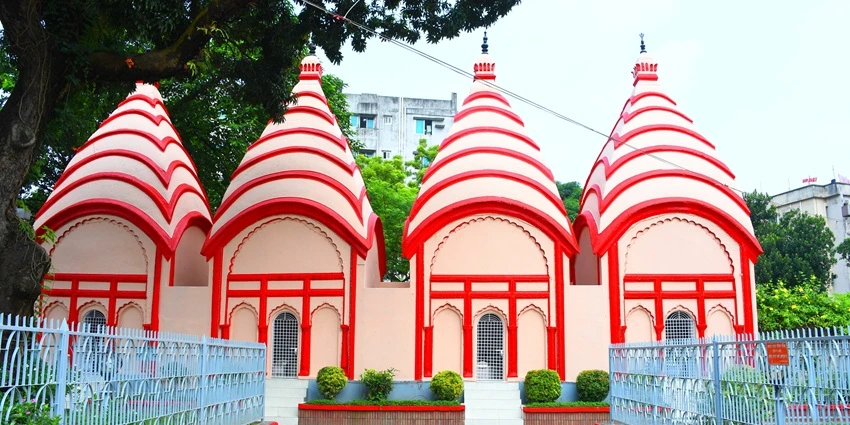
- Four Shiva temples surrounding the main shrine
- Open courtyards used for gatherings and rituals
- Brick and plaster construction typical of Bengal
Although much of the original structure was altered over time, the temple’s layout still reflects ancient religious planning.
The Idol of Goddess Dhakeshwari
The current idol is believed to be a later replacement, as the original was reportedly taken to India during periods of unrest. Even so, devotees regard the present idol as spiritually continuous with the original goddess.
Dhakeshwari Temple and Durga Puja Celebrations
The Biggest Hindu Festival in Bangladesh
Durga Puja is the most important Hindu festival in Bangladesh, and Dhakeshwari Temple becomes its spiritual epicenter.
During this time:
- Thousands of devotees gather daily
- Cultural programs, music, and rituals take place
- The temple complex transforms into a vibrant celebration of faith
For visitors, Durga Puja offers a powerful cultural experience, especially when explored as part of A Cultural Tour guided by local experts.
Location and How to Reach Dhakeshwari Temple
Where Is Dhakeshwari Temple Located?
Dhakeshwari Temple is located in Old Dhaka, near Bakshi Bazar, close to other historic landmarks such as Lalbagh Fort and the Buriganga River.
This location makes it ideal to include in:
- An Old Dhaka Tour
- An Old Dhaka and Sonargao Tour
- A Half-Day Tour Dhaka
Transportation Tips for Visitors
- Rickshaws are the most practical option within Old Dhaka
- Cars may face traffic congestion
- Guided tours ensure smooth access and cultural context
Travelers unfamiliar with Dhaka’s layout are advised to visit with the Best Tour Agency in Bangladesh for safety and time efficiency.
Best Time to Visit Dhakeshwari Temple
Seasonal Considerations
- October (Durga Puja): Most vibrant but crowded
- November–February: Pleasant weather and fewer crowds
- Early morning or late afternoon: Best for calm visits
Visiting Etiquette
Visitors should:
- Dress modestly
- Remove shoes before entering inner areas
- Avoid photography inside sanctums without permission
- Maintain silence during prayers
Respectful behavior enhances both cultural understanding and visitor experience.
Dhakeshwari Temple and Religious Harmony in Bangladesh
One of the most powerful aspects of Dhakeshwari Temple is its role in promoting interfaith harmony. Despite political and social challenges over centuries, the temple continues to operate peacefully within a Muslim-majority country.
This coexistence reflects Bangladesh’s pluralistic heritage and is often highlighted during World Heritage and Historical Places Tours focused on religious history.
Exploring Surroundings of Dhakeshwari Temple
Cultural and Historic Sites Nearby
After visiting the temple, travelers often explore:
- Lalbagh Fort
- Ahsan Manzil
- Shankhari Bazaar
- Sadarghat River Port
These sites offer deeper insight into Old Dhaka’s layered past and are best experienced through Discover Dhaka City itineraries.
Food and Local Life Experience
Old Dhaka is also famous for its food culture. While temple visits are spiritual, pairing them with a Dhaka Food Tour allows travelers to experience the city holistically.
Dhakeshwari Temple in Modern Bangladesh
Today, Dhakeshwari Temple is more than a historical monument. It functions as:
- A place of daily worship
- A national cultural symbol
- A center for Hindu community events
- A destination for cultural tourism
The Bangladesh government provides security and support during major festivals, recognizing its national importance.
Experiencing Dhakeshwari Temple Through Guided Tours
For international travelers, guided experiences add depth and understanding.
Recommended experiences include:
- A Cultural Tour focusing on religion and history
- Street Photography Tour in Dhaka capturing rituals and architecture
- Half-Day Tour Dhaka combining heritage landmarks
Choosing the Best Tour Agency in Bangladesh ensures accurate storytelling, respectful access, and local insight.
Frequently Asked Questions
What is Dhakeshwari Temple famous for?
Dhakeshwari Temple is famous as the national Hindu temple of Bangladesh and one of the most important Shakti Peetha sites in the region.
Is Dhakeshwari Temple safe for tourists?
Yes, Dhakeshwari Temple is safe for tourists, especially during daytime and when visited with a licensed tour operator.
Can non-Hindus visit Dhakeshwari Temple?
Yes, non-Hindus are welcome to visit respectfully, observe rituals, and explore the temple complex.
When is the best time to visit Dhakeshwari Temple?
The best time is during the winter months (November–February) or during Durga Puja for cultural immersion.
How long does a visit to Dhakeshwari Temple take?
A typical visit takes 30–60 minutes, but combined cultural tours may last several hours.